Understanding the Sensing Field Geometry
The core question of whether a proximity sensor can detect from the side is fundamentally about the shape and directionality of its sensing field. Most standard inductive and capacitive proximity sensors are designed with a frontal sensing axis. The active sensing field typically projects forward from the face of the sensor in a conical or cylindrical pattern. While this field has a certain width or diameter that expands with distance, its sensitivity is greatest along the central axis. Detection from a purely lateral direction, meaning perpendicular to this central axis, is generally not the primary design intent. The sensor's internal coil (inductive) or electrode (capacitive) is oriented to generate a field projecting outward from the front face.
Lateral Detection: Possibilities and Limitations
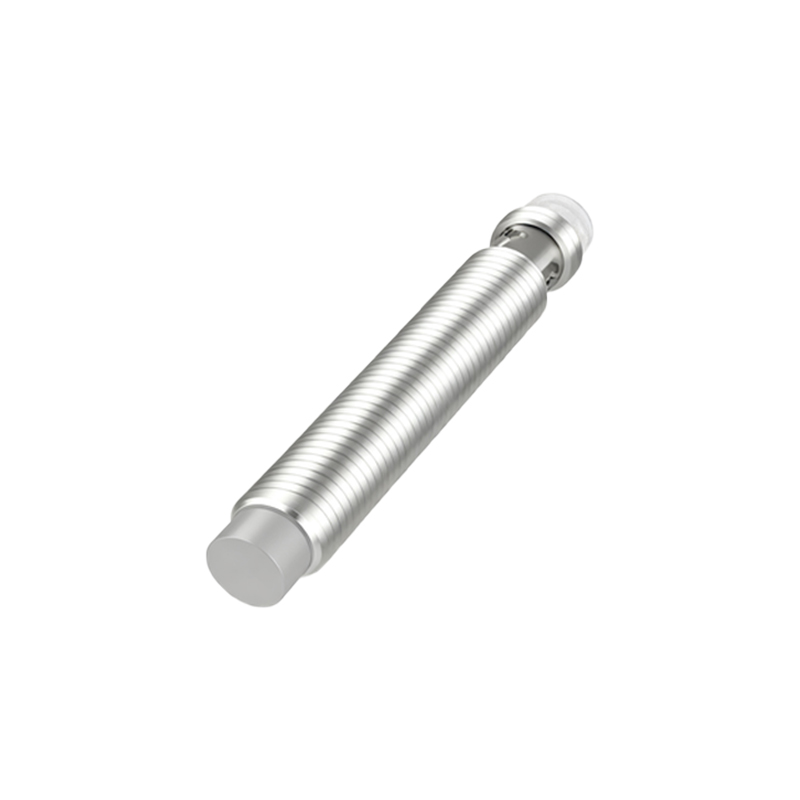
Despite the forward-focused design, lateral detection is not impossible but is highly inconsistent and depends on several factors. If a target approaches very close to the side housing of the sensor, it may enter the fringe or peripheral area of the electromagnetic or electrostatic field. This can sometimes cause a change in the sensor's output state. However, this lateral sensing range is extremely short, unpredictable, and not specified in datasheets. Relying on side detection is considered poor practice as it leads to unreliable operation, false triggers, and reduced system robustness. The effective switching distance (Sn) is only guaranteed for the target approaching the front sensing face on the prescribed axis.
Sensor Housing and Shielding Effects
The construction of the sensor housing plays a critical role in limiting side sensitivity. Many proximity sensors, especially inductive types, are equipped with a metallic shield (often a copper or aluminum ring) surrounding the sides of the sensing coil. This shield serves to focus the magnetic field forward and actively dampens or "shields" the field from extending laterally. This design ensures directional sensitivity and prevents the sensor from being influenced by metal objects in its immediate side environment, such as mounting brackets or machine frames. Unshielded sensor variants have a slightly more extended field but are still front-oriented.
Implications for Installation and Mounting
Understanding the directional sensing characteristic is crucial for correct installation. Engineers must ensure that no unintended metal or conductive objects are present within the frontal sensing zone. Equally important is to maintain proper clearance around the sides of the sensor. Datasheets typically specify minimum non-metallic side clearance distances (e.g., 2x sensor diameter). Failing to observe these clearances can lead to a phenomenon where a large metal object beside the sensor could potentially influence its field, causing erratic behavior even if the object is not directly in front. Proper recessed mounting or the use of mounting brackets that maintain clearance is standard procedure.
Specialized Sensor Designs for Lateral Sensing
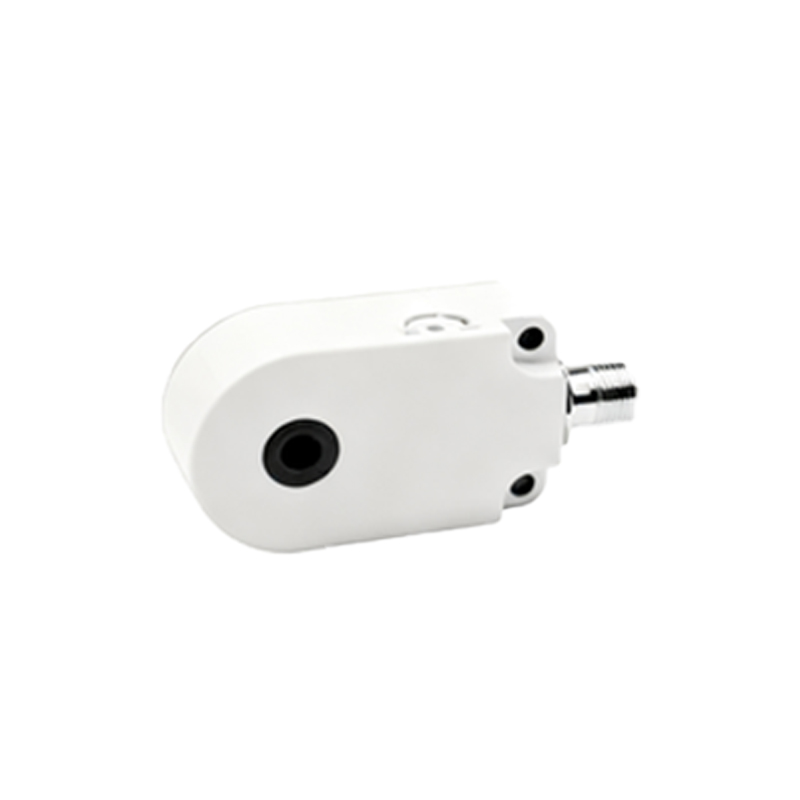
For applications requiring reliable detection from the side, specialized sensor designs exist. These are not standard cylindrical proximity sensors. Examples include "side-sensing" or "side-looking" sensors where the sensing coil and electronics are oriented within the housing to project the primary sensing field parallel to the mounting surface. Another common solution is the use of rectangular or block-style sensors with a large, flat sensing face designed for wide-area detection that includes lateral coverage. For precise edge detection on materials, sensors with a narrow, focused beam or slot-type sensors are employed, where the target passes through a lateral gap.
Testing and Verification in Application
When integrating a standard proximity sensor into a machine, it is advisable to empirically test for unwanted lateral sensitivity. This involves powering the sensor and bringing various materials and objects near its sides at the planned installation distance. Monitoring the output with an oscilloscope or PLC input indicator will reveal any susceptibility. If lateral activation is observed, countermeasures include increasing the side clearance, using a sensor with a more robust shield, selecting a different sensor technology (like photoelectric for directional beams), or adjusting the mounting orientation to ensure only the intended frontal approach triggers the signal.
Conclusion: Design Intent vs. Physical Reality
In summary, while standard cylindrical proximity sensors are not designed to sense from the side, the physical nature of electromagnetic fields means some minimal, unspecified lateral sensitivity can exist at very close ranges. For reliable and professional automation design, engineers must treat these sensors as strictly front-sensing devices. They should follow mounting guidelines meticulously and select specialized sensor form factors if lateral detection is a genuine requirement of the application. Assuming or depending on side sensitivity will compromise system integrity and performance.