In today's fast-paced industrial landscape, the demand for precise, reliable, and non-contact measurement solutions has never been greater. Laser thickness sensors stand at the forefront of this technological revolution, offering unparalleled accuracy for a vast array of manufacturing and quality control applications. Unlike traditional contact methods that can mar surfaces or provide inconsistent readings, laser sensors utilize the principle of triangulation or time-of-flight to deliver micron-level precision without ever touching the target material.
The core technology behind most industrial laser thickness sensors is laser triangulation. A focused laser beam is projected onto the surface of the target object. The reflected light is then captured by a high-resolution receiver, typically a CCD or CMOS linear array, positioned at a known angle. By calculating the position of the laser spot on the receiver, the sensor's onboard processor can determine the exact distance to the surface with extreme accuracy. For thickness measurement, two such sensor heads are typically arranged opposite each other, simultaneously measuring the distance to both sides of a material. The system's computer then calculates the thickness by subtracting the sum of these distances from the known, fixed distance between the two sensor heads. This configuration allows for real-time, continuous measurement of materials in motion, such as metal sheets, plastic films, glass panels, or rubber belts.
The advantages of implementing laser thickness gauges are transformative. Firstly, they eliminate measurement errors caused by mechanical force or wear associated with contact rollers and probes. This non-contact nature is crucial for measuring soft, delicate, hot, or fast-moving products. Secondly, they provide exceptionally high measurement speed and frequency, capable of taking thousands of measurements per second. This enables 100% inspection and the creation of detailed thickness profiles across the entire width of a product, identifying minute variations that contact point sensors would miss. Furthermore, modern sensors are highly robust, designed to withstand harsh industrial environments with vibration, dust, and temperature fluctuations. Their digital output integrates seamlessly with factory automation systems, allowing for immediate process adjustments and closed-loop control, which drastically reduces material waste and improves product consistency.
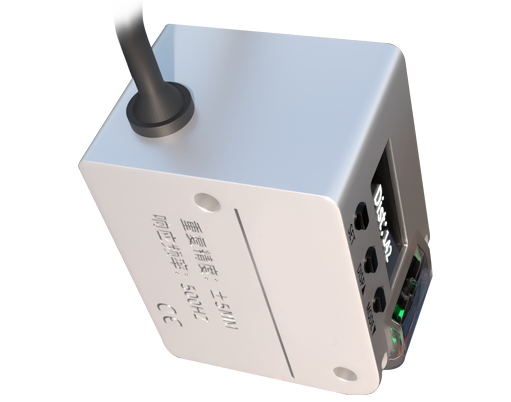
Key industries leveraging this technology include metal rolling mills, where precise thickness control of steel, aluminum, and copper strips is critical for product quality and material savings. In plastics and film extrusion, laser sensors ensure uniform thickness of products from packaging films to technical membranes, directly impacting barrier properties and strength. The paper industry relies on them for monitoring caliper, while the glass and semiconductor manufacturing sectors use them for wafer and substrate inspection. Even in the production of lithium-ion battery electrodes, laser thickness sensors are indispensable for coating uniformity, a key factor in battery performance and safety.
When selecting a laser thickness measurement system, several factors must be considered. Measurement range and resolution are primary; a system must be chosen based on the expected thickness and the required precision. The type of material surface also matters, as highly reflective or transparent materials may require sensors with specialized filters or algorithms. Environmental conditions like ambient light, temperature, and the presence of steam or dust necessitate sensors with appropriate ingress protection (IP) ratings and compensation features. Finally, the system's software interface and data logging capabilities are vital for analysis, reporting, and integration with Statistical Process Control (SPC) protocols.
The future of laser thickness sensing is intertwined with Industry 4.0. The next generation of sensors features enhanced connectivity via Industrial IoT (IIoT) protocols, allowing for predictive maintenance and deeper analytics across production lines. Advancements in blue laser technology offer better performance on challenging surfaces like hot metals, while integrated multi-point scanners provide even more comprehensive surface mapping. As manufacturing tolerances become tighter and the push for zero-defect production intensifies, the role of the laser thickness sensor will only grow more central, solidifying its status as an indispensable tool for precision, efficiency, and quality in the modern industrial world.