Laser displacement sensors are non-contact measurement devices that determine the distance to a target object with high precision. Their operation is based on fundamental principles of optics and electronics, making them indispensable in industries like manufacturing, robotics, and quality control. The core working principle involves emitting a laser beam toward the target and analyzing the reflected light to calculate displacement.
The most common method used is the triangulation principle. In this setup, a laser diode projects a focused beam onto the measurement object's surface. The reflected light is then captured by a receiving lens at a specific angle, focusing it onto a position-sensitive detector, typically a CCD or CMOS linear image sensor. The key is geometry: as the distance to the target changes, the position where the reflected light spot hits the detector shifts linearly. A closer target causes the spot to move in one direction on the sensor, while a farther target moves it in the opposite direction. The sensor's internal processor uses this positional shift, along with the known fixed angle between the emitter and receiver, to calculate the exact distance via trigonometric triangulation. This method offers high resolution and accuracy for short to medium measurement ranges.

Another significant principle is time-of-flight (ToF), often used for longer distances. Here, the sensor measures the time it takes for a laser pulse to travel to the target and back. Since the speed of light is constant, the distance is calculated using the formula: Distance = (Speed of Light × Time of Flight) / 2. This method is less precise over very short ranges than triangulation but excels in measuring over several meters. Some advanced sensors use phase-shift analysis of modulated laser light, a variation of ToF, for improved accuracy at longer ranges.
The choice of laser, usually a visible red or Class 2 infrared laser, is crucial for performance and safety. The sensor's electronics must process the detector signal rapidly, compensating for factors like target color, reflectivity, and surface texture. A dark, matte surface scatters more light, reducing the intensity of the reflected beam, while a shiny surface can create specular reflection that may not reach the detector. Modern sensors incorporate sophisticated algorithms and automatic gain control to normalize these variations and provide stable readings.
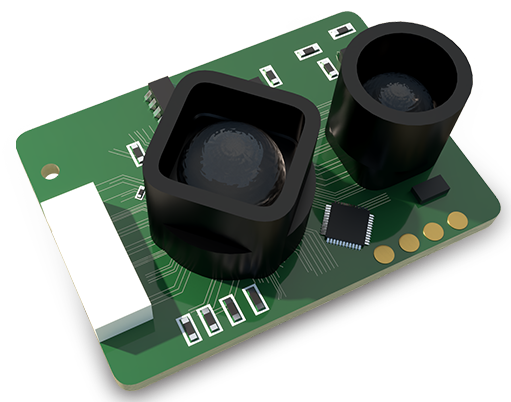
Applications are vast. In automated production lines, they measure component dimensions, thickness, and vibration. In robotics, they guide precise positioning and obstacle detection. Their non-contact nature prevents damage to delicate objects and allows for high-speed measurement unachievable by mechanical probes. When selecting a sensor, engineers consider measurement range, resolution, sampling speed, spot size, and the target's material properties.
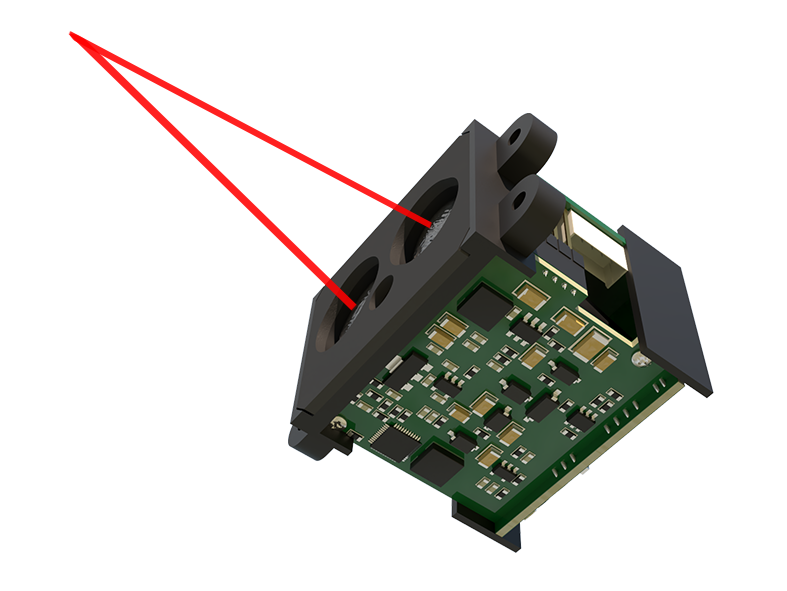
In summary, laser displacement sensors translate physical displacement into an electrical signal through precise optical geometry or time measurement. Their reliability, speed, and accuracy stem from this elegant interplay of light emission, reflection detection, and real-time computational analysis, enabling micron-level measurements critical to modern automation and quality assurance.