In the demanding environment of underground coal mining, managing airborne dust is not merely an operational concern but a critical matter of health, safety, and regulatory compliance. The pervasive presence of coal dust poses severe risks, including respiratory diseases among workers, such as pneumoconiosis (black lung), and the ever-present danger of explosive dust clouds. Traditional methods of dust monitoring, often relying on manual sampling or less sophisticated electronic sensors, have historically struggled to provide the real-time, accurate, and reliable data necessary for proactive hazard mitigation. The advent and integration of laser dust concentration sensors represent a transformative leap forward in industrial hygiene and operational intelligence for the mining sector.
At its core, a laser dust concentration sensor operates on the principle of light scattering, specifically laser diffraction. The device emits a stable, focused beam of laser light into a measurement chamber through which the dust-laden air is drawn. As individual dust particles pass through this laser beam, they scatter the light in various directions. A strategically placed photodetector, typically positioned at a specific angle (like 90 degrees), captures the intensity of this scattered light. The fundamental physics principle at play is that the intensity of the scattered light is directly proportional to the number and size of the particles present in the air sample. Sophisticated onboard algorithms then process this optical signal, correlating it to a precise mass concentration value, usually displayed in units such as milligrams per cubic meter (mg/m³).
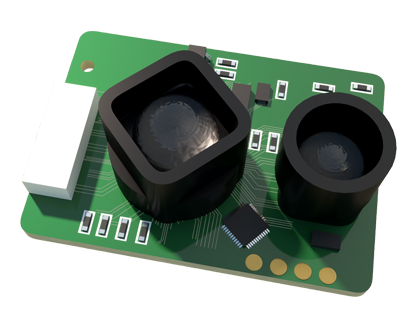
The superiority of this technology over older methods is pronounced. Firstly, it delivers real-time, continuous monitoring. Unlike periodic grab samples that offer only a snapshot in time, laser sensors provide a constant stream of data, enabling immediate awareness of changing conditions. This is vital for triggering ventilation adjustments or equipment shutdowns before dust levels reach dangerous thresholds. Secondly, the accuracy and sensitivity are exceptional. These sensors can detect extremely low concentrations of respirable dust—particles small enough to penetrate deep into the lungs—which are the primary health hazard. This high sensitivity ensures compliance with increasingly stringent occupational exposure limits set by health and safety authorities worldwide.

Furthermore, modern laser dust sensors are engineered for the harsh realities of the mining environment. They are housed in robust, often explosion-proof enclosures rated for use in potentially flammable atmospheres. They are designed to be resistant to vibration, humidity, and temperature fluctuations common underground. Many models feature self-diagnostic capabilities and automatic zero-point calibration to maintain long-term measurement stability with minimal maintenance. The data output is easily integrated into the mine's broader operational technology (OT) network, feeding into centralized control rooms and data historians for trend analysis, reporting, and automated control loops.
The practical applications within a coal mine are extensive and impactful. The primary use is for exposure monitoring in key worker areas, such as along longwall faces, at continuous miner sections, and at transfer points where coal is crushed and conveyed. By providing a clear, real-time picture of dust levels, these sensors empower site managers to optimize the operation of dust suppression systems, like water sprays and scrubbers, and to manage ventilation currents more effectively. This not only protects personnel but also enhances operational efficiency by ensuring that resources are deployed precisely where and when they are needed.
Another critical application is in explosion prevention. Coal dust is highly combustible, and its accumulation can lead to catastrophic secondary explosions following an initial methane ignition. Laser sensors monitoring return airways or specific zones can provide early warning of rising dust levels, allowing for preemptive cleaning (rock dusting) or other mitigation measures. This function is integral to a mine's overall safety management system, directly contributing to risk reduction.
Looking ahead, the role of laser dust concentration sensors is set to expand with the industry's move toward greater automation and "smart mining" initiatives. As autonomous vehicles and remote-operated machinery become more prevalent, reliable environmental sensing becomes even more crucial. These sensors will form a key node in the Internet of Things (IoT) ecosystem of the mine, providing essential data for autonomous systems to navigate safely and for predictive analytics platforms to forecast dust generation patterns based on production activities. This data-driven approach paves the way for not just reactive controls, but truly predictive and preventive dust management strategies.
In conclusion, the laser dust concentration sensor is far more than just another monitoring tool; it is a cornerstone technology for modern, responsible coal mining. By delivering unparalleled accuracy, reliability, and real-time insight into one of the industry's most persistent hazards, it fundamentally enhances the protection of the workforce, ensures regulatory compliance, and supports more efficient and intelligent mining operations. Its continued adoption and integration are essential steps toward a safer and more sustainable future for the global mining industry.