In the world of industrial automation and smart systems, the ability to detect the presence or measure the distance of an object without physical contact is fundamental. This capability is provided by proximity switch distance sensors, a critical category of non-contact sensing devices. These sensors combine the triggering function of a standard proximity switch with precise distance measurement, offering a versatile solution for numerous applications.
At their core, these sensors operate by emitting a field or beam of energy and analyzing the signal that returns from a target object. The primary technologies employed are inductive, capacitive, and photoelectric (often using laser or infrared light). Inductive sensors generate an electromagnetic field and are exclusively used for detecting metallic objects. The presence of a metal target within the sensing range disturbs this field, which the sensor's electronics interpret to determine both presence and distance. Capacitive sensors, on the other hand, create an electrostatic field and can detect a much wider variety of materials, including metals, plastics, liquids, and granular substances, by sensing changes in capacitance. Photoelectric sensors, particularly laser-based versions, emit a focused light beam. The distance is calculated based on the time it takes for the light to reflect back to the receiver (time-of-flight principle) or through triangulation methods, providing high accuracy even for small or distant objects.
The integration of distance measurement elevates a simple proximity switch into a more intelligent device. Instead of just providing a simple on/off signal when an object enters a predefined zone, these sensors output a continuous analog signal (e.g., 4-20 mA, 0-10 V) or a digital value via protocols like IO-Link. This signal is proportional to the measured distance, allowing systems to monitor precise positional data. For instance, it can be used to control the fill level in a tank, monitor the thickness of a material on a production line, or ensure a robotic gripper is correctly positioned before closing.
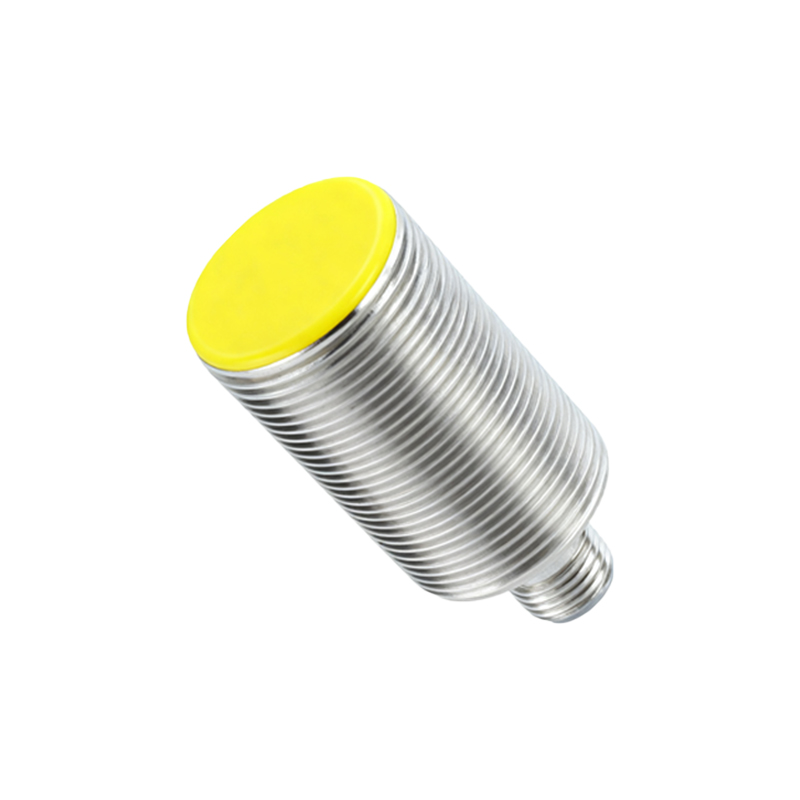
The applications for proximity switch distance sensors are vast and span across industries. In manufacturing, they are indispensable for precise positioning control in assembly robots, checking the dimensions of machined parts for quality control, and monitoring roll diameters in printing or winding machines. The automotive industry relies on them for robotic welding and painting applications where consistent distance is crucial. In packaging, they ensure products are correctly placed on conveyor belts. Beyond traditional industry, they find use in agricultural equipment for controlling implement height, in automated warehouses for inventory management, and even in consumer electronics for features like automatic screen dimming.
Selecting the right sensor requires careful consideration of several key parameters. First, the sensing range must be appropriate for the application, with a suitable margin. Second, the target material dictates the technology: inductive for metals, capacitive for non-metals or level detection, and photoelectric for most materials requiring high precision. Repeatability, or the sensor's ability to consistently return the same measurement for the same distance, is critical for precision tasks. Environmental factors are paramount; sensors may need to withstand extreme temperatures, humidity, vibration, washdowns (with appropriate IP ratings like IP67 or IP69K), or exposure to dust and chemicals. The output type must be compatible with the control system, whether it's a simple switch output, an analog signal, or a digital bus communication. Finally, the form factor and mounting options must suit the physical constraints of the installation.
Modern advancements continue to enhance these devices. Sensors are becoming smaller, more robust, and smarter. The integration of IO-Link communication allows for parameterization, diagnostics, and condition monitoring directly from the controller, facilitating predictive maintenance and reducing downtime. Improved algorithms provide better immunity to environmental interference, such as background light for optical sensors or varying material colors.
In conclusion, proximity switch distance sensors are a pivotal technology enabling precision, efficiency, and automation. By understanding the underlying principles—inductive, capacitive, and photoelectric—and carefully evaluating application requirements against sensor specifications, engineers and technicians can effectively harness their power. From ensuring a robotic arm moves to the exact millimeter to preventing overflows in a chemical tank, these sensors provide the critical eyes for countless automated systems, driving productivity and innovation forward.