Introduction to Green Proximity Sensors
Green proximity sensors represent a significant advancement in industrial automation, focusing on energy efficiency, environmental sustainability, and operational reliability. Unlike traditional sensors, the term "green" primarily refers to their low power consumption and reduced environmental impact throughout their lifecycle. These sensors are pivotal in creating smarter, more sustainable manufacturing and logistics systems. They operate on the fundamental principle of detecting the presence or absence of an object within a specified range without any physical contact, thereby minimizing wear and tear and maintenance needs.
Core Operating Principles
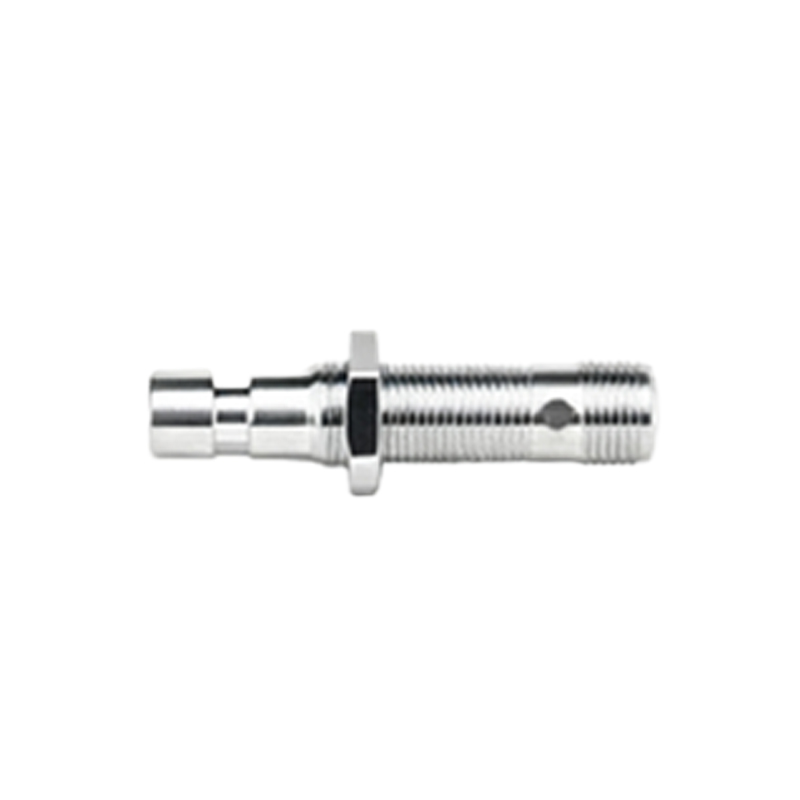
The working principle of a green proximity sensor is based on the use of an electromagnetic field, light, or sound to detect a target. The most common types are inductive, capacitive, and photoelectric sensors, each optimized for lower energy use. An inductive sensor, for instance, generates a high-frequency oscillating electromagnetic field from its coil. When a metallic object enters this field, it induces eddy currents in the target, which dampens the oscillation amplitude. The sensor's circuit detects this change and triggers a solid-state switch. Modern green variants achieve this with highly efficient oscillators and low-power ASICs (Application-Specific Integrated Circuits) that draw minimal current in both active and standby states.
Energy-Efficient Design and Components
A key to their "green" designation lies in the design architecture. These sensors incorporate components like low-dropout voltage regulators, sleep or burst modes, and energy-harvesting capabilities in some advanced models. The sensing element itself is often a tuned, low-loss ferrite core or an optimized photodiode-LED pair. The signal processing is handled by ultra-low-power microcontrollers that can quickly wake from sleep upon detecting a potential target signature, process the signal, and return to sleep. This drastically reduces the average power consumption, sometimes to the microampere range, enabling operation from small batteries or low-capacity energy harvesters for years.
Inductive vs. Capacitive Green Sensors
Inductive green proximity sensors are exclusively for detecting metals. Their efficiency is enhanced by using optimized coil geometries and materials that concentrate the magnetic field, requiring less energy to maintain the necessary detection strength. Capacitive green sensors, on the other hand, can detect both metallic and non-metallic materials like liquids, wood, or plastics. They work by measuring changes in capacitance between the sensor's electrode and the ground. Green versions use sophisticated circuitry to distinguish the target signal from environmental noise with minimal power, often employing pulsed excitation rather than a continuous field.
The Role of Photoelectric Technology
Photoelectric green proximity sensors use a beam of light, typically from an efficient infrared LED, to detect objects. The object interrupts or reflects the light beam back to a receiver (phototransistor or photodiode). The green aspect is achieved through pulsed LED operation. Instead of emitting a constant beam, the LED fires very short, high-intensity pulses. This allows the sensor to achieve a strong signal for detection while keeping the average current extremely low. Advanced models also feature ambient light suppression circuits to prevent false triggers, further enhancing reliability and efficiency.
Communication and Smart Features
Modern green sensors are often part of Industrial IoT (IIoT) networks. They feature digital interfaces like IO-Link, which not only transmit a simple on/off signal but also detailed diagnostic and process data. This intelligence allows for predictive maintenance, reducing waste from unexpected downtime and spare parts. The communication protocols themselves are designed for low-power operation. Furthermore, smart sensors can adjust their sensing parameters, like sensitivity or response time, based on the application needs, optimizing energy use dynamically without sacrificing performance.
Environmental and Economic Benefits
The primary benefit is drastic reduction in energy consumption across thousands of sensors in a plant, leading to lower operational costs and a smaller carbon footprint. Their long service life, due to solid-state design and robust construction, reduces electronic waste. The use of lead-free solders and RoHS-compliant materials in manufacturing minimizes toxic environmental impact. For end-users, this translates into lower total cost of ownership, compliance with environmental regulations, and contribution to corporate sustainability goals.
Typical Industrial Applications
Green proximity sensors are ubiquitous in automated systems. Common applications include position detection in packaging machinery, part counting on assembly lines, fill level monitoring in bottling plants, and safety door monitoring. In battery-operated mobile equipment like AGVs (Automated Guided Vehicles), their low power draw is critical for extended operation. They are also essential in clean energy sectors, such as monitoring solar panel positioning systems or wind turbine pitch control mechanisms, where reliability and efficiency are paramount.
Future Trends and Developments
The future of green proximity sensing points toward even greater integration