In industrial environments where machinery operates at high speeds or under heavy loads, the generation of oil mist is a common and significant challenge. This aerosol, composed of microscopic oil droplets suspended in air, poses serious risks to equipment health, workplace safety, and environmental compliance. Traditional methods for detecting such contaminants often fall short in terms of sensitivity, real-time response, and reliability. This is where advanced oil mist particle laser sensor technology emerges as a critical solution, offering unparalleled precision in monitoring airborne lubricant and coolant particles.
The core operating principle of an oil mist particle laser sensor is based on light scattering, specifically laser diffraction. A highly focused laser beam is projected into a sampling chamber through which air is continuously drawn. When an oil mist particle passes through this laser beam, it scatters the light. A strategically positioned photodetector then captures this scattered light signal. The intensity of the scattered light is directly proportional to the size and concentration of the particle. Sophisticated onboard algorithms analyze these signals in real-time, differentiating oil mist from other airborne particulates like dust or water vapor, and calculating the particle count and mass concentration. This process happens thousands of times per second, providing a dynamic and accurate picture of the oil mist level.
The advantages of employing laser-based sensing for oil mist are substantial. Firstly, the sensitivity is exceptional. These sensors can detect particles as small as 0.1 microns, identifying problems at their very inception long before they become visible or cause damage. This enables predictive maintenance strategies. Secondly, the response time is instantaneous. Unlike older gravimetric methods that require sample collection and lab analysis, laser sensors deliver continuous, real-time data. This allows for immediate alerts and automatic shutdown protocols if mist concentrations exceed predefined safety thresholds, preventing catastrophic bearing failures or fires. Thirdly, they are remarkably reliable and require minimal maintenance, as they have no moving parts that interact with the sample and are designed to withstand harsh industrial environments with high temperatures, vibrations, and electromagnetic interference.
The applications for oil mist particle laser sensors are vast and critical across multiple sectors. In the maritime industry, they are indispensable for monitoring crankcase atmospheres in large marine diesel engines. A rapid increase in oil mist concentration can indicate a hot spot or a developing piston ring failure, allowing engineers to take corrective action before a costly crankcase explosion occurs. Within manufacturing, particularly in machining centers, CNC lathes, and gear grinding operations, these sensors protect vital components. They monitor mist levels from cooling lubricants, ensuring that extraction systems are functioning correctly and that the air quality for operators remains within safe limits, reducing the risk of respiratory issues. In the power generation sector, they safeguard turbines and large compressors, while in the automotive industry, they ensure the integrity of engine test beds and transmission testing facilities.
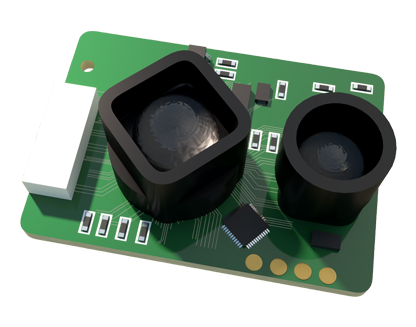
Implementing an effective oil mist monitoring system involves more than just installing a sensor. Best practices include strategic sensor placement in areas of highest risk or concentration, such as near bearing housings, crankcase breather vents, or machine tool enclosures. Regular calibration against known standards is crucial to maintain accuracy. Furthermore, the sensor should be integrated into a broader control network, connecting to programmable logic controllers (PLCs) or supervisory control and data acquisition (SCADA) systems. This integration enables data logging for trend analysis, remote monitoring capabilities, and the triggering of automated responses like activating enhanced ventilation or shutting down machinery.
Looking ahead, the evolution of oil mist particle laser sensors is intertwined with Industry 4.0 trends. Future sensors will feature enhanced connectivity through Industrial Internet of Things (IIoT) protocols, allowing for seamless data integration into cloud platforms for advanced analytics and fleet-wide management. Improvements in laser diode and detector technology will push detection limits even lower while reducing the sensor's physical footprint and power consumption. Artificial intelligence and machine learning algorithms will be increasingly embedded, enabling the sensors to not only detect particles but also diagnose the specific type of wear or fault pattern based on the particle size distribution, moving from simple monitoring to intelligent prognostic health management.
In conclusion, the oil mist particle laser sensor represents a fundamental technological leap for industrial asset protection and safety. By providing precise, real-time, and reliable detection of microscopic oil aerosols, it forms the first and most critical line of defense against equipment degradation, fire hazards, and unsafe working conditions. As machinery continues to operate at higher efficiencies and under greater stresses, the role of this sophisticated monitoring technology will only become more central to achieving operational excellence, ensuring regulatory compliance, and protecting both capital investments and personnel.