In the rapidly evolving landscape of industrial automation and smart technology, proximity sensors have emerged as critical components, enabling machines to detect the presence or absence of objects without physical contact. These high-tech devices operate on various principles, each tailored to specific applications and environmental conditions. This article delves into the core working mechanisms of modern proximity sensors, exploring their types, functionalities, and the underlying physics that make them indispensable in today's automated systems.
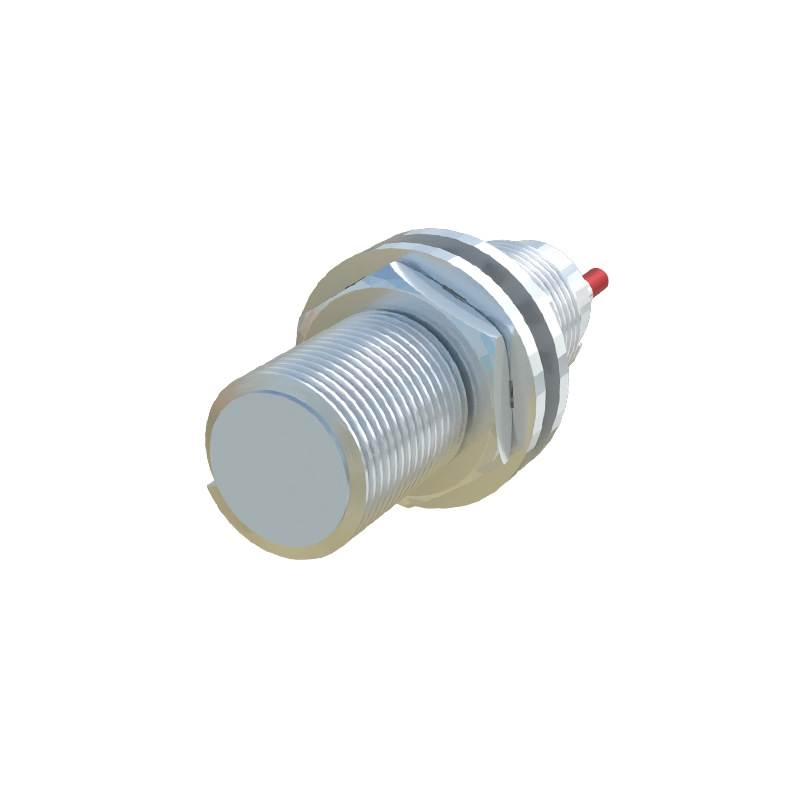
Proximity sensors are primarily categorized based on their detection methods: inductive, capacitive, ultrasonic, and photoelectric. Inductive proximity sensors are widely used in metal detection scenarios. They consist of an oscillator circuit that generates a high-frequency electromagnetic field. When a metallic object enters this field, eddy currents are induced on the object's surface, causing a change in the oscillation amplitude. This alteration is detected by the sensor's circuitry, which then triggers an output signal. These sensors are ideal for harsh industrial environments due to their robustness and immunity to non-metallic materials like dust or oil.
Capacitive proximity sensors, on the other hand, can detect both metallic and non-metallic objects, including liquids, plastics, and wood. They operate by measuring changes in capacitance. The sensor forms one plate of a capacitor, with the target object acting as the other plate. As the object approaches, the capacitance increases, altering the oscillator frequency. Once this change reaches a threshold, the sensor activates. This makes capacitive sensors versatile for applications such as level detection in tanks or material handling in packaging industries.
Ultrasonic proximity sensors utilize sound waves beyond the human hearing range (typically above 20 kHz). They emit ultrasonic pulses and measure the time taken for the echo to return after reflecting off an object. By calculating the time-of-flight, the sensor determines the distance to the target. These sensors are effective in challenging conditions like fog, dust, or varying light levels, and are commonly used in automotive parking systems, robotics, and conveyor belt monitoring.
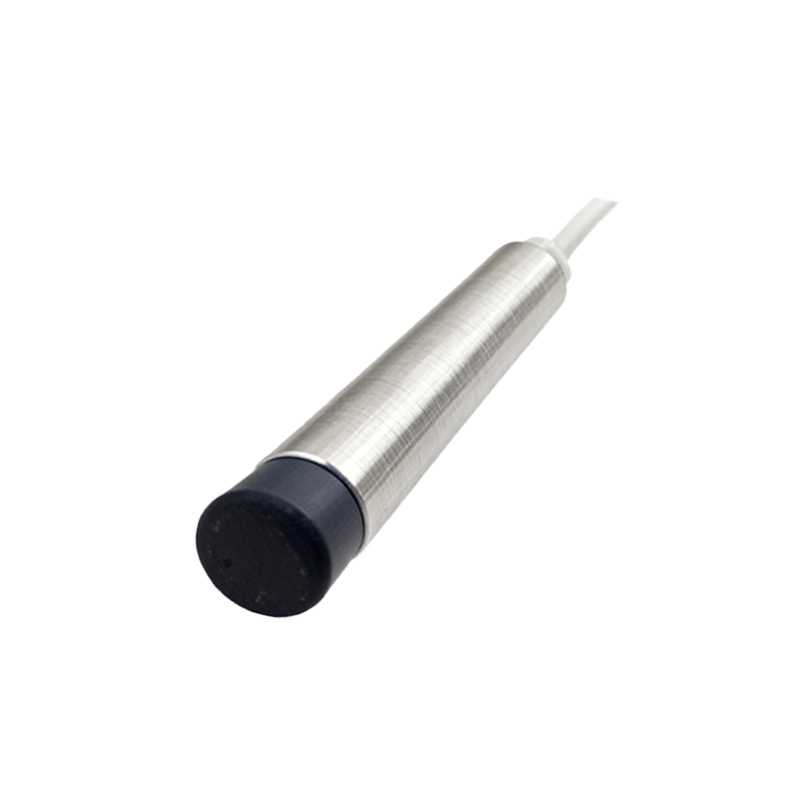
Photoelectric proximity sensors rely on light beams, usually infrared, to detect objects. They consist of an emitter and a receiver. In the through-beam type, the emitter and receiver are separate units; an object is detected when it interrupts the light beam. In the reflective type, both emitter and receiver are housed together, and detection occurs when the light reflects off the target back to the receiver. Diffuse sensors work similarly but rely on the object itself to scatter the light. Photoelectric sensors offer long detection ranges and high precision, making them suitable for packaging, assembly lines, and safety systems.
The advancement of microelectronics and digital signal processing has further enhanced proximity sensor capabilities. Modern sensors integrate smart features like programmability, self-diagnostics, and communication protocols (e.g., IO-Link, Ethernet/IP). These innovations allow for real-time data exchange, predictive maintenance, and seamless integration into Industrial Internet of Things (IIoT) networks. For instance, sensors can now compensate for environmental drift, adjust sensitivity automatically, and provide feedback on operational status, thereby reducing downtime and improving efficiency.
In practice, selecting the right proximity sensor depends on factors such as target material, detection range, environmental conditions, and response time. Engineers must consider interference from other electromagnetic sources, temperature variations, and mounting constraints. For example, in automotive manufacturing, inductive sensors are preferred for metal part detection, while capacitive sensors might be used for fluid level monitoring. Ultrasonic sensors excel in distance measurement tasks, and photoelectric sensors are chosen for high-speed counting or color recognition.
The future of proximity sensing lies in miniaturization, enhanced sensitivity, and AI-driven analytics. Researchers are developing nanomaterials and MEMS (Micro-Electro-Mechanical Systems) based sensors that offer higher resolution and lower power consumption. Additionally, machine learning algorithms are being integrated to enable pattern recognition and anomaly detection, paving the way for autonomous systems in smart factories and robotics.
In conclusion, high-tech proximity sensors are fundamental to modern automation, driven by diverse physical principles that cater to specific industrial needs. Their continuous evolution promises greater reliability, intelligence, and adaptability, shaping the next generation of technological innovations.