In industrial automation and electronic design, proximity switch sensors play a crucial role in detecting the presence or absence of objects without physical contact. While technical specifications are vital, visual references—proximity switch sensor images—are equally important for identification, selection, and integration. This guide explores the various types of proximity sensors through a visual lens, explaining what the physical characteristics seen in pictures mean for their function and application.
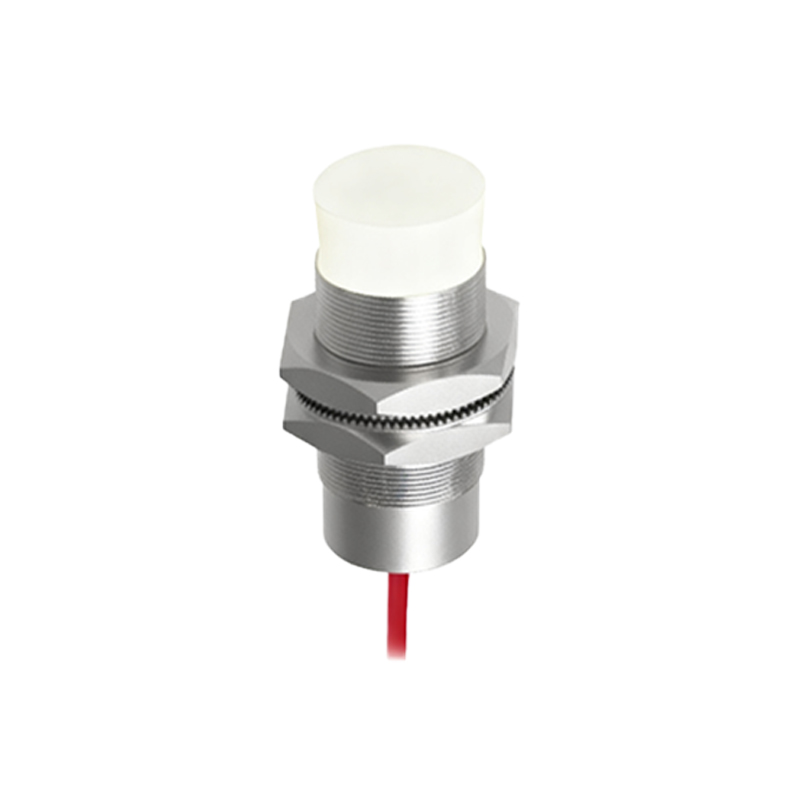
A glance at a gallery of proximity switch sensor images reveals a world of diversity in shape, size, and housing. The most immediate visual distinction is the sensor's housing material and form factor. Common housings are cylindrical (barrel-shaped) or rectangular (block-shaped). Cylindrical sensors, often made of nickel-plated brass or stainless steel, are ubiquitous. Images typically show a threaded body for easy mounting into a nut or bracket, with a sensing face at one end and a cable or connector at the other. The size, indicated by dimensions like M8, M12, M18, or M30, is immediately apparent in comparison shots. Rectangular sensors, housed in plastic or metal casings, offer a more compact profile for space-constrained applications. Their images often show integrated mounting holes and a clearly marked sensing window.
Beyond the shape, the internal technology is hinted at by external markings and the appearance of the sensing face. Inductive proximity sensors, designed to detect metallic objects, usually have a metallic sensing face. Pictures might show a flat or shielded face, where the sensing coil is embedded behind a metal front, allowing for flush mounting in metal. Conversely, a non-shielded or unthreaded version has a protruding sensing coil. Capacitive proximity sensors, which can detect both metallic and non-metallic materials like liquids, wood, or plastic, often have a plastic or ceramic sensing face. This is a key visual differentiator. Photoelectric sensors, another major category, have a distinct visual signature: they possess both a light emitter (usually an LED) and a receiver window. Images clearly show these two apertures, sometimes with visible red or infrared light when powered.
Ultrasonic sensors are identifiable by the transducer surface, which is typically a circular, metallic mesh or membrane used for emitting and receiving sound waves. The product label and model number, always visible in high-quality product images, are the definitive keys. These codes specify the sensing technology (e.g., "IM" for inductive, "CM" for capacitive), sensing distance, output type (NPN/PNP, NO/NC), and supply voltage. A clear image of the label is invaluable for replacement or verification.

Why are these images so critical? For engineers and maintenance technicians, a picture can confirm a sensor's type when documentation is lost. For procurement, matching a visual from a machine diagram to a product catalog image ensures correct ordering. For designers, seeing the physical size and connector type in an image helps in planning panel layouts and clearance. Installation images, showing sensors mounted on machinery with appropriate gaps (the "dead zone" behind a cylindrical sensor, for instance), provide practical guidance that pure text cannot.
In conclusion, proximity switch sensor images are more than just illustrations; they are essential tools for understanding, selecting, and applying these devices. The housing shape, sensing face material, presence of LED indicators, and label details all tell a story about the sensor's capabilities. Whether you are troubleshooting an assembly line, designing a new circuit, or simply learning about automation components, learning to "read" these visual cues from photographs will significantly enhance your efficiency and accuracy. Always refer to high-resolution, manufacturer-provided images alongside datasheets for the most reliable information.