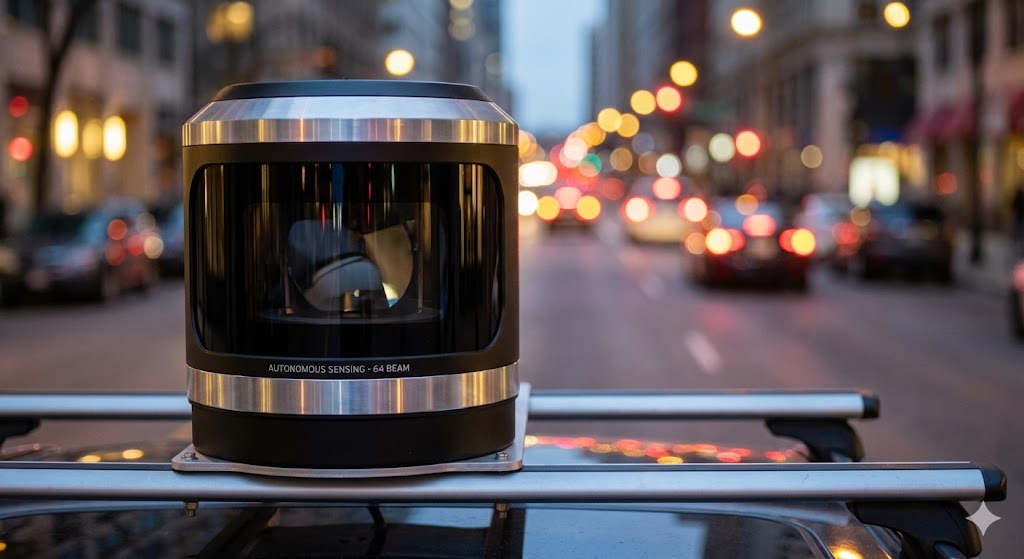
Laser distance sensors, also known as laser rangefinders or LiDAR (Light Detection and Ranging) sensors, are widely used in industrial automation, robotics, surveying, and consumer electronics. These devices measure distance with high precision by emitting laser beams and analyzing the reflected light. Understanding their working principles provides insight into their versatility and reliability.
The core operation relies on the time-of-flight (ToF) principle. A laser diode emits a focused pulse of light toward a target. The light travels at a constant speed—approximately 300,000 kilometers per second in a vacuum. Upon hitting the target, the beam reflects back to a photodetector within the sensor. By precisely measuring the time elapsed between emission and reception, the sensor calculates the distance using the formula: Distance = (Speed of Light × Time) / 2. The division by two accounts for the round-trip journey of the light pulse. Modern sensors achieve sub-millimeter accuracy by employing high-speed electronic circuits that can measure nanosecond-level intervals.
Another common method is phase-shift measurement, often used in continuous-wave laser sensors. Instead of discrete pulses, these sensors emit a modulated laser beam with a known frequency. The reflected wave’s phase is compared to the emitted wave’s phase. The phase difference correlates directly to the distance traveled. This approach excels in medium-range applications where high resolution is needed, though it may require more complex signal processing.
Triangulation-based laser sensors offer an alternative for short-range measurements. Here, the laser projects a spot onto the target. A lens at a fixed angle focuses the reflected spot onto a position-sensitive detector, such as a CCD or CMOS array. As the target distance changes, the spot shifts laterally on the detector. Using trigonometric relationships, the sensor computes the distance. This method is cost-effective and suitable for applications like assembly line inspection or thickness gauging.

Key components enable these functionalities. The laser source, typically a Class 1 or Class 2 diode, ensures eye safety while providing coherent, monochromatic light. Optics, including lenses and filters, shape the beam and reduce ambient light interference. The detector converts light signals into electrical ones, while a microprocessor handles timing, calculations, and output interfacing. Environmental factors like target reflectivity, surface texture, and atmospheric conditions can influence performance. Dark or absorbent surfaces may weaken return signals, whereas transparent or glossy objects might cause erroneous readings. Many sensors incorporate adaptive algorithms to compensate for such variables.
Applications span diverse fields. In manufacturing, laser sensors monitor object positioning, detect defects, and control robotic arms. Autonomous vehicles use LiDAR arrays to create real-time 3D maps of surroundings. Construction professionals employ them for land surveying and building alignment. Even smartphones now integrate miniature laser sensors for autofocus and augmented reality features. The non-contact nature of laser measurement prevents wear and avoids disturbing delicate objects.
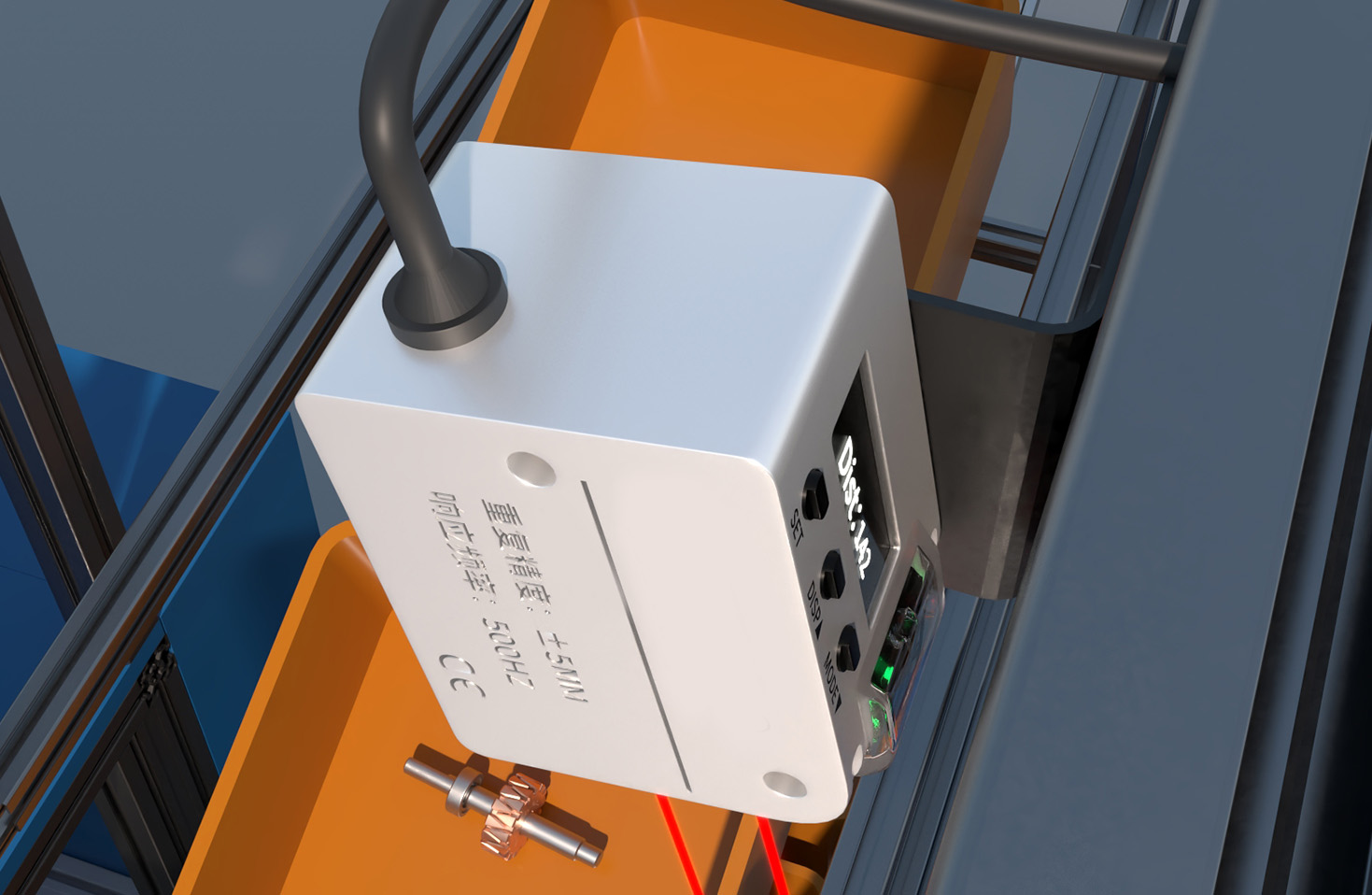
Advancements continue to enhance capabilities. Miniaturization reduces size and power consumption, enabling integration into portable devices. Improved algorithms filter noise from vibrations or ambient light. Multi-echo technology allows sensors to distinguish between multiple reflections, useful in complex environments like forestry or urban mapping. As costs decline, laser distance sensors are becoming accessible for hobbyist projects and educational tools.
In summary, laser distance sensors operate on well-established optical and electronic principles. Whether using time-of-flight, phase-shift, or triangulation, they transform light interactions into precise distance data. Their accuracy, speed, and adaptability make them indispensable in modern technology, driving innovation across industries. By mastering the interplay of light, time, and geometry, these sensors unlock new possibilities in measurement and automation.