Laser sensors represent a cornerstone of modern measurement and detection technology, utilizing focused light beams to achieve unparalleled precision across countless applications. Their fundamental principle involves emitting a laser beam towards a target and analyzing the reflected light. The specific method of analyzing this return signal defines the primary categories of laser sensors, each suited to distinct tasks and environments.
One of the most prevalent types is the Laser Distance Sensor, often based on Time-of-Flight (ToF) or phase-shift measurement principles. ToF sensors calculate distance by precisely measuring the time it takes for a laser pulse to travel to the target and back. These are ideal for long-range measurements, from several meters to kilometers, used in surveying, forestry, and unmanned vehicle navigation. Phase-shift sensors, by contrast, modulate the intensity of the laser beam and measure the phase difference between the emitted and reflected waves. They offer extremely high accuracy at shorter ranges, making them perfect for industrial positioning, warehouse level monitoring, and assembly robotics.
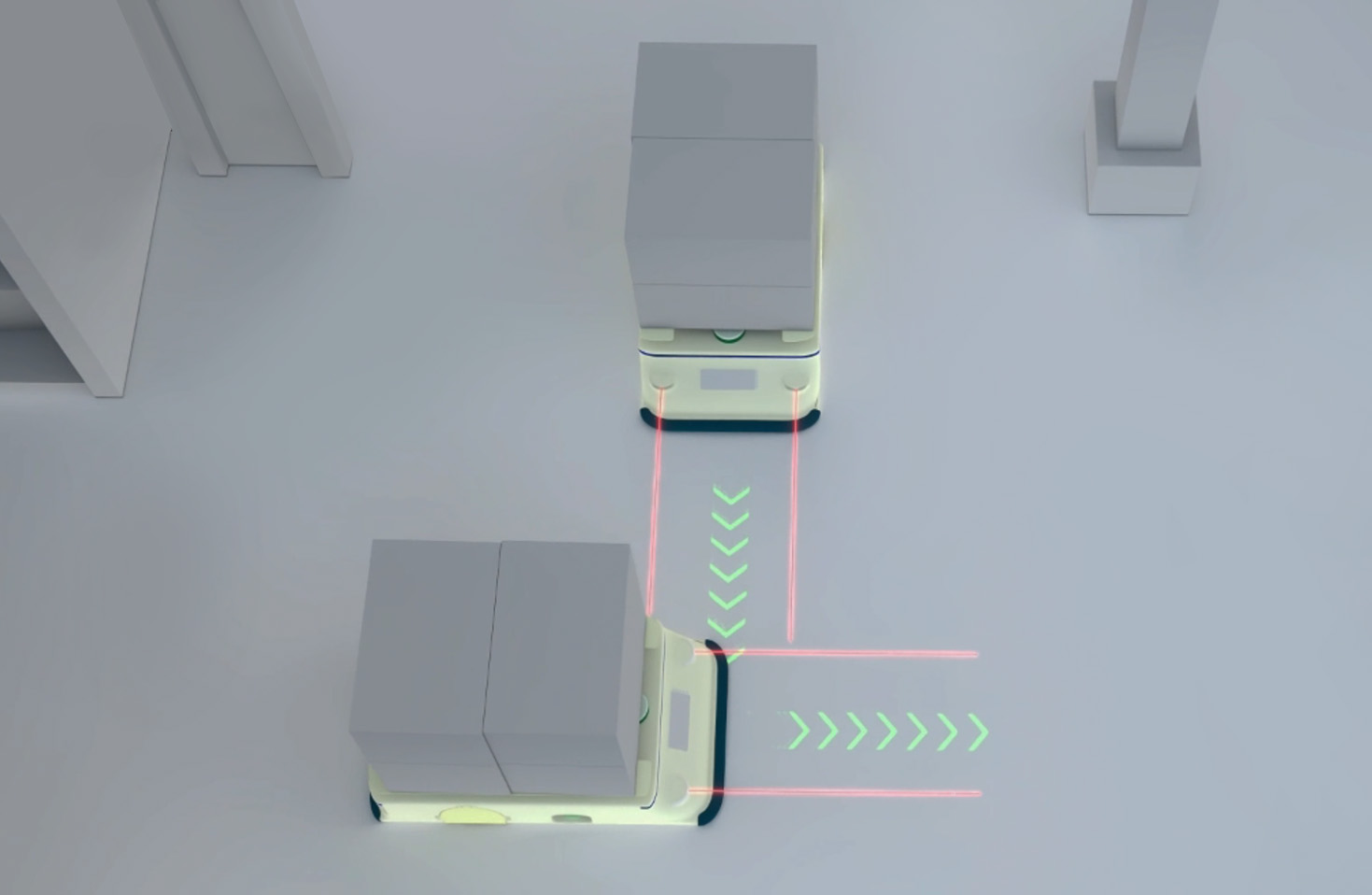
Laser Displacement Sensors are a critical sub-category designed for measuring minute changes in distance or position. They typically operate on triangulation or confocal principle. In triangulation, the emitted laser beam, the reflected beam, and the sensor's receiver form a triangle. A shift in the target's position causes the reflected spot to move across a position-sensitive detector, allowing for micron-level resolution. These sensors are indispensable in quality control for measuring thickness, warpage, or vibration of components. Confocal chromatic sensors use white light, where only a specific wavelength is in perfect focus on the target surface, providing exceptional resolution for transparent or glossy materials.
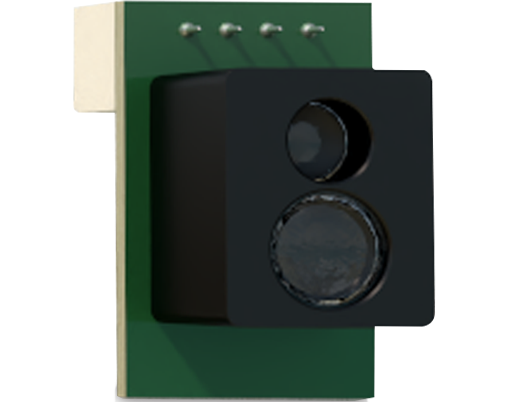
For detecting the mere presence or absence of an object, Laser Photoelectric Sensors are the workhorses of factory automation. They function as through-beam, retro-reflective, or diffuse-reflective sensors. Through-beam models have separate emitter and receiver units; breaking the beam indicates an object's presence, allowing for long detection ranges. Retro-reflective types use a single unit and a reflector, detecting an object that blocks the reflected beam. Diffuse-reflective sensors detect light bounced directly off the target itself, offering simpler installation. They are crucial for object counting, jam detection, and conveyor line control.
Laser Speed and Velocity Sensors employ the Doppler effect. When a laser beam hits a moving surface, the frequency of the reflected light shifts proportionally to the velocity. By measuring this frequency shift (Laser Doppler Velocimetry), these sensors can non-contact measure speed with extreme accuracy. Applications range from monitoring paper or sheet metal speed in production lines to scientific research in fluid dynamics.
Laser Profile Sensors project a laser line onto a target instead of a single point. A camera then captures the deformation of this line, from which a detailed 2D or 3D cross-sectional profile is generated. This technology is key in dimensional inspection, weld seam tracking, and reverse engineering, providing a complete contour map rather than just single-point data.
Choosing the right laser sensor depends on key parameters: required measurement range, accuracy, resolution, response speed, and the target's surface properties (color, reflectivity, material). Environmental factors like ambient light, dust, fog, or temperature must also be considered, as they can scatter or interfere with the laser beam. Modern advancements continue to enhance their capabilities, with innovations like multi-echo processing allowing a sensor to ignore foreground debris and measure the true background, or integrated connectivity for Industry 4.0 data collection. From ensuring manufacturing precision to enabling autonomous systems, the diverse family of laser sensors provides the exact technological solution for precise, reliable, and non-contact measurement challenges.