In the rapidly evolving landscape of industrial automation and precision engineering, the demand for specialized sensing solutions has never been higher. Custom laser module sensors stand at the forefront of this technological advancement, offering unparalleled accuracy, reliability, and adaptability for a myriad of applications. Unlike off-the-shelf sensors, custom-designed laser modules are engineered to meet specific operational parameters, environmental conditions, and performance criteria, ensuring optimal functionality in complex industrial settings.
The process of customizing a laser module sensor begins with a thorough analysis of the application requirements. This includes evaluating factors such as measurement range, resolution, response time, and the physical properties of the target material. For instance, in automotive manufacturing, laser sensors may be customized for high-speed inspection of component dimensions or surface defects, requiring specific wavelengths and beam profiles to handle reflective metals. In contrast, pharmaceutical packaging lines might necessitate sensors with ultra-fine resolution for verifying label placement or tablet counting, often demanding different optical configurations.
Key components of a laser module, such as the laser diode, lens assembly, and photodetector, are selected and calibrated based on these unique needs. The choice of laser wavelength—whether visible red, infrared, or blue-violet—impacts factors like visibility, penetration, and safety. Environmental robustness is another critical consideration; custom housings with IP ratings protect against dust, moisture, and temperature fluctuations, while specialized coatings can mitigate interference from ambient light or vibrations. Integration with existing systems is also streamlined through tailored communication protocols (e.g., IO-Link, Ethernet/IP) and mechanical interfaces, reducing downtime and enhancing workflow efficiency.
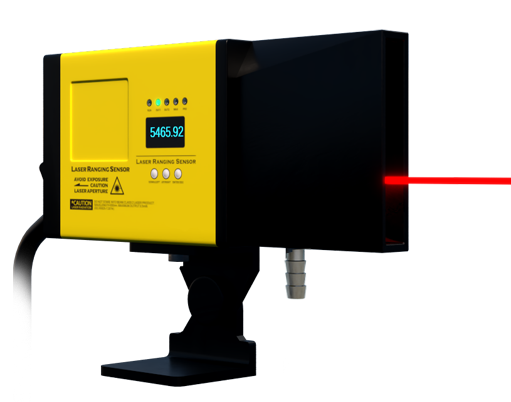
One of the significant advantages of custom laser sensors is their ability to solve niche challenges. In logistics, for example, sensors can be designed for precise parcel dimensioning in automated sorting facilities, incorporating 3D profiling capabilities to handle irregular shapes. In semiconductor fabrication, ultra-stable laser modules enable nanometer-level alignment during lithography processes. Furthermore, advancements in miniaturization and power efficiency allow for compact designs suitable for robotics or wearable devices, expanding their utility across sectors like aerospace, agriculture, and medical technology.
Collaboration between clients and engineering teams is pivotal throughout the customization journey. From initial concept design and prototyping to rigorous testing and validation, each phase ensures the final product aligns with performance benchmarks. Real-world simulations and lifecycle testing under operational stresses guarantee durability and consistency. By leveraging custom laser module sensors, industries can achieve higher productivity, reduced waste, and improved quality control, ultimately driving innovation and competitive edge.
As technology progresses, trends such as the integration of AI for adaptive sensing and the development of green lasers for enhanced safety are shaping the future of customization. Investing in tailored laser solutions not only addresses immediate operational needs but also fosters scalability for evolving industrial demands, making it a strategic imperative for forward-thinking enterprises.