In the rapidly evolving landscape of smartphone technology, the integration of sophisticated sensing components has become a key differentiator. Among these, the single-point laser sensor has emerged as a critical, yet often underappreciated, component enabling a range of advanced functionalities. This article delves into the operational principles, current applications, and future potential of these miniature optical devices within mobile handsets.
At its core, a single-point laser sensor is a compact optoelectronic module. It typically consists of a low-power Vertical-Cavity Surface-Emitting Laser (VCSEL) diode, a photodetector, and associated control circuitry. The fundamental principle is based on Time-of-Flight (ToF) or structured light measurement. In the ToF method, the VCSEL emits a modulated, invisible (usually infrared) laser pulse towards a target. The photodetector then captures the reflected light. By precisely measuring the phase shift or the time delay between the emitted and reflected pulses, the sensor's integrated processor calculates the distance to the object with high accuracy, often within a millimeter range. This process occurs millions of times per second, creating a precise single-point depth measurement.
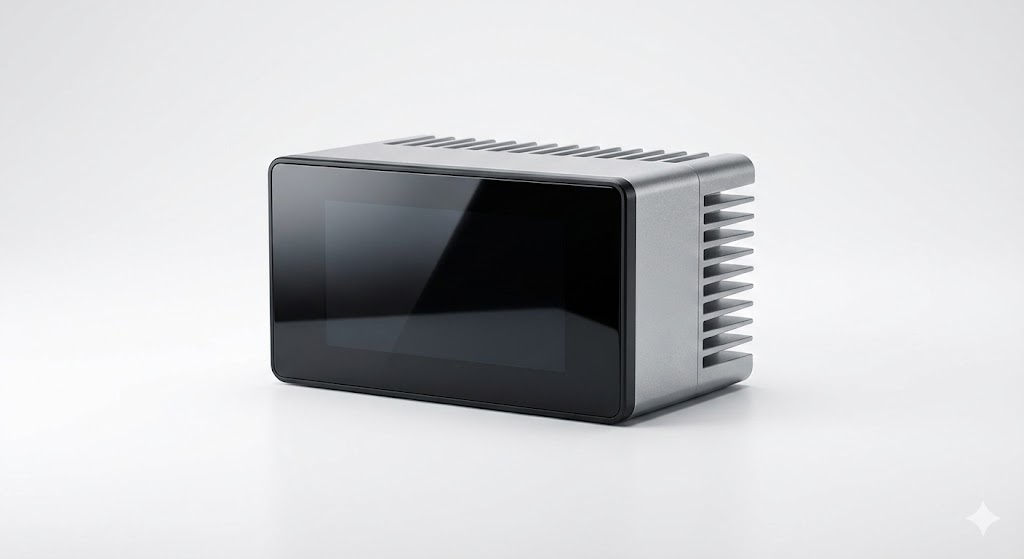
The primary application driving the adoption of single-point laser sensors in smartphones has been autofocus enhancement, particularly in low-light conditions. Traditional contrast-detection or phase-detection autofocus systems can struggle in dim environments, leading to "focus hunting." A laser autofocus sensor solves this by instantly providing an absolute distance measurement to the subject. This allows the camera's lens assembly to move directly to the correct focal position, resulting in significantly faster and more reliable focus acquisition, which is crucial for capturing fleeting moments.
Beyond autofocus, these sensors are pivotal in enabling proximity-sensing features. They provide a more accurate and consistent method for detecting when a phone is held to the user's ear during a call, triggering the screen to turn off to save power and prevent accidental touch inputs. Compared to older infrared LED-based proximity sensors, laser-based systems are less susceptible to ambient light interference and offer a clearer detection threshold.
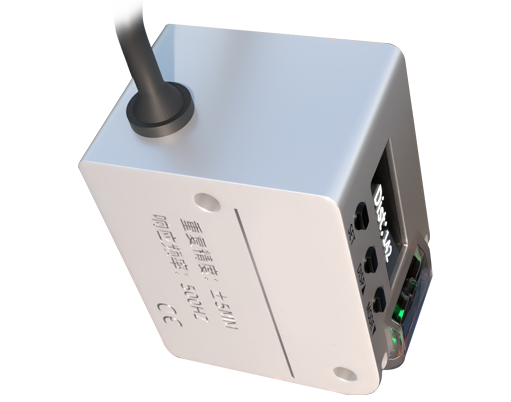
A more recent and innovative application is in the realm of augmented reality (AR) and spatial awareness. While full-fledged AR relies on complex multi-sensor arrays or LiDAR scanners, a single-point laser can serve as a foundational tool for basic spatial mapping and object scaling. It can quickly gauge the distance to a floor or a wall, aiding in the initialization of AR experiences and improving the stability of virtual objects placed in the real-world viewfinder.
From an engineering and manufacturing perspective, integrating these sensors presents both challenges and advancements. The module must be extremely small to fit within the ever-shrinking bezels and complex internal layouts of modern smartphones. It requires careful optical design to ensure the laser beam is properly collimated and the receiver's field of view is aligned. Power consumption is another critical factor; engineers employ sophisticated duty-cycling algorithms to ensure the sensor only operates when necessary, preserving battery life. Furthermore, the sensor must comply with stringent eye-safety regulations (under IEC 60825-1 Class 1), guaranteeing that its low-power laser emission is harmless under all conditions of use.

Looking forward, the trajectory for single-point laser sensors points towards greater integration and enhanced capabilities. We anticipate their role evolving from a supplementary tool to a more central component in holistic depth-sensing systems. Future iterations may feature increased measurement speed, longer effective range, and even lower power consumption. There is also potential for multi-wavelength laser sensors that could gather simple spectral information, potentially contributing to rudimentary health monitoring or material identification features. As computational photography and machine learning algorithms advance, the precise, real-time distance data from these sensors will be fused with image data from multiple cameras to create even more sophisticated bokeh effects, improve portrait mode segmentation, and enhance computational zoom performance.
In conclusion, the single-point laser sensor is a quintessential example of how a focused, specialized hardware innovation can profoundly improve the user experience in smartphones. By providing fast, accurate, and reliable distance measurement, it underpins essential features from photography to power management and lays the groundwork for future interactive applications. As smartphone design continues to push boundaries, the importance of such precise, miniature sensing technology will only continue to grow.