Distance measurement is a fundamental requirement across numerous industries, from manufacturing and robotics to consumer electronics and automotive systems. Among the various technologies available, sensors utilizing laser and infrared (IR) light have emerged as powerful, precise, and versatile solutions. This article explores the principles, types, and practical applications of laser and infrared distance sensors, highlighting their distinct advantages.
At its core, a distance sensor measures the interval between itself and a target object. Laser and IR sensors achieve this by emitting light and analyzing the reflection. While they share this basic principle, their underlying technologies differ. Infrared sensors typically use modulated IR light, often from an LED. The most common method is triangulation. The sensor emits an IR beam; when it hits an object, the reflected light is focused onto a position-sensitive detector (like a PSD or CMOS array). The position of the light spot on the detector changes with the object's distance, allowing for calculation. These sensors are effective for short to medium ranges and are generally cost-effective.
Laser distance sensors, on the other hand, often employ time-of-flight (ToF) or laser triangulation principles. Time-of-flight sensors emit a pulsed laser beam and measure the precise time it takes for the light to travel to the target and back. Since the speed of light is constant, the distance can be calculated with high accuracy. This method is excellent for longer ranges. Laser triangulation sensors work similarly to IR triangulation but use a coherent laser source, resulting in higher precision and a smaller, more defined spot size, ideal for detecting small objects or precise edges.
The choice between laser and IR often hinges on the application's demands. Infrared sensors are widely used in applications where cost and simplicity are key. You find them in automatic faucets, soap dispensers, paper towel dispensers, and some basic obstacle avoidance systems in robots or vacuum cleaners. They are also common in proximity sensing for smartphones (to turn off the screen during a call). However, their accuracy can be influenced by ambient light and the color or reflectivity of the target object.
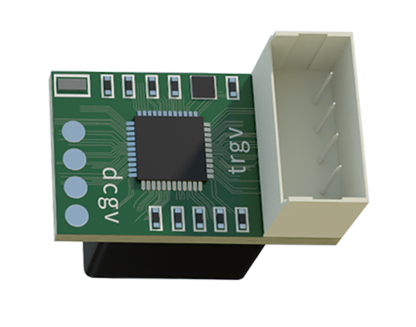
Laser sensors, due to their precision and longer range, are staples in industrial environments. They are used for precise positioning in automated assembly lines, measuring object dimensions, monitoring fill levels in tanks or silos, and in construction for elevation and distance measurement. LiDAR (Light Detection and Ranging), a advanced laser-based technology, is crucial for autonomous vehicles, creating high-resolution 3D maps of the surroundings. Laser sensors generally perform better in varying lighting conditions and with diverse surface materials, though highly reflective or absorbent surfaces can still pose challenges.
Key specifications to consider when selecting a sensor include measuring range, accuracy, resolution, response time, and the required beam spot size. Environmental factors like dust, fog, ambient light interference, and temperature must also be evaluated. For instance, some industrial laser sensors are housed in rugged enclosures with IP ratings for dust and water resistance.
The integration of these sensors with modern systems is seamless through various output interfaces like analog voltage/current, digital protocols (RS-232, RS-485), or industrial fieldbuses (IO-Link, PROFINET). This allows for real-time data acquisition and control within larger automation frameworks.
In conclusion, both laser and infrared distance sensors are indispensable tools in the modern technological landscape. Infrared sensors offer a reliable, economical solution for many proximity and short-range sensing tasks. Laser sensors provide the high precision and long-range capability needed for demanding industrial, scientific, and advanced robotic applications. Understanding their operating principles and limitations is essential for selecting the right tool to ensure efficiency, safety, and accuracy in any system requiring distance measurement. As technology progresses, we can expect these sensors to become even smaller, more accurate, and more integrated into the fabric of smart systems and the Internet of Things (IoT).