Proximity sensors are fundamental components in industrial automation, particularly within Programmable Logic Controller (PLC) systems. These sensors detect the presence or absence of an object without physical contact, relying on electromagnetic fields, light, or sound. In PLC applications, they serve as critical input devices, triggering actions based on object detection to control machinery, monitor processes, and ensure safety.
The operation of a proximity sensor begins with its sensing element, which generates a field or beam. Inductive proximity sensors, commonly used for metal objects, produce an electromagnetic field. When a metal object enters this field, it induces eddy currents, causing a change in the oscillation amplitude. This change is detected by the sensor's circuit, which then sends a signal to the PLC. Capacitive sensors work similarly but can detect both metallic and non-metallic materials by measuring changes in capacitance when an object disturbs the electrostatic field. Ultrasonic sensors emit sound waves and calculate distance based on the time taken for echoes to return, while photoelectric sensors use light beams to detect objects.
In a PLC system, the sensor's output is typically a digital signal—either ON or OFF—transmitted to the PLC's input module. The PLC processes this signal according to its programmed logic, executing commands such as starting a motor, activating a relay, or halting a conveyor belt. For instance, in an assembly line, an inductive proximity sensor might detect a metal part, signaling the PLC to initiate a robotic arm for pickup. The PLC's response is rapid and precise, enabling real-time control essential for efficient automation.
Key factors influence sensor performance in PLC setups. Sensing range, defined as the maximum distance at which an object can be reliably detected, varies by sensor type—inductive sensors typically have shorter ranges (up to 60 mm), while ultrasonic sensors can reach several meters. Environmental conditions like temperature, humidity, and electrical noise must be considered to prevent false triggers. Additionally, output configuration matters: two-wire sensors simplify wiring but may have leakage current, while three-wire sensors offer separate power and signal lines for clearer PLC communication.
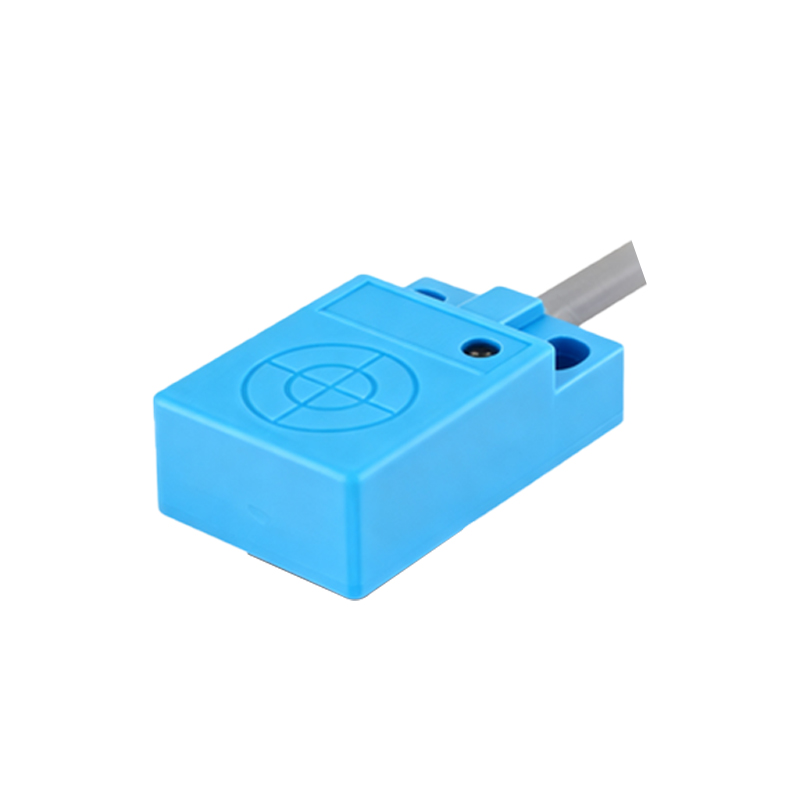
Installation and calibration are crucial for optimal function. Sensors should be mounted securely, aligned properly with target objects, and shielded from interference. Regular maintenance, including cleaning and testing, ensures longevity. In PLC programming, ladder logic or structured text is used to integrate sensor inputs, often incorporating debounce timers to filter out transient signals and enhance reliability.
Advancements in proximity sensor technology continue to enhance PLC systems. Smart sensors with IO-Link communication provide diagnostic data, such as wear indicators or temperature readings, directly to the PLC, facilitating predictive maintenance. Furthermore, miniaturized sensors enable integration into compact machinery, expanding automation possibilities.
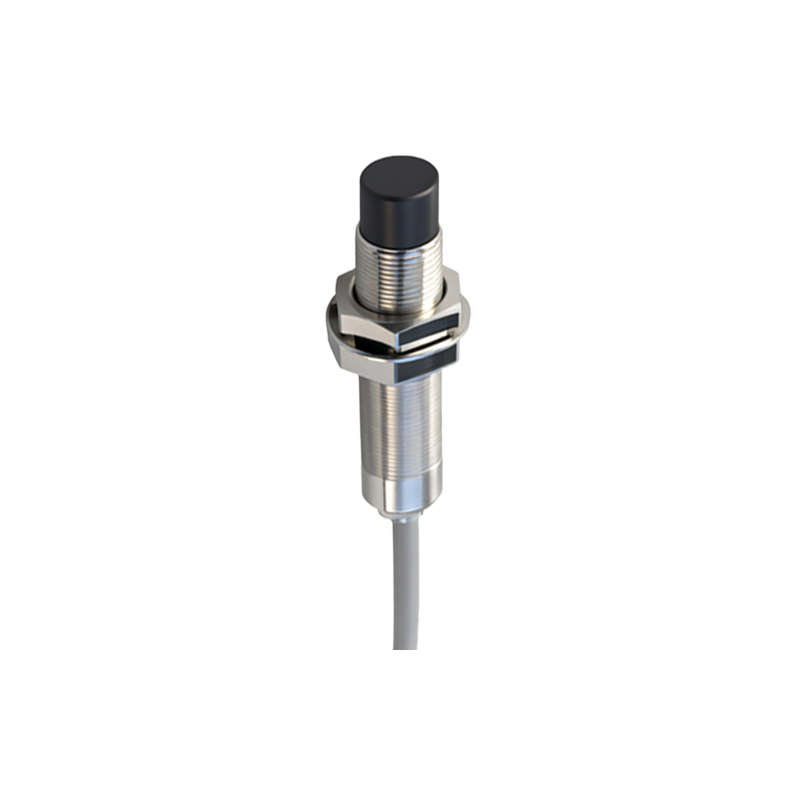
In summary, proximity sensors in PLC systems operate by non-contact detection, converting physical presence into electrical signals for PLC processing. Their versatility and reliability make them indispensable in modern industrial automation, driving efficiency and safety across manufacturing, packaging, and material handling applications.