In the realm of high-precision industrial measurement, German laser displacement sensors stand as a benchmark for quality, reliability, and technological sophistication. Renowned for their engineering excellence, these sensors are integral components in manufacturing, automation, and quality control processes worldwide. The foundation of this reputation lies in a deep-seated tradition of precision engineering, rigorous research and development, and an unwavering commitment to meeting the stringent demands of modern industry.
The core technology behind these sensors is laser triangulation. A laser diode projects a focused beam of light onto the target surface. The reflected light is captured by a high-resolution CMOS or CCD array at a specific angle. Any change in the distance to the target causes a shift in the position of the laser spot on the receiver. Sophisticated onboard processors then calculate the exact displacement with exceptional speed and accuracy. German manufacturers have perfected this principle, developing sensors that deliver sub-micron resolution, high linearity, and remarkable stability even in challenging environments.
Key characteristics define the superiority of German-made laser displacement sensors. First is their exceptional precision and resolution. Capable of detecting minute changes often down to 0.01 micrometers, they are indispensable for applications requiring the highest level of detail, such as semiconductor wafer inspection, precision machining, and surface profiling. Second is their robustness and durability. Designed for continuous operation in industrial settings, they often feature rugged, IP67-rated housings that protect against dust, moisture, oil, and mechanical shock. This ensures long-term reliability on factory floors.
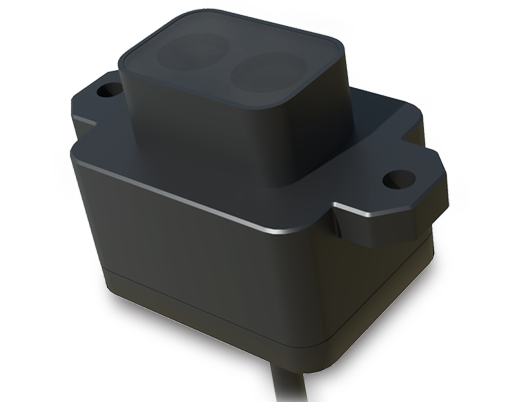
Third is their versatility. Available in a wide range of models, they cater to diverse needs. Options include compact sensors for confined spaces, long-range models for measuring over several meters, high-speed versions for dynamic processes on fast-moving production lines, and specialized sensors for measuring transparent objects, hot surfaces, or materials with difficult surface properties. Fourth is the advanced software and integration capability. German sensor companies provide powerful, user-friendly software for configuration, data analysis, and visualization, alongside seamless integration with PLCs (Programmable Logic Controllers) and industrial networks like PROFINET, EtherCAT, or IO-Link.

The applications for these precision instruments are vast and critical across numerous sectors. In the automotive industry, they are used for 100% inline inspection of component dimensions, gap and flush measurement on car bodies, and brake disc thickness monitoring. In electronics manufacturing, they verify the coplanarity of BGA (Ball Grid Array) components, measure solder paste height, and inspect micro-components. In metal processing, they control roll gaps in steel mills, measure sheet thickness, and guide robotic welding arms. Furthermore, they play a vital role in pharmaceutical packaging, wood processing, and even in research and development laboratories.
Choosing a German laser displacement sensor involves considering several technical parameters. The measuring range defines the minimum and maximum distances over which the sensor operates accurately. The resolution indicates the smallest detectable change in distance. The linearity error specifies the maximum deviation from the ideal straight-line response across the measuring range, a critical factor for high-accuracy tasks. Sampling rate, or frequency, determines how many measurements per second the sensor can perform, which is essential for high-speed production. Finally, the laser class (typically Class 2) and the type of output signal (analog voltage/current, digital, or serial) must align with the application's safety and integration requirements.
Leading German companies in this field have built their legacy on continuous innovation. They invest heavily in R&D to push the boundaries of what is possible, developing sensors with faster processors, smarter algorithms for handling difficult surfaces, and enhanced connectivity for Industry 4.0 environments. The focus is not merely on selling a sensor but on providing a complete measurement solution that enhances process efficiency, guarantees product quality, and reduces waste.
In conclusion, German laser displacement sensors represent the pinnacle of non-contact measurement technology. Their unmatched precision, robust construction, and application flexibility make them a cornerstone of modern industrial automation and quality assurance. For engineers and production managers seeking to optimize processes, ensure flawless quality, and implement cutting-edge measurement solutions, specifying a sensor from Germany's leading manufacturers is a decision rooted in a proven track record of performance and technological leadership. They are more than just sensors; they are enablers of precision in an increasingly demanding industrial world.