In the realm of industrial automation and electronic control systems, proximity switch sensors stand as fundamental components. These non-contact sensors detect the presence or absence of an object within a specific range without any physical contact. Their operation hinges on the disturbance of an electromagnetic field, acoustic wave, or beam of light, which is then converted into an electrical signal. This capability makes them indispensable in environments demanding reliability, speed, and durability, where mechanical switches would fail due to wear or contamination.
The core principle behind most electronic proximity sensors involves generating an oscillating electromagnetic field from a coil located at the sensing face. When a metallic target enters this field, eddy currents are induced on the target's surface. These currents absorb energy from the oscillator, causing its amplitude to decrease. This change is detected by a threshold circuit, which subsequently switches the output state of the sensor. For non-metallic targets, capacitive or optical principles are employed. Capacitive sensors detect changes in capacitance caused by any material, while optical sensors use a light emitter and receiver to detect the interruption or reflection of a light beam.
Several key types dominate the market, each suited for specific applications. Inductive proximity sensors are the most common, exclusively for detecting ferrous and non-ferrous metals. They are renowned for their robustness, high switching frequency, and resistance to harsh industrial environments like dust, oil, and coolants. Capacitive proximity sensors, on the other hand, can detect a wider variety of materials including liquids, plastics, wood, and granular substances by sensing changes in the dielectric constant. They are ideal for level detection in tanks or presence detection of non-metallic objects. Ultrasonic proximity sensors use sound waves beyond human hearing. They measure the time taken for an emitted sound wave to bounce back from a target, making them excellent for distance measurement and detecting objects regardless of color, transparency, or material composition. Finally, photoelectric sensors, which include through-beam, retro-reflective, and diffuse reflective types, offer the longest sensing ranges and are perfect for detecting small objects or precise positioning.
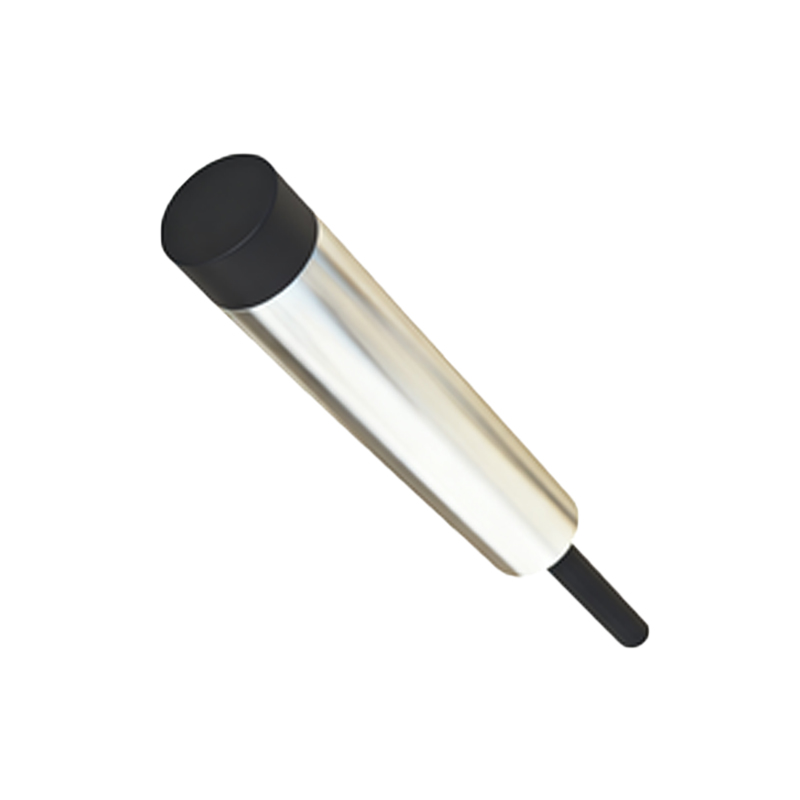
The electronics within a modern proximity sensor are a marvel of miniaturization and reliability. Typically, they consist of an oscillator circuit to generate the high-frequency field, a demodulator to convert the RF signal, a trigger circuit to set the switching point, and an output amplifier. The output stage is crucial and comes in several configurations: NPN (sinking) and PNP (sourcing) are standard transistor outputs for DC sensors, while analog outputs (4-20 mA or 0-10V) provide continuous distance information. Some advanced models feature IO-Link digital communication, enabling detailed parameter setting, diagnostics, and process data exchange, paving the way for Industry 4.0 predictive maintenance.
Applications for proximity switch sensor electronics are vast and varied. In manufacturing, they are used for part counting, machine tool positioning, limit switching on robots, and detecting the end of a roll in packaging machinery. In the automotive industry, they ensure precise positioning in assembly robots and detect valve positions. They provide safety interlocks on guarded machinery, preventing operation when a door is open. In consumer electronics, they deactivate touchscreens when a phone is held to the ear. Their non-contact nature eliminates mechanical wear, ensures millions of cycles of operation, and allows for high-speed detection that mechanical limit switches cannot match.
Selecting the right proximity sensor requires careful consideration of several factors. The material of the target object is primary; metal detection calls for inductive sensors, while other materials may require capacitive or optical types. The required sensing distance, or "switching distance," must be specified, noting that factors like target size, shape, and material can affect this value. Environmental conditions are critical; sensors may need specific ingress protection (IP) ratings for dust and water, resistance to chemicals, or extended temperature ranges. The electrical characteristics, including supply voltage (e.g., 10-30V DC) and output type (PNP/NPN, NO/NC), must match the control system's input module.
In conclusion, proximity switch sensor electronics form a critical link between the physical and control worlds in automated systems. Their ability to provide reliable, non-contact detection translates into increased machine efficiency, reduced downtime, and enhanced safety. As technology advances, these sensors are becoming smarter, smaller, and more integrated with digital industrial networks, solidifying their role as essential components in the evolving landscape of automation and smart manufacturing.