In the realm of industrial automation and precision measurement, digital laser sensors have emerged as a cornerstone technology. Unlike their analog predecessors, these sophisticated devices convert detected physical parameters into discrete digital signals, offering unparalleled accuracy, stability, and integration capabilities. Their core principle involves emitting a focused laser beam towards a target. The reflected light is then captured by a high-resolution receiver. Advanced onboard processors analyze this signal, calculating parameters such as distance, displacement, height, or presence with micron-level precision, and outputting the results as clean digital data.
The advantages of digital laser sensors are manifold. First and foremost is their exceptional precision and repeatability. They are largely immune to the electrical noise and signal drift that can plague analog systems, ensuring consistent performance even in challenging industrial environments. This inherent stability minimizes calibration cycles and reduces maintenance demands. Secondly, their digital nature facilitates seamless integration with modern control systems. Communication via standard protocols like IO-Link, Ethernet/IP, or PROFINET allows for real-time data transmission, remote configuration, and sophisticated diagnostics. This connectivity is a key enabler for Industry 4.0 and smart factory initiatives, where sensor data feeds into larger analytics and decision-making systems.
Furthermore, modern digital laser sensors boast impressive versatility. They are available in diverse models tailored for specific applications: diffuse-reflective sensors for general presence detection, through-beam sensors for long-range or highly reliable detection, and precise triangulation sensors for exact distance measurement. Features like advanced background suppression, the ability to detect challenging surfaces (e.g., transparent glass or shiny metals), and robust housings with high IP ratings for dust and water resistance make them suitable for sectors ranging from electronics assembly and automotive manufacturing to food processing and logistics.
The application spectrum is vast. On production lines, they perform critical tasks such as precise part positioning, dimensional inspection, gap and thickness control, and bottle fill-level monitoring. In robotics, they provide essential feedback for guidance and pick-and-place operations. They are indispensable in quality control labs for verifying tolerances and in automated warehouses for object detection and sorting. The digital output allows for easy setup of complex logic—for instance, triggering an actuator only when measurements fall within a predefined window—directly within programmable logic controllers (PLCs) or via the sensor's own intelligent functions.
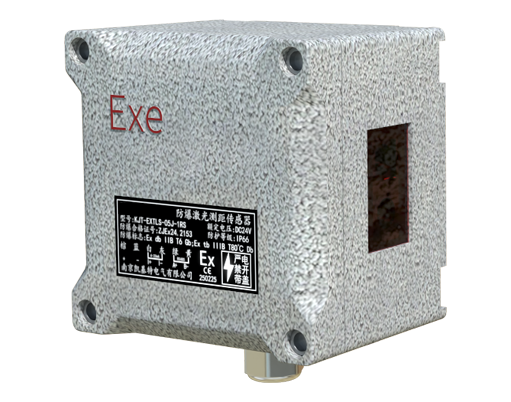
Looking ahead, the evolution of digital laser sensors is tightly coupled with trends in miniaturization, increased processing power, and enhanced connectivity. Future iterations will likely offer even higher speeds, smarter edge-computing features for preliminary data analysis, and tighter cybersecurity for networked systems. As the demand for greater automation, traceability, and quality assurance grows across industries, the role of the digital laser sensor as a critical, reliable, and intelligent data acquisition point will only become more pronounced, solidifying its status as an indispensable tool in the technological landscape.