In the demanding world of material handling and heavy-duty logistics, hook arm trucks, also known as roll-off trucks, are indispensable. Their ability to efficiently transport and deploy large containers relies on a robust and precisely controlled hydraulic system. A critical, yet often underappreciated, component within this system is the proximity switch sensor installed on the support frame. This article delves into the technical specifics, selection criteria, and maintenance best practices for these sensors from an electrical engineering perspective.
The primary function of the proximity switch sensor on a hook arm support frame is to provide non-contact positional feedback. Typically, these sensors are mounted at strategic points—often at the fully retracted and fully extended positions of the support legs or the locking mechanisms. Their role is to detect the presence (or absence) of the metallic target, which is usually part of the moving leg assembly or the container lock pin. This detection generates a discrete electrical signal (e.g., 24V DC ON/OFF) that is fed back to the truck's programmable logic controller (PLC) or a dedicated hydraulic control unit.
This signal is fundamental for operational safety and automation. It prevents the operator from attempting to lift a container if the support legs are not correctly deployed and locked, thereby eliminating the risk of a catastrophic tip-over. Conversely, it ensures the legs are fully retracted before the vehicle is permitted to move, preventing damage to the legs or road hazards. In more advanced systems, this feedback can sequence operations, such as automatically initiating the hook engagement process only after the support frame is confirmed to be in the correct "travel" position.
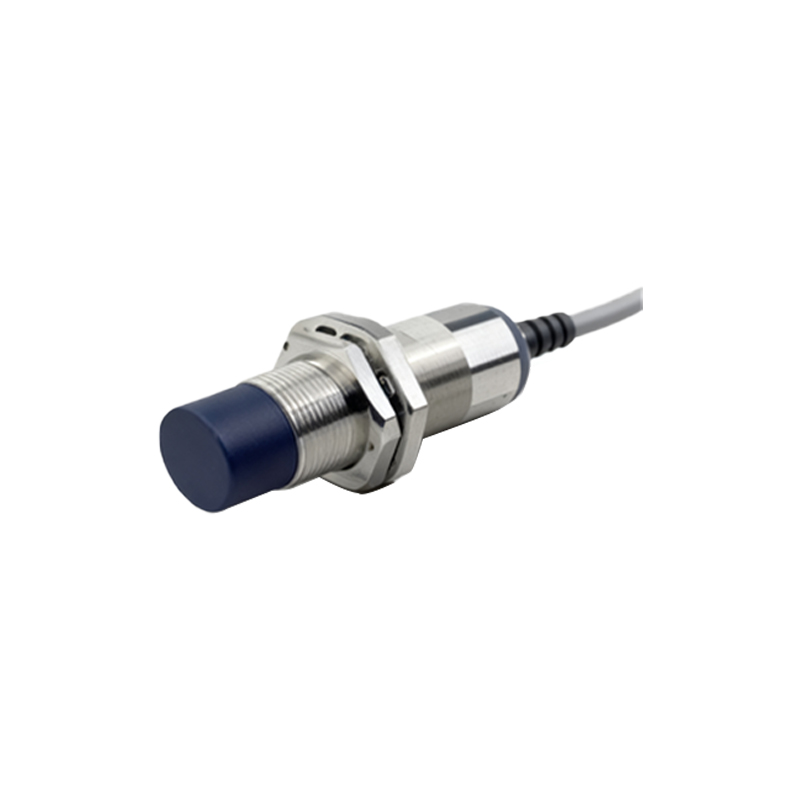
From an engineering standpoint, selecting the right proximity sensor for this application is paramount. Inductive proximity sensors are the unequivocal standard due to their ability to detect ferrous metals (steel) reliably in harsh environments. Key selection parameters include:
1. Sensing Distance: A factor of safety (typically 1.5x to 2x) should be applied to the nominal sensing distance to account for mechanical tolerances, vibration, and potential misalignment. Common ranges are 5mm to 15mm.
2. Housing and Protection Rating: The sensor must withstand extreme conditions: shock, vibration, water, dust, and corrosive agents like road salt. Stainless steel housings (e.g., V2A or V4A grades) with an ingress protection rating of at least IP67 (submersible up to 1m) are mandatory. IP69K ratings are advantageous for high-pressure wash-downs.

3. Electrical Output: PNP (sourcing) or NPN (sinking) DC outputs are standard. The choice must match the input card specifications of the control system. A short-circuit and overload protection feature is highly recommended.
4. Connection Technology: M12 connectors are the industry norm for their robustness, sealing, and quick-disconnect capability. Pre-wired cables with gland fittings are an alternative but require careful strain relief.
5. Temperature Range: Operational range must cover at least -25°C to +70°C to account for seasonal and operational heat variations.
Installation and alignment are critical for reliable operation. The sensor should be mounted rigidly to minimize vibration-induced movement relative to its target. The sensing face must be parallel to the target surface, and the target should approach the sensor axially for optimal performance. The target material's size and quality also matter; it should be at least equivalent to the sensor's sensing face area and be made of mild steel for consistent switching points.
Common failure modes include physical damage from impact, cable breakage due to inadequate strain relief or continuous flexing, and internal failure from moisture ingress despite the IP rating. Electrical noise from the vehicle's hydraulic solenoids or alternator can also cause erratic signals; therefore, using shielded cables and proper grounding practices is essential. A periodic maintenance check should involve verifying the sensor's output with a multimeter or PLC diagnostic software while manually cycling the support frame, cleaning the sensor face of any metallic debris, and inspecting the housing and cable for integrity.
In conclusion, the proximity switch sensor on a hook arm truck support frame is a vital safety interlock and automation enabler. Its selection is not a generic task but a precise engineering decision based on environmental, mechanical, and electrical requirements. Specifying high-quality, appropriately rated inductive sensors and ensuring correct installation and maintenance will directly contribute to the vehicle's uptime, operational safety, and long-term reliability, preventing costly downtime and hazardous situations on the worksite.