In the global landscape of industrial automation and precision measurement, Japanese laser sensor technology stands as a benchmark for excellence. Renowned for their meticulous engineering, relentless innovation, and uncompromising quality, Japanese manufacturers have consistently pushed the boundaries of what is possible with photoelectric sensing. This article delves into the core principles, key technological advancements, and diverse industrial applications that define Japan's leadership in this critical field.
At its heart, a laser sensor is a device that uses a focused beam of light to detect, measure, or profile an object. Japanese engineers have mastered the art of leveraging various methodologies, including time-of-flight (ToF), triangulation, and confocal measurement, to achieve unparalleled accuracy. The fundamental components—a laser diode, optics for beam shaping, a high-sensitivity photodetector, and sophisticated signal processing circuitry—are engineered to operate in harmony under the most demanding conditions. Japanese manufacturers excel in minimizing environmental interference from ambient light, dust, and vibration, ensuring reliable data acquisition.
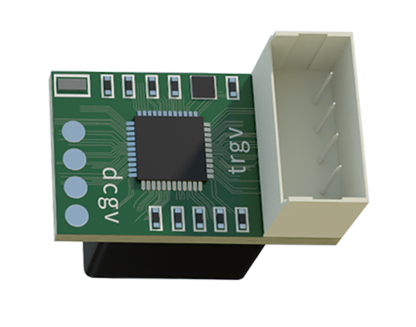
The innovation drive in Japan's sensor sector is relentless. A significant breakthrough has been the development of ultra-compact, high-speed laser displacement sensors. Companies like Keyence, Omron, and Panasonic have introduced models capable of sub-micron resolution at sampling rates exceeding 100 kHz. This allows for real-time inspection on high-speed production lines, such as measuring the thickness of semiconductor wafers or the minute warp of lithium-ion battery electrodes. Another area of prowess is the advancement of 2D and 3D laser profile sensors. These devices project a laser line onto a target, capturing its cross-sectional shape with extreme precision. This technology is indispensable in robotics for bin-picking, weld seam tracking, and detailed inspection of complex component geometries in automotive and electronics assembly.
Furthermore, Japanese firms are at the forefront of integrating smart features. Modern laser sensors now come equipped with embedded AI and IoT connectivity. They can perform self-diagnostics, automatically adjust parameters based on the target material or color, and communicate data directly to cloud-based monitoring systems for predictive maintenance and process optimization. This shift from a simple sensing device to an intelligent data node is a hallmark of Japan's Industry 4.0 approach.
The applications of Japanese laser sensors span virtually every modern industry. In automotive manufacturing, they ensure the precise gap and flushness between body panels and perform 100% inspection of critical engine components. In the electronics sector, they are used to measure solder paste height on PCBs, inspect micro-LED displays, and align components for assembly robots. The food and pharmaceutical industries utilize them for non-contact level detection, packaging integrity checks, and pill counting. Even in infrastructure and agriculture, these sensors monitor structural deformations in bridges and optimize harvesting by gauging fruit size.

The success of Japanese laser sensor technology is not accidental. It is built upon a foundation of deep collaboration between component suppliers, sensor manufacturers, and end-users. This ecosystem fosters continuous feedback and rapid iteration. Moreover, a cultural emphasis on *monozukuri* (the art of making things) translates into an obsessive focus on durability, user-friendly design, and long-term reliability. Sensors are built to withstand harsh factory environments—resistant to oils, coolants, and significant temperature fluctuations.
Looking ahead, the trajectory points toward even greater miniaturization, higher speeds, and enhanced multi-sensor fusion. Research is ongoing into new laser wavelengths and advanced algorithms for handling transparent, glossy, or low-contrast objects that traditionally challenge optical sensors. As collaborative robots (cobots), autonomous guided vehicles (AGVs), and flexible manufacturing cells become more prevalent, the demand for intelligent, versatile, and robust Japanese laser sensors will only intensify.
In conclusion, Japanese laser sensor devices represent the pinnacle of optoelectronic engineering. Their combination of extreme precision, robust construction, and intelligent functionality makes them indispensable tools for modern manufacturing and beyond. By consistently solving complex measurement challenges, they not only enhance productivity and quality but also enable the next wave of technological innovation across the globe. For engineers and system integrators seeking reliable, high-performance sensing solutions, Japanese technology remains a premier and trusted choice.