Laser displacement sensors are pivotal in modern industrial automation, offering non-contact, high-precision measurement capabilities. Among these, the Laser Displacement Sensor 405 stands out as a robust and versatile solution for demanding applications. This article delves into the technical specifications, operational principles, key advantages, and diverse use cases of the Sensor 405, providing a detailed guide for engineers and procurement specialists.
The core operating principle of the Laser Displacement Sensor 405 is based on the triangulation method. It emits a focused laser beam onto the target surface. The reflected light is then captured by a high-resolution CMOS or CCD linear image sensor at a specific angle. By precisely calculating the position of the light spot on the receiver, the sensor determines the distance to the target with exceptional accuracy. This method allows for measurements that are largely unaffected by the target's surface color, material, or ambient light conditions, ensuring reliable and stable readings.

Key specifications typically associated with a model like the 405 include a measuring range (e.g., ±50mm to ±300mm, depending on the specific variant), a high repeatability (often in the micron or sub-micron range), and a fast response time enabling high-speed inspection on production lines. It commonly features a compact, rugged housing rated for IP67 protection, making it suitable for harsh industrial environments with dust, oil, or coolant exposure. Communication interfaces such as analog outputs (0-10V, 4-20mA), digital I/O, and industrial Ethernet protocols (EtherCAT, PROFINET) are standard, facilitating seamless integration into PLC-based control systems.
The advantages of utilizing the Laser Displacement Sensor 405 are manifold. Its non-contact nature eliminates mechanical wear and prevents damage to delicate targets. It delivers high-speed, real-time data crucial for process control and quality assurance. Furthermore, its ability to measure a wide variety of materials—from shiny metals to dark, absorbent surfaces—with consistent performance underscores its versatility. Advanced models may incorporate features like multi-point measurement, profile scanning, and sophisticated software for data analysis and outlier detection.
In practical applications, the Sensor 405 finds extensive use across multiple sectors. In automotive manufacturing, it measures component thickness, checks gap and flush between body panels, and inspects brake disc runout. In electronics, it verifies the coplanarity of BGA chips and measures solder paste height. Within the metal processing industry, it monitors vibration, deformation, and thickness of plates and rolls. It is also instrumental in robotics for precise guidance and positioning tasks.

Selecting the right Laser Displacement Sensor 405 model requires careful consideration of several parameters. The primary factor is the required measuring range and stand-off distance relative to the target. The necessary resolution and repeatability for the task must be defined. The target's surface characteristics (color, reflectivity, texture) can influence performance, so consulting application notes or performing tests is advisable. Environmental factors like temperature extremes, potential for contamination, and required housing protection level (IP rating) are critical. Finally, the choice of output signal and compatibility with existing factory network infrastructure must be addressed.
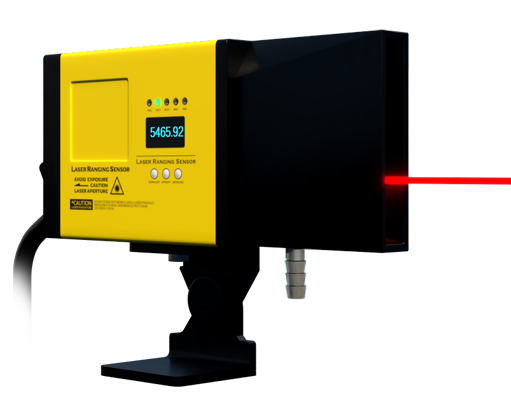
Proper installation and calibration are paramount for optimal performance. Ensuring a stable mounting, minimizing environmental vibration, and avoiding optical interference from other light sources are essential setup steps. Regular maintenance, primarily keeping the lens clean from dust and debris, ensures long-term accuracy and sensor longevity.
In conclusion, the Laser Displacement Sensor 405 represents a mature and highly capable technology for precision metrology. Its blend of accuracy, speed, robustness, and flexibility makes it an indispensable tool for enhancing quality control, optimizing processes, and enabling advanced automation. By understanding its capabilities and matching them to specific application needs, engineers can unlock significant value in measurement and inspection systems.