Capacitive proximity sensors are versatile electronic devices widely used in industrial automation and control systems. Unlike inductive sensors that detect only metallic objects, capacitive sensors can sense a variety of materials, including liquids, plastics, wood, and granular substances. This capability makes them indispensable in modern manufacturing, packaging, food processing, and material handling applications.
The fundamental working principle of capacitive proximity sensors relies on changes in capacitance. Each sensor contains an oscillator circuit that generates an electrostatic field. When an object enters this field, it alters the dielectric constant, causing a change in capacitance. This change is detected by the sensor's circuitry, which then triggers an output signal—typically a switch or analog output—to indicate the presence or absence of the target. One key advantage is their ability to sense through non-metallic barriers, such as glass or plastic containers, enabling non-contact detection of liquid levels or contents without direct exposure.
In industrial settings, capacitive sensors perform several critical functions. They are commonly employed for level detection in tanks and silos, ensuring precise monitoring of liquids, powders, or granules. For instance, in the food and beverage industry, these sensors help maintain optimal levels of ingredients in mixing vessels, preventing overflow or shortages. Another vital application is object detection on conveyor belts, where they identify products regardless of material composition, facilitating sorting and quality control processes. Additionally, capacitive sensors are used in assembly lines to verify the presence of components, such as plastic caps or rubber seals, enhancing production accuracy.
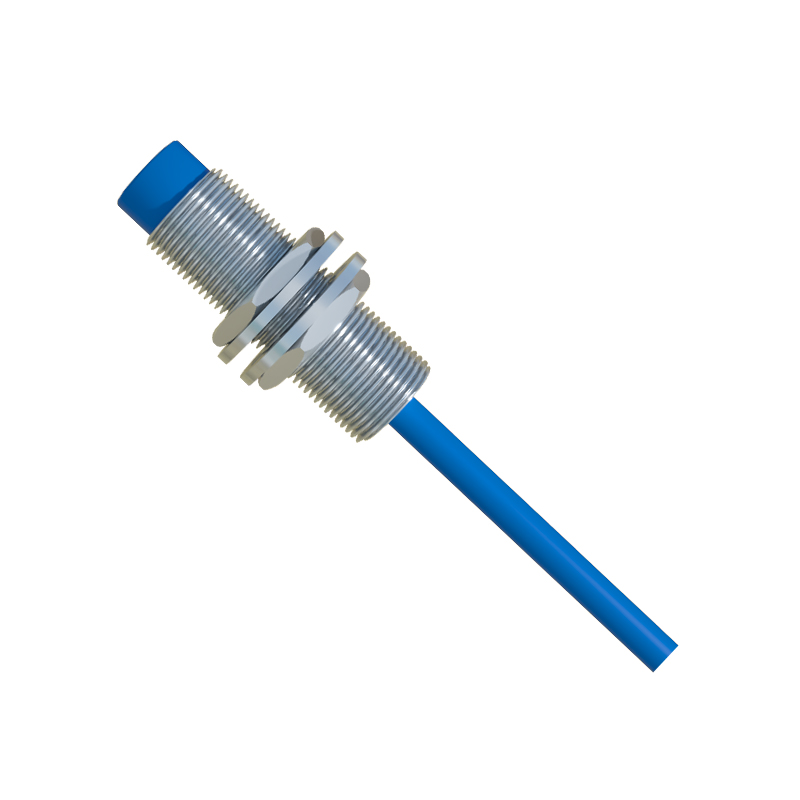
The design of capacitive proximity sensors often includes adjustable sensitivity settings, allowing operators to fine-tune detection ranges and ignore background interference. This feature is particularly useful in environments with varying material properties or environmental conditions, such as humidity or temperature fluctuations. Modern sensors also incorporate robust housings, typically made of PTFE or stainless steel, to withstand harsh industrial conditions like dust, moisture, and chemical exposure.
Despite their advantages, capacitive sensors require careful installation and calibration. Factors like sensor size, sensing distance, and the dielectric properties of target materials can influence performance. For example, materials with higher dielectric constants, such as water, are easier to detect than low-dielectric substances like dry wood. Engineers must consider these variables to optimize sensor placement and avoid false triggers from unintended objects.
Looking ahead, advancements in capacitive sensor technology continue to expand their applications. Innovations like miniaturized designs and IoT integration enable smarter monitoring systems with real-time data analytics. In summary, capacitive proximity sensors play a pivotal role in enhancing efficiency, safety, and automation across diverse industries, offering reliable and adaptable solutions for proximity detection challenges.