In the realm of industrial automation and machinery, the ability to detect the presence or absence of an object without physical contact is paramount. This is where proximity switch sensors, specifically the NNS series, come into play. These robust and reliable devices are fundamental components in countless applications, from manufacturing assembly lines to safety systems. Unlike mechanical limit switches, proximity sensors offer a non-contact detection method, leading to longer service life, higher operational speeds, and greater reliability.
The NNS series of proximity sensors typically operate on the inductive sensing principle. This means they are designed to detect metallic objects, primarily ferrous metals like steel and iron. At the heart of an inductive NNS sensor is a coil that is part of an oscillating circuit. When an electrical current passes through this coil, it generates an alternating electromagnetic field around the sensor's active face. In the absence of a target metal object, this oscillation continues at a constant amplitude. However, when a conductive metal object enters this electromagnetic field, eddy currents are induced on the surface of the object. These eddy currents draw energy from the sensor's oscillating circuit, causing a reduction in the oscillation amplitude. The sensor's internal circuitry monitors this change. Once the amplitude drop reaches a predetermined threshold, it triggers a switching action—either opening or closing an electrical circuit. This signal can then be used to control machinery, count items, or indicate position.
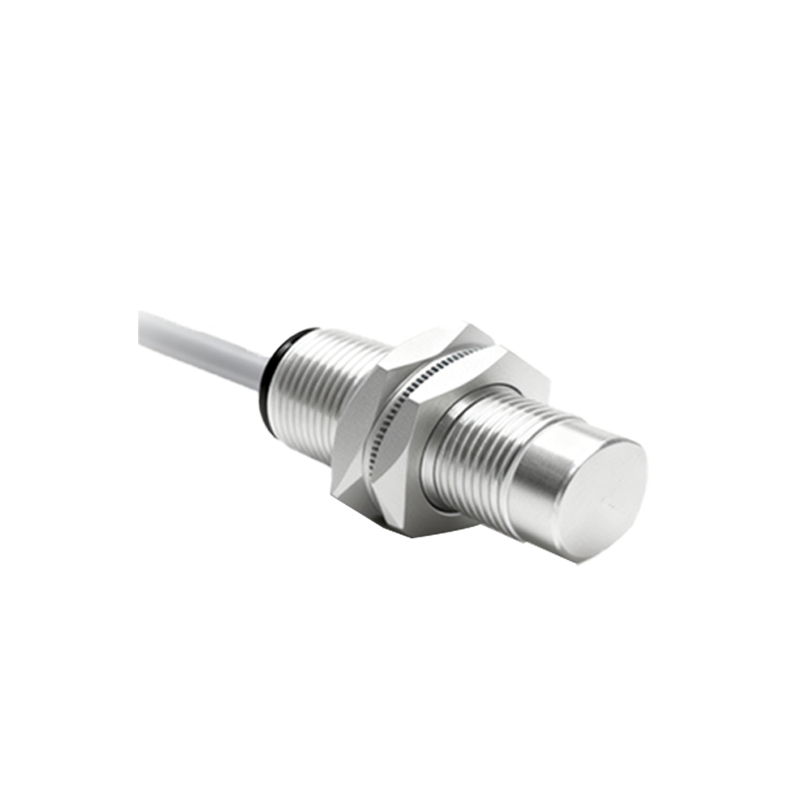
Key specifications define the performance of an NNS proximity sensor. The sensing distance, often referred to as the "nominal range" or Sn, is a critical parameter. It indicates the standard distance at which a standard target (usually a square of mild steel) can be reliably detected. It's crucial to note that the actual sensing range can be affected by the target material's type, size, and shape. For instance, aluminum or copper may reduce the effective sensing distance compared to steel. Another vital specification is the switching frequency, which denotes how many times per second the sensor can detect an object and switch its output. High-speed applications, such as counting small parts on a conveyor, require sensors with a high switching frequency. The NNS sensors are also characterized by their housing material, typically nickel-plated brass or stainless steel, offering resistance to oils, coolants, and physical impacts common in industrial environments. They are available in various form factors, including cylindrical threaded barrels (e.g., M8, M12, M18, M30) and rectangular shapes, to suit different mounting requirements.
The output configuration is another important aspect. NNS sensors commonly provide a digital switch output. The two main types are NPN (sinking) and PNP (sourcing) transistor outputs, which define how the sensor connects to the controller's input module (like a PLC). Additionally, many models feature a Normally Open (NO) or Normally Closed (NC) contact logic. Some advanced versions may offer analog current (4-20mA) or voltage (0-10V) outputs proportional to the distance to the target, useful for precision positioning tasks.
The applications for NNS proximity sensors are vast and varied. In automotive manufacturing, they are used to verify the presence of engine blocks on a pallet or to confirm that a robot has correctly placed a component. On packaging lines, they count bottles or boxes as they pass by. In metalworking, they serve as end-of-travel limit switches for CNC machine tools, ensuring the tool head does not crash. They are also integral to safety systems, acting as interlock sensors on machine guards; if a guard door is opened, the sensor detects the change and sends a signal to immediately halt the machine, protecting personnel. Furthermore, their sealed designs make them suitable for harsh environments, including those with dust, moisture, or washdown procedures in food and beverage processing.
When selecting and installing an NNS proximity sensor, several best practices ensure optimal performance. First, choose a sensor with a sensing range slightly greater than the maximum required operating distance to account for mechanical tolerances and wear. Ensure the target object is large enough and made of an appropriate material for reliable detection. During installation, maintain proper clearance between adjacent sensors to prevent mutual interference of their electromagnetic fields, a phenomenon known as "crosstalk." The sensor should also be mounted securely to minimize vibration, which can affect sensing stability. For cylindrical sensors, using the correct mounting nut and ensuring they are not over-tightened is essential to avoid damaging the housing. Always refer to the manufacturer's datasheet for wiring diagrams, voltage requirements (commonly 10-30V DC), and environmental limits regarding temperature and ingress protection (IP rating).
In conclusion, the NNS series of inductive proximity switch sensors represent a mature and essential technology in industrial automation. Their non-contact operation, durability, and versatility make them a go-to solution for object detection, positioning, and counting