In the realm of industrial automation and process control, the demand for reliable sensing technology in high-temperature environments has never been greater. Laser sensors, renowned for their precision and non-contact measurement capabilities, face significant engineering challenges when operating under extreme thermal conditions. This article delves into the core principles, material science, and innovative designs that enable laser sensors to withstand and perform accurately in temperatures exceeding 500°C and beyond.
The fundamental operation of a laser sensor involves emitting a focused beam of light towards a target and analyzing the reflected signal to determine distance, displacement, or presence. However, excessive heat directly impacts critical components. The laser diode itself, typically the heart of the emitter, is susceptible to wavelength drift and efficiency loss as temperature rises. Sophisticated cooling systems, such as integrated thermoelectric coolers (TECs) or advanced heat sink designs using materials like copper-tungsten alloys, are essential to maintain the diode at a stable operational temperature, even when the ambient environment is scorching.
Beyond the emitter, the optical assembly—including lenses, windows, and beam splitters—must be constructed from materials with exceptional thermal stability. Standard optical glasses can warp or lose transparency. Engineers increasingly turn to fused silica, sapphire, or specialized ceramics. These materials exhibit low coefficients of thermal expansion, ensuring the optical path remains consistent, and maintain their clarity and structural integrity under intense heat. Furthermore, the sensor housing must act as a robust shield. Stainless steel grades like 316 or Inconel alloys are commonly employed for their corrosion resistance and ability to retain strength at high temperatures, protecting the delicate internal electronics.
The electronic circuitry within the sensor presents another major hurdle. Standard semiconductors and solders can fail. Solutions involve using high-temperature-grade electronic components specifically rated for extended operation at elevated temperatures. Additionally, the design of printed circuit boards (PCBs) utilizes polyimide or ceramic substrates instead of conventional FR4, which can delaminate. Signal processing algorithms are also refined to compensate for any minor thermal-induced signal noise or baseline drift, ensuring the output data remains accurate and stable.

Applications for high-temperature laser sensors are vast and critical. In the metal processing industry, they are indispensable for monitoring molten metal levels in furnaces or measuring the thickness of red-hot steel plates on rolling mills. In aerospace and automotive engine testing, they precisely measure component displacement and vibration within test chambers simulating extreme operational heat. Within the energy sector, particularly in gas turbine plants and next-generation nuclear reactors, these sensors provide vital data for safety and efficiency in core high-heat zones.
Selecting the right high-temperature laser sensor requires careful analysis of several parameters. The maximum ambient temperature and potential for radiant heat from the target are primary concerns. The required measurement range, accuracy, and response speed must align with the process needs. Environmental factors like exposure to flames, abrasive dust, or chemical vapors will dictate the necessary ingress protection (IP) rating and housing material. Finally, the chosen sensor must offer a reliable interface—often a robust analog output or digitally insulated communication protocol like IO-Link—to integrate seamlessly into the broader control system without signal degradation.
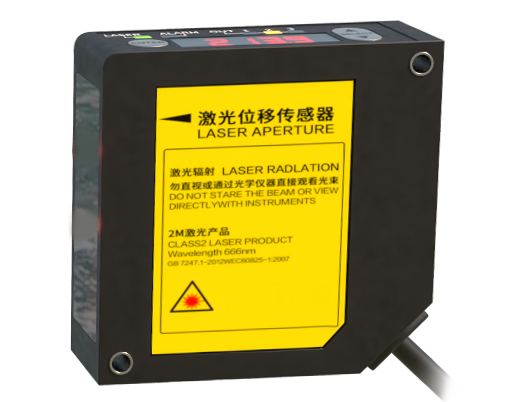
Future advancements are focused on pushing the temperature boundaries further. Research into wide-bandgap semiconductor materials like Gallium Nitride (GaN) for laser diodes promises higher efficiency and thermal resilience. The integration of fiber optic cables to remotely locate the sensitive electronics away from the heat source is a growing trend. Furthermore, the application of advanced active cooling techniques, perhaps leveraging micro-channel cooling or phase-change materials, will enable more compact sensor designs capable of surviving in the most punishing thermal environments imaginable.

In conclusion, the engineering of laser sensors for high-temperature duty is a multidisciplinary triumph. It merges optics, material science, thermal management, and electronics into a robust package. As industrial processes continue to evolve towards higher efficiencies and more extreme conditions, the ongoing innovation in high-temperature laser sensing technology will remain a cornerstone of safe, precise, and automated operation, providing the critical eyes where human observation is impossible.