In the realm of industrial automation and machine safety, the proximity sensor stands as a fundamental component. Its primary function—detecting the presence or absence of an object without physical contact—relies heavily on one critical parameter: sensitivity. Sensitivity, in this context, defines the sensor's ability to detect a target at a specified distance and under varying conditions. A deep understanding of this characteristic is paramount for engineers and technicians to ensure system reliability, efficiency, and safety.
Sensitivity is intrinsically linked to the sensor's operating principle. Inductive proximity sensors, for instance, generate an electromagnetic field. When a metallic target enters this field, it induces eddy currents, causing a change in the oscillation amplitude within the sensor's coil. The sensitivity determines how small a change can be reliably detected and at what distance. For capacitive sensors, which detect both metallic and non-metallic materials by sensing changes in capacitance, sensitivity adjustments are often crucial to ignore background interference or to tune for specific material dielectric constants. Similarly, photoelectric sensors rely on the sensitivity of their receiver to discern the reflected or interrupted light beam from ambient light noise.
The rated operating distance (Sn), typically specified for a standard target, is the baseline. However, true sensitivity is about performance under real-world conditions. Several factors directly influence effective sensitivity. The target material is primary; an inductive sensor's sensing range reduces significantly for non-ferrous metals like aluminum or copper compared to mild steel. Target size and shape also matter—a small or thin target may not sufficiently disturb the electromagnetic or capacitive field, requiring higher sensitivity settings or a closer mounting distance. Environmental conditions pose another challenge. Temperature fluctuations can affect electronic components and oscillation frequencies, while the presence of dust, oil, or coolant can coat the sensor face, attenuating signals in photoelectric or capacitive models. Electrical noise from motors, drives, or welding equipment can also induce false triggering if the sensor's sensitivity is set too high or its noise immunity is poor.
Therefore, sensitivity is not a "set and forget" parameter. Many modern proximity sensors feature potentiometers or teach-in functions for sensitivity adjustment. This allows fine-tuning for specific applications. For example, in a bottling plant, a capacitive sensor's sensitivity might be adjusted to detect plastic bottles filled with liquid while ignoring empty ones, based on the difference in dielectric constant. The key is to find the optimal point: high enough to detect all valid targets consistently, but low enough to reject false triggers from environmental factors or non-target objects. Overly high sensitivity can lead to instability and reduced operational life due to constant switching from minor disturbances.
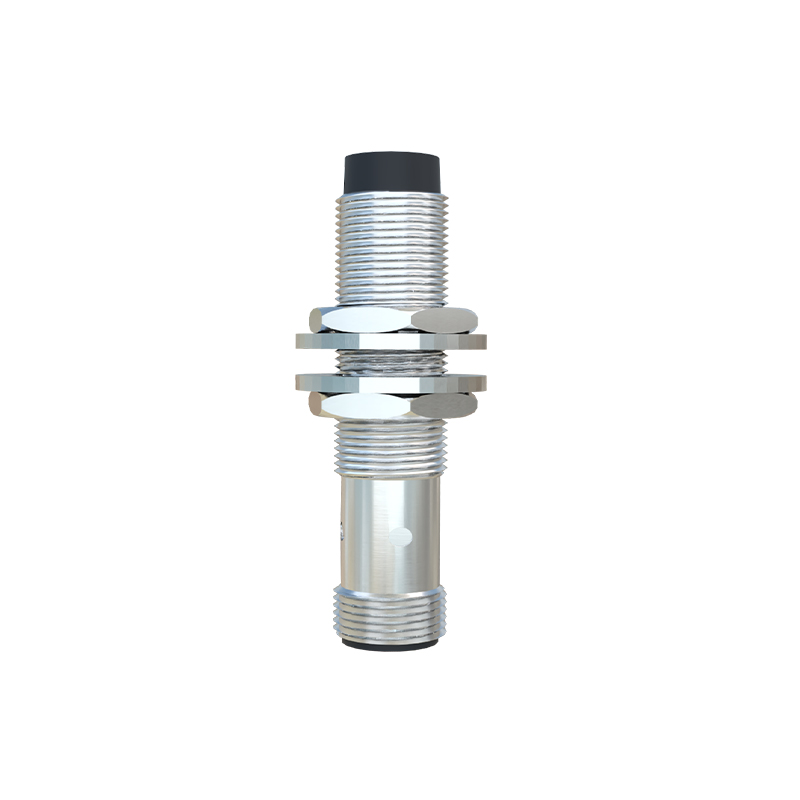
Calibration and maintenance are vital for preserving sensitivity over time. Regular checks against a standard target at the known operating distance can detect drift. Cleaning the sensor face from contaminants is essential, especially for optical and capacitive types. Furthermore, proper installation is critical. Ensuring the correct mounting, with adequate clearance from metal surrounds (for inductive sensors) and alignment (for photoelectric sensors), as specified in the datasheet, prevents shielding effects and ensures the published sensitivity can be achieved.
In high-precision applications like robotic positioning or semiconductor manufacturing, even micron-level variations matter. Here, specialized high-sensitivity sensors or analog output variants are employed. These sensors provide a continuous signal proportional to the distance to the target, allowing the control system to make precise calculations far beyond a simple on/off switch. Understanding the sensitivity curve and linearity of such sensors becomes a sophisticated task.
Ultimately, mastering proximity sensor sensitivity is about balancing detection reliability with operational robustness. It requires a systematic approach: selecting the correct sensor type for the target and environment, installing it per guidelines, and carefully adjusting its sensitivity during commissioning while simulating worst-case scenarios. By prioritizing this parameter, engineers can build automated systems that are not only intelligent but also resilient, minimizing downtime and maximizing productivity. The sensitivity setting is where theoretical specification meets practical, often messy, industrial reality, and getting it right is a hallmark of proficient system design.