In the realm of industrial automation and control systems, proximity sensors play a pivotal role in detecting the presence or absence of objects without physical contact. Among the various configurations available, the 2-wire proximity sensor stands out for its simplicity, reliability, and cost-effectiveness. This article delves into the fundamental principles, operational characteristics, advantages, limitations, and typical applications of 2-wire inductive proximity sensors, providing a thorough understanding for engineers and technicians.
A 2-wire proximity sensor, as the name implies, requires only two wires for its connection to a power supply and load (often a programmable logic controller input or relay). This contrasts with 3-wire and 4-wire sensors, which have separate wires for power supply, ground, and output signal. The two wires in this sensor carry both the operating power and the switching signal. In its normal state (no target detected), a small leakage or quiescent current flows through the sensor. When a metallic target enters its sensing range, the sensor switches, allowing a significantly higher current to flow, which is interpreted as the "ON" signal by the connected control device.
The core technology behind most industrial 2-wire proximity sensors is the inductive principle. The sensor contains an oscillator circuit that generates a high-frequency electromagnetic field at its active face. When a conductive metal target enters this field, eddy currents are induced within the target. These eddy currents absorb energy from the oscillator, causing a reduction in its amplitude. This amplitude change is detected by a threshold circuit, which subsequently triggers a solid-state switch (like a MOSFET) within the sensor to change state. The entire process is contactless, ensuring long operational life and high reliability.
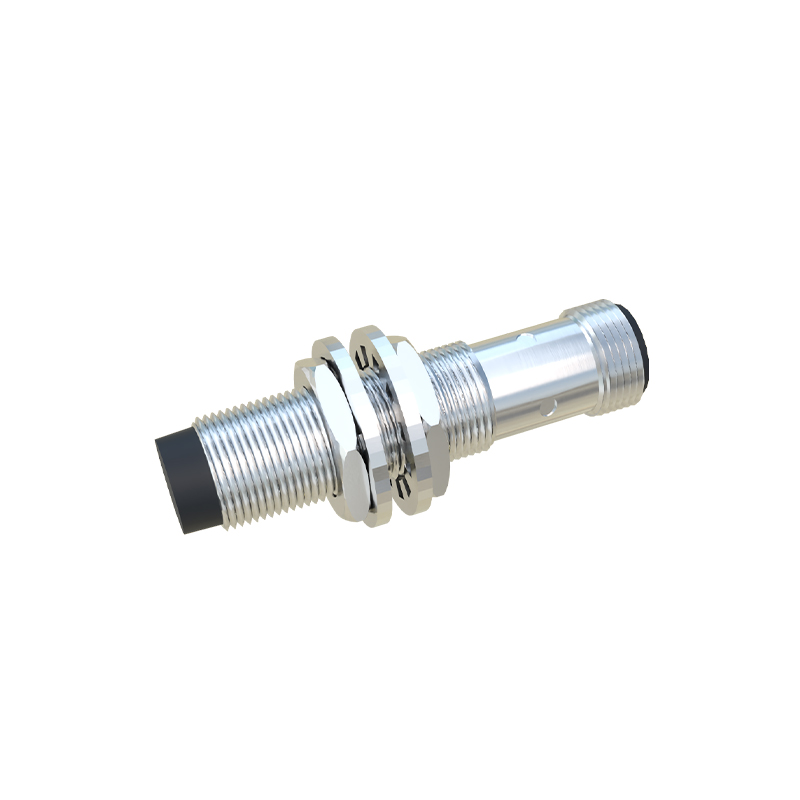
One of the primary advantages of the 2-wire design is its straightforward installation. It wires similarly to a mechanical limit switch, simplifying panel design and reducing wiring time and costs. There is no need to distinguish between a separate power wire and signal wire, minimizing connection errors. Furthermore, its inherent simplicity often translates to a robust construction suitable for harsh industrial environments featuring dust, moisture, and vibration. Many models offer excellent resistance to electrical noise and come in various housing materials like nickel-plated brass, stainless steel, or PBT plastic to withstand different chemical exposures.
However, engineers must also consider its limitations. The key consideration is the voltage drop and leakage current. Since the sensor is in series with the load, the voltage drop across the sensor in its "ON" state must be accounted for to ensure the load receives sufficient voltage to operate correctly. The leakage current (typically 1-2 mA) in the "OFF" state must be low enough not to inadvertently activate the connected input module. This requires careful compatibility checking between the sensor and the PLC or relay input specifications. Additionally, 2-wire sensors generally have a slightly lower switching frequency compared to their 3-wire counterparts and may have more restrictive requirements regarding minimum load current to ensure proper operation.
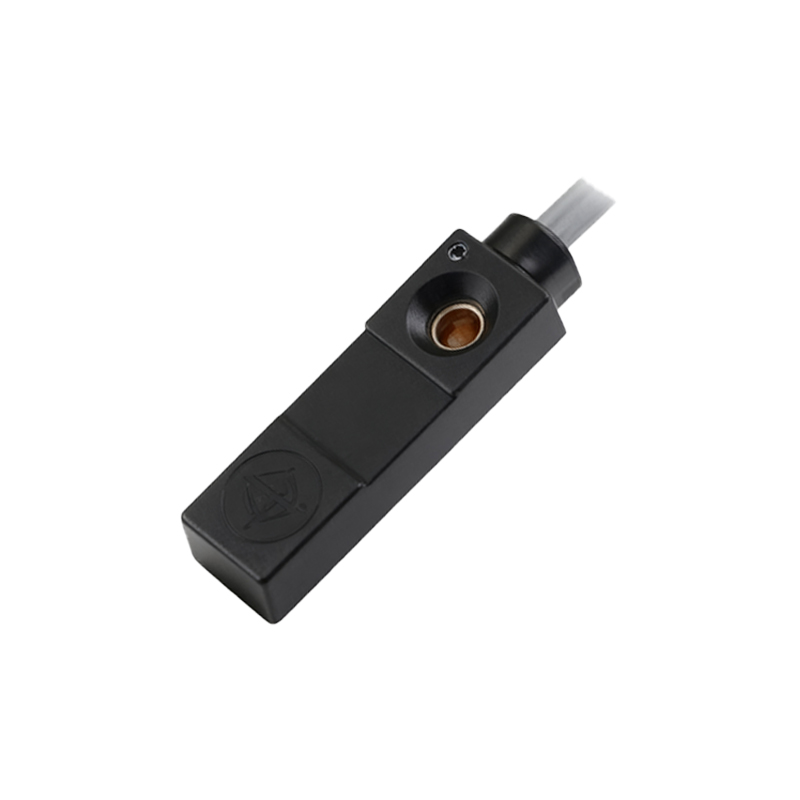
When selecting a 2-wire proximity sensor, critical parameters include sensing distance (rated and effective), supply voltage range (commonly 10-30V DC or 20-250V AC), output type (normally open or normally closed), housing style (cylindrical, rectangular, etc.), and environmental protection ratings (IP67, IP69K). The sensing distance is typically short-range, from a few millimeters up to about 30 mm for standard cylindrical models, and is non-adjustable. The target material also affects performance; mild steel provides the standard sensing distance, while stainless steel, aluminum, and copper may reduce it significantly, often requiring a correction factor.
Application areas for 2-wire proximity sensors are vast across manufacturing and process industries. They are extensively used for simple presence detection tasks: counting objects on a conveyor, verifying the position of a machine part like a cylinder rod, detecting the end of a roll of material, or confirming the closure of a safety guard. Their robust nature makes them ideal for machine tools, packaging machinery, automotive assembly lines, and material handling systems.
In conclusion, the 2-wire proximity sensor is a fundamental and highly practical component in electrical engineering for industrial automation. Its design elegance lies in merging power and signal into a single loop, offering installation ease and reliable performance. A clear understanding of its operating principle, alongside a careful review of its electrical characteristics against the load requirements, enables engineers to deploy these sensors effectively, ensuring robust and maintenance-free operation in countless detection and control scenarios.