Magnetic proximity sensors, particularly those operating at a standard 5V DC supply, are fundamental components in modern industrial automation, consumer electronics, and robotics. Their ability to detect the presence or absence of a magnetic field without physical contact makes them invaluable for position sensing, limit switching, and speed detection. This article delves into the operational principle of these ubiquitous 5V devices, explaining the core technology that enables their reliable, non-contact sensing capability.
At the heart of a 5V magnetic proximity sensor lies a solid-state semiconductor component known as a Hall-effect sensor. The Hall effect, discovered by Edwin Hall in 1879, is the production of a voltage difference (the Hall voltage) across an electrical conductor, transverse to an electric current in the conductor and a magnetic field perpendicular to the current. In a modern integrated circuit (IC) Hall-effect sensor, this phenomenon is harnessed within a tiny silicon chip. When a magnetic field of sufficient strength and correct polarity is applied perpendicular to the sensor's active surface, the Lorentz force acts on the moving charge carriers (electrons or holes), deflecting them to one side of the semiconductor material. This charge separation generates a small, measurable Hall voltage proportional to the magnetic flux density.
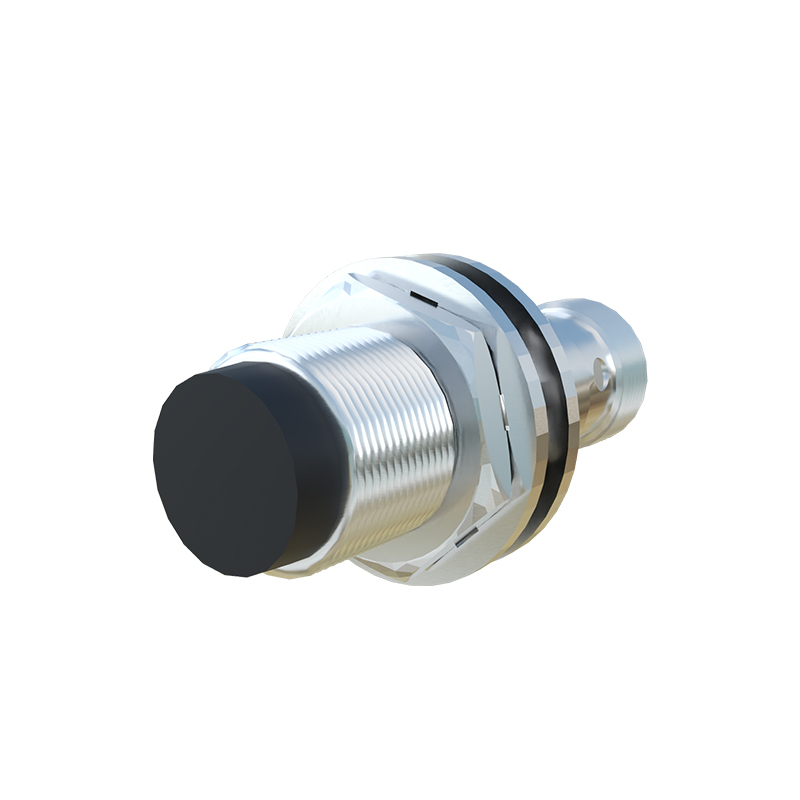
The raw Hall voltage signal is extremely small, typically in the microvolt to millivolt range. Therefore, a 5V magnetic proximity sensor IC incorporates sophisticated on-chip signal conditioning circuitry. This circuitry typically includes a low-noise amplifier to boost the weak Hall voltage, a Schmitt trigger to provide a clean, digital output with hysteresis (which prevents output oscillation when the magnetic field is near the switching threshold), and a voltage regulator to ensure stable operation from the 5V supply, even with minor fluctuations. The final output is a clean, digital logic signal—either high (near 5V) or low (near 0V)—indicating the presence or absence of the target magnetic field.
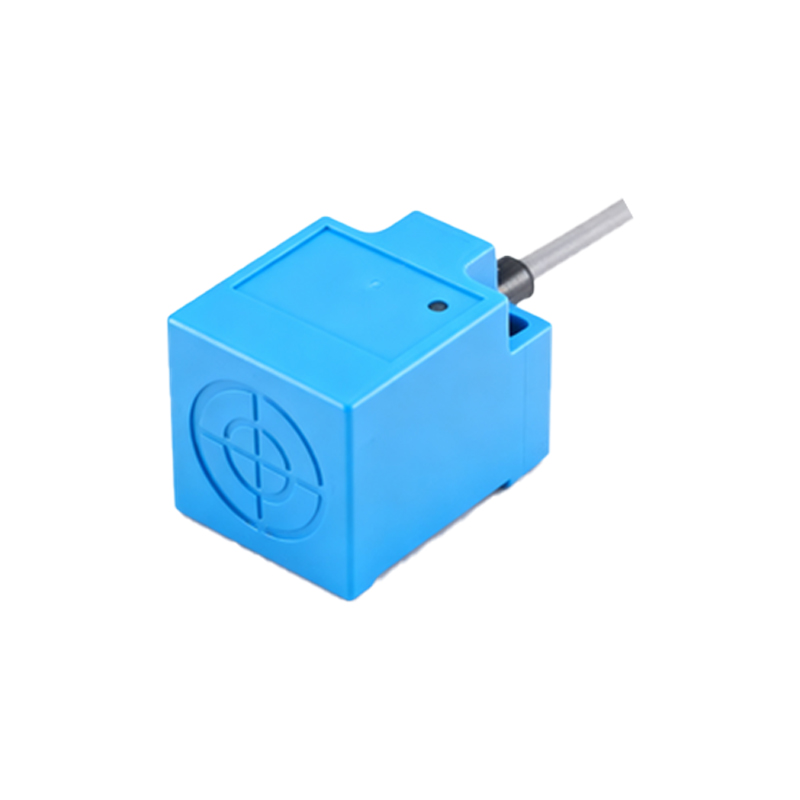
The sensor detects a moving permanent magnet or an electromagnet. The most common configuration involves a sensor fixed in place and a magnet attached to a moving object, such as a door, a gear tooth, or a linear actuator. As the magnet approaches the sensor, the magnetic flux density at the Hall element increases. Once it crosses a predefined threshold (the operate point, B_OP), the sensor's internal Schmitt trigger switches its output state. When the magnet moves away and the flux density decreases below a lower threshold (the release point, B_RP), the output switches back. The difference between B_OP and B_RP is the hysteresis, a critical feature that ensures noise immunity and stable switching without chattering.
There are several key types of 5V Hall-effect sensors based on their output response to the magnetic field. The most common is the unipolar switch, which responds to a single magnetic south or north pole and ignores the opposite pole. A bipolar switch requires a south pole to turn on and a north pole to turn off (or vice-versa), often used in push-button applications. A latching sensor maintains its output state (latches) after the magnetic field is removed until the opposite pole is presented, useful for memory functions. Finally, linear sensors provide a continuous, analog output voltage proportional to the magnetic field strength, used for precise position measurement.
The 5V operating voltage is a de facto standard in digital electronics, compatible with microcontrollers (like Arduino, PIC, AVR), logic circuits, and many industrial PLC input modules. This compatibility simplifies system design, eliminating the need for additional level-shifting circuitry. Key performance parameters for a 5V magnetic sensor include its sensitivity (measured in Gauss or milliTesla), operating distance (the maximum air gap at which it can reliably detect a standard magnet), response time (often in microseconds), and its output configuration (open-collector/NPN or current-sourcing/PNP).
In application, these sensors are prized for their robustness. With no moving parts and a fully sealed semiconductor package, they are immune to contamination from dust, oil, and moisture. They are not affected by ambient light, and their solid-state nature guarantees a long operational life with millions of switching cycles. Common applications include detecting the open/closed state of laptop lids or flip phones, sensing rotational speed in BLDC motor commutation, counting revolutions in flow meters, providing end-of-travel limits in linear guides, and implementing non-contact pushbuttons in automotive and industrial control panels.
In conclusion, the 5V magnetic proximity sensor is a marvel of semiconductor integration, transforming the fundamental Hall effect into a robust, reliable, and easy-to-use digital switch. Its principle of operation—magnetic field deflection of charge carriers, amplified and digitized on a single chip—provides a perfect interface between the physical motion of a magnet and the digital world of 5V logic systems.