In the intricate world of industrial automation and smart systems, proximity sensors stand as silent sentinels, enabling seamless interaction between machines and their environment. Proximity Sensor Co., Ltd. has emerged as a pivotal player in this domain, charting a course of innovation that mirrors the broader evolution of sensing technology. The journey from rudimentary detection mechanisms to today's sophisticated, intelligent sensors is a testament to relentless engineering pursuit.
The foundational principle of proximity sensing—detecting the presence or absence of an object without physical contact—has remained constant. However, the methodologies have undergone a radical transformation. Early iterations, often based on inductive or capacitive principles, were limited in range, sensitivity, and environmental robustness. Proximity Sensor Co., Ltd. entered the market at a crucial juncture, focusing on refining these core technologies. By employing advanced materials and precision manufacturing, the company enhanced the reliability and longevity of its inductive sensors, making them indispensable in harsh manufacturing environments where metal detection is paramount. Similarly, their capacitive sensors achieved greater stability, allowing for the detection of non-metallic objects like liquids and plastics with unprecedented accuracy.
The true inflection point arrived with the integration of digital intelligence. Proximity Sensor Co., Ltd. pioneered the development of sensors embedded with microprocessors and IO-Link communication capabilities. This shift from a simple binary switch to a smart data point revolutionized plant floors. These intelligent sensors do not merely detect; they diagnose. They can monitor their own health, report operational parameters like temperature and signal strength, and even adjust sensing distances dynamically based on ambient conditions. This predictive maintenance capability, a cornerstone of Industry 4.0, drastically reduces unplanned downtime and operational costs for clients.
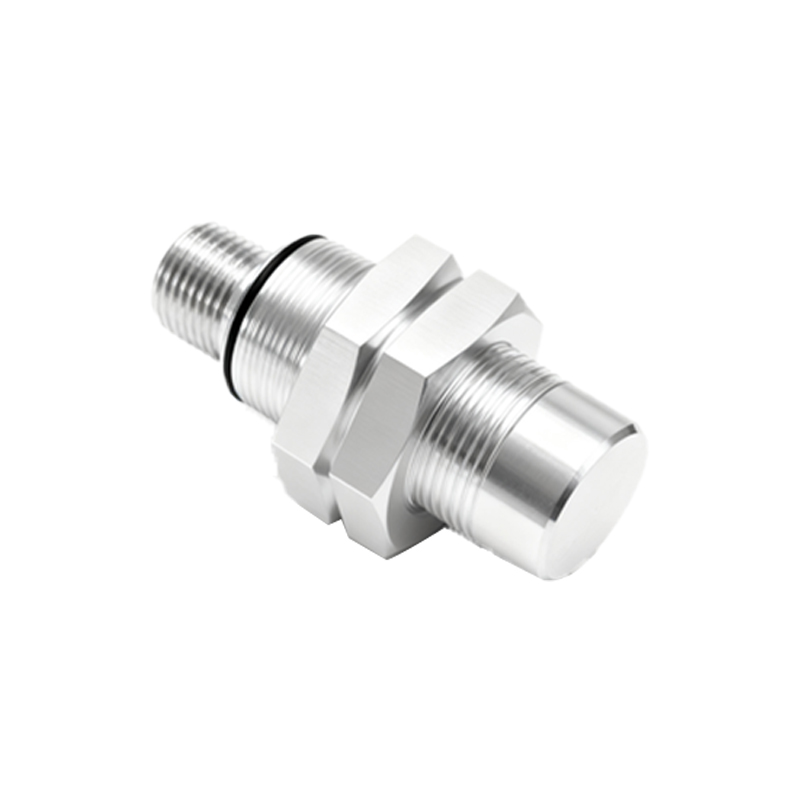
Furthermore, the company has aggressively expanded its portfolio to address diverse application challenges. The advent of ultrasonic proximity sensors provided solutions for precise distance measurement and level detection in challenging environments filled with dust or vapor. Magnetic sensors offered robust, cost-effective solutions for detecting piston positions in hydraulic cylinders. Each product line is developed with a deep understanding of specific industry pain points, whether in automotive assembly lines, food and beverage packaging, or pharmaceutical clean rooms.
Looking ahead, the future trajectory of Proximity Sensor Co., Ltd. is firmly aligned with the megatrends of miniaturization, wireless connectivity, and sensor fusion. The demand for smaller sensors with equal or greater performance is driving research into novel packaging and chip-scale technologies. Wireless sensor networks promise to eliminate costly wiring harnesses, enabling more flexible and reconfigurable production lines. Perhaps most significantly, the company is investing in the fusion of proximity data with other sensor inputs (vision, temperature, pressure) to create comprehensive contextual awareness for autonomous systems and collaborative robots.
The ethos of Proximity Sensor Co., Ltd. has always been rooted in solving real-world engineering problems. Their rigorous testing protocols ensure that every sensor can withstand electromagnetic interference, extreme temperatures, and mechanical shocks. This commitment to quality, coupled with a forward-thinking R&D strategy, has cemented their reputation not just as a supplier, but as a strategic partner in automation. As we advance towards increasingly interconnected and intelligent industrial ecosystems, the role of reliable, smart proximity sensing will only magnify. Proximity Sensor Co., Ltd., through its continuous evolution from a component manufacturer to a solutions provider, is poised to be at the forefront, enabling the next generation of industrial innovation and efficiency. Their story is fundamentally about translating subtle physical phenomena into robust, actionable data—the very language of modern industry.