Proximity sensors are fundamental components in modern industrial automation, enabling non-contact detection of objects with high reliability and precision. Their operation hinges on several key internal components working in concert. Understanding these parts is crucial for engineers involved in selection, integration, and troubleshooting. This article details the primary components of a standard inductive or capacitive proximity sensor, explaining their roles and contributions to overall system functionality.
The core of an inductive proximity sensor is the Oscillator Circuit. This circuit generates a high-frequency electromagnetic field that radiates from the sensor's active face. Typically, it consists of a coil (often part of a resonant LC circuit), a capacitor, and an oscillator IC. When a metallic target enters this oscillating field, eddy currents are induced on the target's surface. These currents draw energy from the oscillator, causing a measurable change in its amplitude or frequency. This change is the primary detection signal.
The Demodulator and Signal Conditioning Unit is responsible for processing the raw signal from the oscillator. The demodulator converts the high-frequency AC signal into a DC voltage level that corresponds to the amplitude loss. This signal is then filtered, amplified, and shaped by the conditioning circuitry. This stage is critical for eliminating noise, compensating for temperature variations, and ensuring a clean, stable signal is passed to the threshold detector. It defines the sensor's stability and immunity to electrical interference.
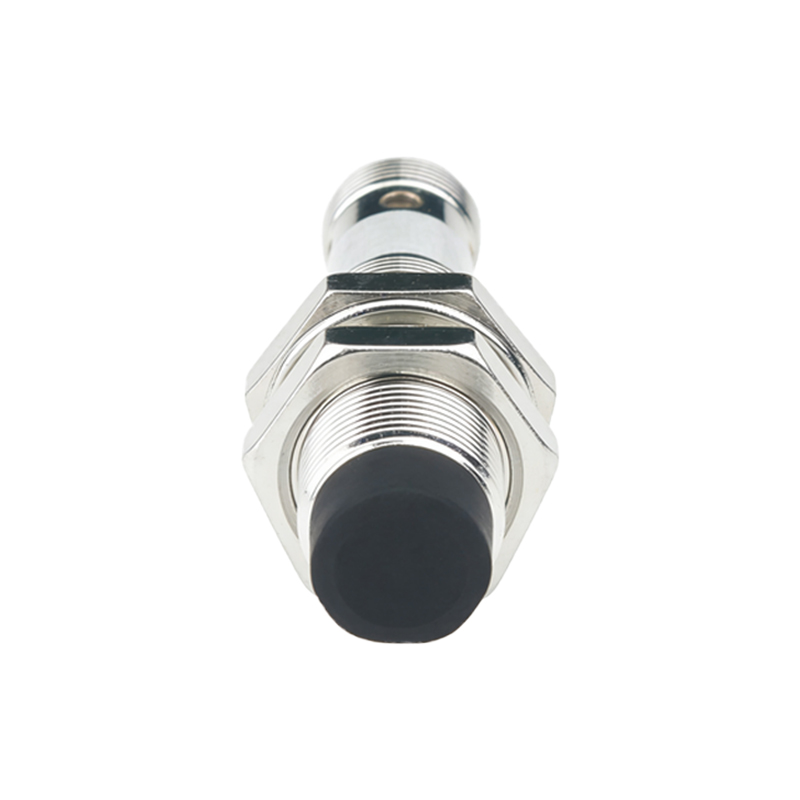
Following signal conditioning, the Threshold Detector (or Schmitt Trigger) compares the processed signal against a predefined reference voltage. This component provides the sensor's switching hysteresis, a vital feature that prevents output oscillation when a target is at the exact sensing point. When the input signal exceeds the "switch-on" threshold, the detector triggers the output stage. The target must then move farther away, dropping the signal below a lower "switch-off" threshold, before the output deactivates. This hysteresis ensures clean, chatter-free switching.
The Output Stage is the component that interfaces the sensor with the external control system, such as a PLC. Common configurations include NPN (sinking), PNP (sourcing), analog (4-20mA, 0-10V), or IO-Link digital outputs. This stage typically contains a power transistor (like a MOSFET) that acts as a solid-state switch. It is protected against short-circuits, overloads, and reverse polarity by integrated protection circuits. The robustness of the output stage directly impacts the sensor's lifespan in demanding electrical environments.
Encasing and protecting these electronic components is the Housing. Typically made from nickel-plated brass, stainless steel, or rugged polymers like PBT, the housing provides mechanical strength, environmental sealing (often rated IP67 or IP69K), and chemical resistance. The front face, or sensing face, is a critical part of the housing, usually made of a ferrite material in inductive sensors to shape and direct the electromagnetic field. The housing design also incorporates mounting threads or brackets and cable strain relief.
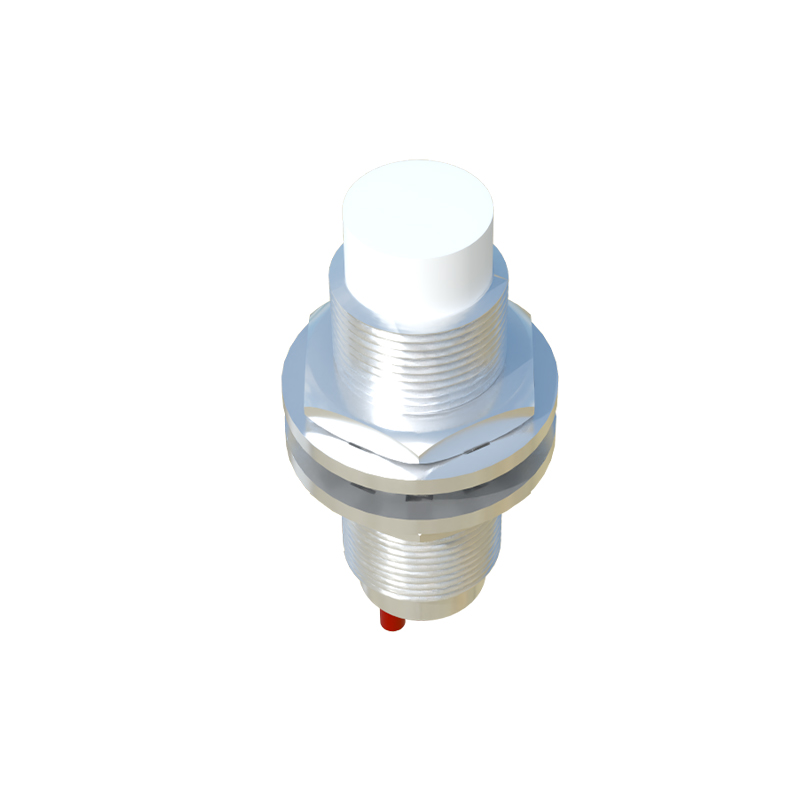
Finally, the Indicator LED is a small but important user interface component. It provides visual status feedback, indicating power presence and output switching. This aids immensely during installation, commissioning, and diagnostics, allowing quick verification of sensor operation without external equipment.
In capacitive proximity sensors, the core principle differs—detecting changes in capacitance—but the component architecture is similar. The oscillator circuit is designed to respond to changes in the dielectric constant, the sensing face is different, and often a sensitivity adjustment potentiometer is included. However, the chain of demodulator, threshold detector, and output stage performs analogous functions.
The synergy of these components—oscillator, demodulator, detector, output stage, housing, and indicator—enables the proximity sensor to perform its seemingly simple task with remarkable consistency. Each part must be precisely engineered to meet specifications for sensing distance, repeatability, switching frequency, and environmental durability. For an engineer, this knowledge informs better sensor choices, optimal installation practices, and more effective predictive maintenance strategies, ensuring seamless integration into complex automated systems that demand unwavering reliability.