Laser sensors have become indispensable tools across numerous industrial sectors due to their exceptional precision, reliability, and versatility. These devices operate by emitting a focused beam of light—typically from a laser diode—and measuring the reflection or interruption of that beam to determine distance, position, presence, or dimensions of an object. One of the most prominent characteristics of laser sensors is their high accuracy and resolution. Capable of detecting minute changes down to the micrometer level, they are ideal for applications requiring exact measurements, such as in semiconductor manufacturing, precision assembly, and quality control inspections. Unlike conventional photoelectric sensors, laser sensors maintain this accuracy even over long distances and in challenging environmental conditions, thanks to their coherent and collimated light beam that minimizes dispersion.
Another key feature is the exceptional response speed of laser sensors. They can perform thousands of measurements per second, enabling real-time monitoring and control in high-speed production lines, robotics, and automated sorting systems. This rapid response reduces cycle times and enhances overall operational efficiency. Additionally, laser sensors offer remarkable flexibility in terms of installation and application. They are available in various configurations, including through-beam, retro-reflective, and diffuse-reflective models, each suited to specific tasks. For instance, through-beam sensors provide the longest sensing ranges and are highly immune to environmental interference, making them suitable for large-scale material handling. Diffuse-reflective types, on the other hand, are compact and easier to install for proximity detection without a separate reflector.
Durability and robustness are also defining traits of modern laser sensors. Designed to withstand harsh industrial environments, they often feature rugged housings rated for IP67 or higher, protecting against dust, moisture, vibrations, and temperature fluctuations. This resilience ensures consistent performance in settings like automotive manufacturing, metal processing, and outdoor logistics. Furthermore, advanced laser sensors incorporate intelligent functionalities such as background suppression, programmable logic, and digital communication interfaces (e.g., IO-Link, Ethernet/IP). These features allow for easy integration into Industry 4.0 and IoT frameworks, enabling predictive maintenance, data analytics, and centralized system management.
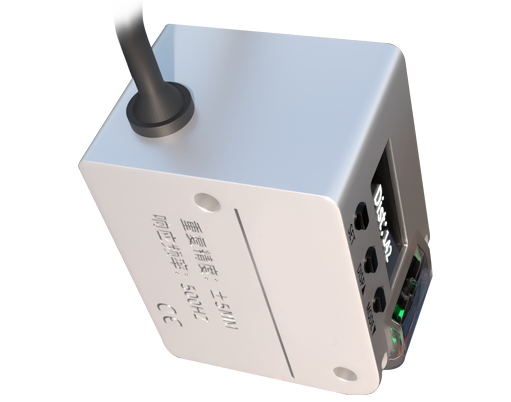
The non-contact nature of laser sensing eliminates mechanical wear and prevents damage to delicate objects, thereby reducing maintenance costs and extending equipment lifespan. In applications like wafer inspection, food packaging, or pharmaceutical production, this contactless operation ensures hygiene and prevents contamination. Moreover, laser sensors can detect a wide range of materials—including transparent, glossy, or dark surfaces—by adjusting sensitivity or using specialized algorithms, overcoming limitations of traditional sensors.
Despite their advantages, selecting the right laser sensor requires consideration of factors like sensing range, beam spot size, environmental conditions, and target properties. Proper alignment and calibration are crucial to maximize performance. As technology advances, innovations in miniaturization, energy efficiency, and smart sensing continue to expand the potential of laser sensors, solidifying their role as critical components in automation, safety systems, and precision engineering. Their ability to deliver fast, accurate, and reliable data makes them a cornerstone of modern industrial innovation, driving productivity and quality improvements across global supply chains.
