Laser cutting is a cornerstone of modern manufacturing, prized for its precision, speed, and versatility. At the heart of achieving optimal cut quality lies a critical, yet often overlooked component: the focus sensor. This article delves into the technology behind laser cutting focus sensors, exploring their types, operational principles, key applications, and essential factors for selection.
The primary function of a focus sensor is to maintain the laser beam's focal point precisely on the material surface throughout the cutting process. The focal point—where the beam converges to its smallest diameter and highest power density—is crucial. Even minor deviations can lead to poor edge quality, increased dross, wider kerfs, or incomplete cuts. Modern sensors automate this adjustment, compensating for material warping, uneven surfaces, or machine bed inconsistencies in real-time.
There are several prevalent types of focus sensing technologies, each with distinct advantages. Capacitive sensors are widely used for conductive materials like metals. They operate by measuring the capacitance between the sensor and the workpiece. As the distance changes, so does the capacitance, providing a feedback signal for the Z-axis control. They are robust and effective but require a conductive target. Optical or vision-based sensors, often using laser triangulation or confocal chromatic principles, are non-contact and material-independent. A secondary laser or light source projects onto the surface, and a camera or photodetector analyzes the reflected light's position to calculate distance. These are ideal for non-conductive materials like plastics, wood, or coated metals. Another method involves analyzing the plasma or acoustic emissions generated during cutting. Changes in these signals can correlate with focal position, offering an indirect but integrated sensing approach.

The applications of advanced focus control are extensive. In the automotive industry, where high-strength steel and aluminum alloys are common, consistent focus ensures clean cuts for structural components. In aerospace, cutting intricate shapes from titanium or composites demands absolute precision to maintain material integrity. For job shops handling diverse materials daily, a reliable sensor system minimizes setup time and scrap. Furthermore, in processes like 3D laser cutting on contoured surfaces, dynamic focus control is not just beneficial but mandatory for following complex geometries.
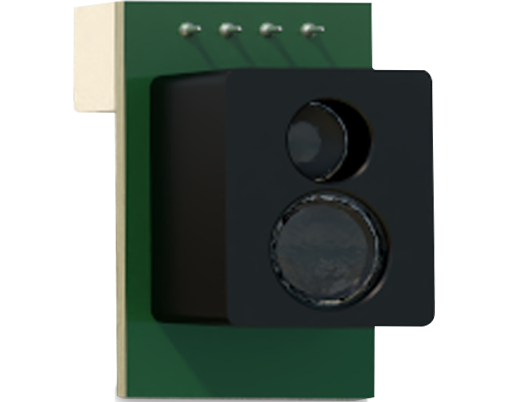
Selecting the right focus sensor requires careful consideration of multiple parameters. Material type is paramount; a capacitive sensor is unsuitable for cutting wood or glass. Required accuracy and repeatability specifications vary by application; micro-machining demands sub-micron precision, while heavy plate cutting may tolerate slightly larger tolerances. The sensor's response speed must match the machine's dynamics and cutting speed. Environmental factors are critical—sensors must withstand intense heat, spatter, smoke, and electromagnetic interference prevalent near the cutting head. Integration capability with the existing CNC controller and laser source is a practical necessity. Finally, the total cost of ownership, including maintenance, calibration needs, and durability, plays a significant role in the decision.

Recent advancements are pushing the boundaries of focus sensing. Smart sensors with integrated algorithms can now predict and compensate for thermal lensing effects in the laser optics, a phenomenon where heat changes the lens's focal length. The integration of Industrial Internet of Things (IIoT) capabilities allows for predictive maintenance, where sensor data trends can indicate impending calibration drift or component wear. Furthermore, the combination of focus sensing with other monitoring systems, such as melt pool monitoring or kerf width analysis, is paving the way for fully adaptive, closed-loop laser cutting systems that self-optimize in real-time.
In conclusion, the laser cutting focus sensor is far more than a simple height follower. It is a sophisticated enabling technology that directly impacts cut quality, process reliability, and operational efficiency. Understanding the different technologies and their appropriate applications allows engineers and manufacturers to make informed choices, unlocking the full potential of their laser cutting investment and ensuring consistent, high-quality results across a diverse production portfolio. As laser technology evolves towards higher powers and more complex applications, the role of intelligent, adaptive focus control will only become more central to manufacturing success.