In the realm of industrial automation, quality control, and advanced robotics, the demand for unparalleled accuracy and reliability in measurement has never been greater. High-precision laser sensors have emerged as a cornerstone technology, enabling feats of engineering that were once considered impossible. These sophisticated devices operate on the principle of emitting a focused beam of coherent light and analyzing the reflected signal to determine parameters such as distance, displacement, thickness, and profile with extraordinary resolution, often in the sub-micron range.
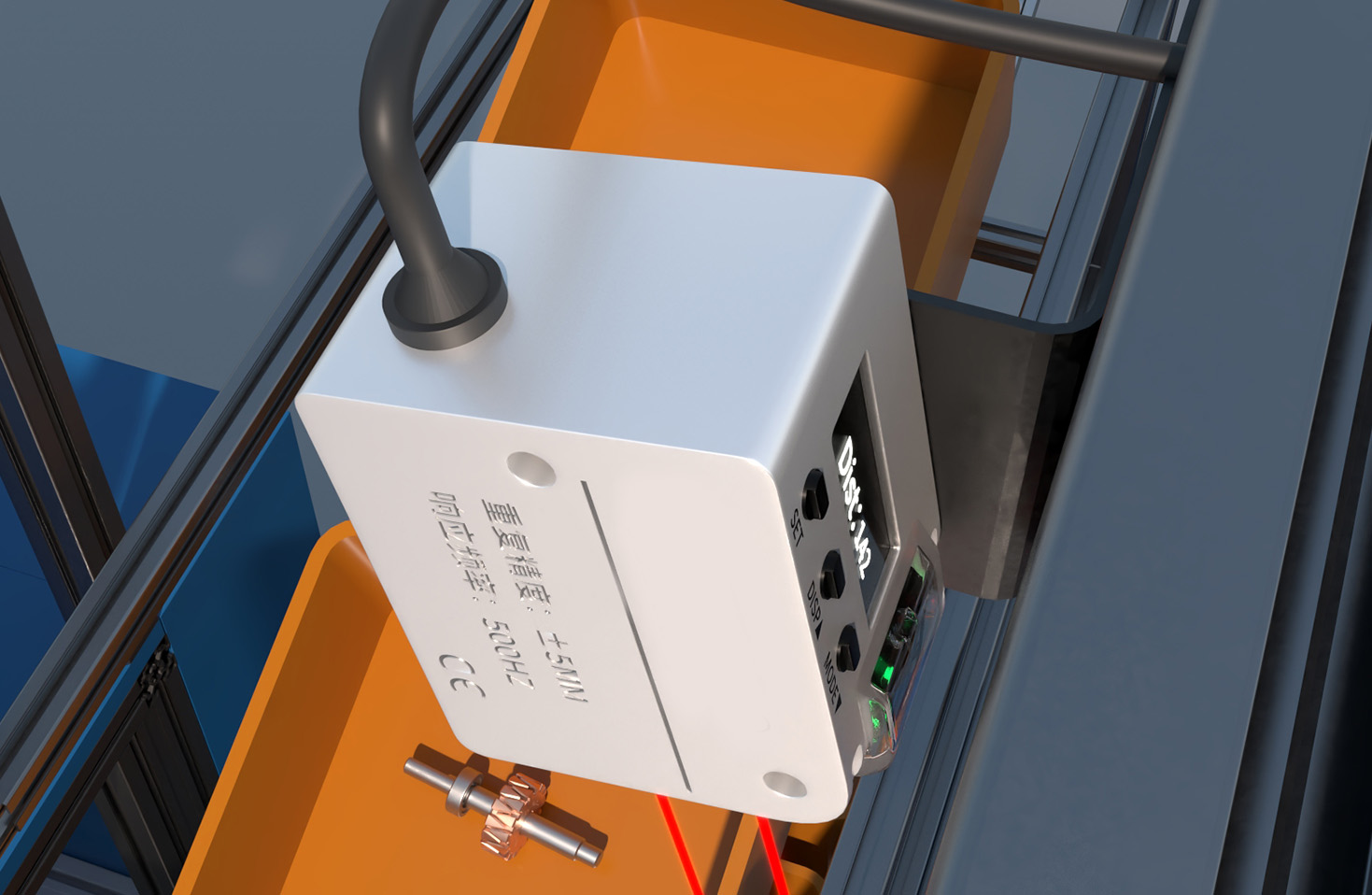
The core technology behind these sensors typically involves triangulation, time-of-flight (ToF), or interferometry. Laser triangulation sensors are exceptionally common for short to medium-range applications. A laser diode projects a visible or infrared spot onto the target surface. The reflected light is focused onto a position-sensitive detector (PSD) or a CMOS/CCD array. Any change in the target's distance causes the light spot to shift its position on the detector, which is then calculated with high precision. This method is ideal for applications like vibration analysis, part dimension verification, and wafer thickness measurement.
For longer ranges, time-of-flight laser sensors measure the time it takes for a laser pulse to travel to the target and back. Advances in high-speed electronics have dramatically improved the resolution of ToF sensors, making them suitable for applications like vehicle LiDAR, bulk level monitoring, and large-scale metrology. Meanwhile, laser interferometers represent the pinnacle of precision, using the wave nature of light to measure displacement by analyzing interference patterns. They are indispensable in semiconductor lithography, precision machine tool calibration, and gravitational wave detection, where nanometer or even picometer accuracy is required.
The advantages of high-precision laser sensors are manifold. Their non-contact nature eliminates the risk of damaging delicate surfaces or influencing the measurement through physical force. They offer extremely high sampling rates, capturing dynamic processes in real-time. Furthermore, they are largely immune to the material properties of the target, such as color or reflectivity, especially when equipped with advanced algorithms for automatic gain control and background suppression. Modern sensors integrate onboard processors and digital interfaces (e.g., Ethernet, IO-Link, RS-485), facilitating seamless integration into Industry 4.0 and IoT ecosystems for predictive maintenance and data analytics.
Typical industrial applications are vast and critical. In automotive manufacturing, laser sensors ensure the precise gap and flushness between body panels. In electronics, they verify the coplanarity of BGA solder balls and the thickness of deposited films. In pharmaceuticals, they control the fill level in vials and the integrity of blister packs. Robotics rely on them for accurate positioning and obstacle detection, enabling collaborative robots to work safely alongside humans. Additionally, they play a vital role in reverse engineering and 3D scanning, capturing complex geometries with high fidelity.
However, deploying these sensors is not without challenges. Environmental factors like ambient light, dust, steam, or extreme temperatures can affect performance, necessitating proper housing and sometimes auxiliary cooling or air purge systems. Highly reflective, transparent, or absorptive surfaces may require sensor models with specialized optics or software filters. Calibration and regular verification against traceable standards are paramount to maintain measurement integrity over time.
Looking ahead, the evolution of high-precision laser sensors is closely tied to advancements in photonics, computational power, and artificial intelligence. The integration of AI allows for smarter sensors that can self-diagnose, adapt to changing conditions, and classify objects beyond simple measurement. Miniaturization continues, enabling their use in increasingly compact devices. Furthermore, the development of new laser sources and detection techniques promises even higher speeds, greater accuracy, and more robust operation in harsh environments.
In conclusion, high-precision laser sensors are far more than mere measuring tools; they are enablers of innovation and quality across a breathtaking spectrum of industries. By providing reliable, micron-level data, they form the sensory foundation upon which modern automated and intelligent systems are built. As technology progresses, their role will only expand, driving further advancements in manufacturing, scientific research, and beyond, solidifying their status as an indispensable component in the engineer's toolkit.