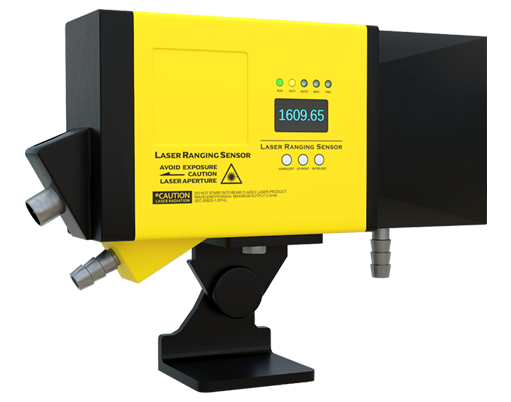
Laser sensors are pivotal components in modern industrial automation, offering high precision, non-contact measurement, and rapid response times. These devices operate based on the principles of light detection and ranging, utilizing laser beams to detect objects, measure distances, or monitor processes with exceptional accuracy. The core working mechanism involves emitting a focused laser beam toward a target, which then reflects or scatters light back to a receiver within the sensor. By analyzing the properties of the returned light—such as time-of-flight, phase shift, or triangulation—the sensor calculates parameters like distance, position, or presence of an object.
There are several types of laser sensors, each suited for specific applications. Time-of-flight (ToF) sensors measure the time taken for a laser pulse to travel to a target and back, enabling distance calculations over long ranges, often used in robotics and logistics. Triangulation sensors, on the other hand, rely on geometric principles: a laser beam projects onto a target, and the reflected light is captured by a detector at a known angle, allowing for precise displacement measurements in manufacturing quality control. Additionally, confocal sensors use chromatic aberration to gauge surface profiles, ideal for inspecting materials in electronics or automotive industries.

The advantages of laser sensors include their ability to operate in harsh environments, resistance to electromagnetic interference, and minimal maintenance requirements. They are widely deployed in sectors such as automotive assembly for part alignment, pharmaceuticals for fill-level detection, and aerospace for structural monitoring. However, challenges like sensitivity to ambient light or reflective surfaces can be mitigated through advanced filtering and calibration techniques.
In summary, laser sensors leverage optical technology to enhance automation efficiency, driving innovations in Industry 4.0. As demand for smart manufacturing grows, these sensors continue to evolve with integration into IoT systems, enabling real-time data analytics and predictive maintenance for optimized industrial operations.