In the realm of industrial automation, the precise detection of color marks or contrasts on moving materials is a critical task. This is where the color mark sensor, particularly those utilizing laser technology, becomes an indispensable tool. Unlike standard photoelectric sensors that detect presence or absence, color mark sensors are designed to distinguish subtle differences in color, grayscale, or contrast, triggering outputs at the exact moment a specific mark passes. The integration of laser light sources has significantly elevated their performance, offering superior precision, stability, and reliability in challenging environments.
The core principle of a laser-based color mark sensor revolves around its ability to emit a focused, coherent beam of light—typically a visible red laser—onto the target surface. The sensor's receiver then measures the intensity of the reflected light. The key parameter is the reflected light's intensity, which varies based on the color or contrast of the surface. A dark mark on a light background will absorb more light, resulting in lower reflectivity, while a light mark on a dark background will reflect more. The sensor is "taught" a reference value for the background or the mark. When the detected reflectivity crosses a set threshold (indicating the transition from background to mark or vice versa), the sensor sends a control signal.
The advantages of using a laser source are manifold. First, the highly focused laser spot allows for the detection of extremely small marks or precise edges, enabling high-resolution positioning. Second, laser light is less susceptible to ambient light interference compared to standard LED-based sensors, ensuring stable operation even in environments with variable lighting. Third, the coherent nature of laser light provides a consistent measurement, reducing errors caused by surface texture variations or slight distance changes (within the sensor's specified range). This makes laser color mark sensors ideal for applications involving glossy, textured, or uneven surfaces.
Typical applications span numerous industries. In packaging, they are used for label registration, ensuring prints are correctly aligned before cutting or sealing. In the textile industry, they detect color patterns or seams for precise cutting and sewing. In printing, they provide feedback for color-to-color registration. In the automotive sector, they verify the presence and position of colored gaskets or components on assembly lines. The laser variant is especially favored in high-speed applications, such as web processing of films or papers, where milliseconds of timing accuracy are paramount.
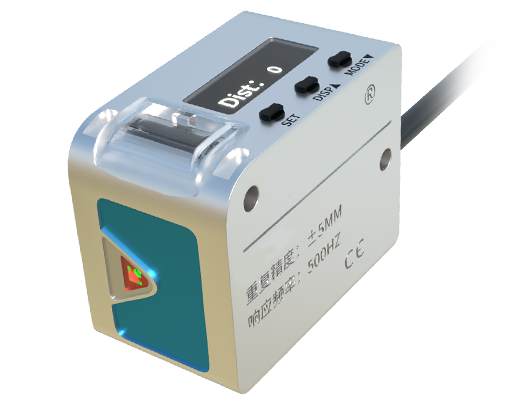
Selecting the right laser color mark sensor requires careful consideration of several factors. The first is the sensing distance and spot size. A smaller spot allows for finer mark detection but may require more precise mounting. The second is the color contrast or grayscale difference between the mark and the background. Some advanced sensors offer RGB or true color detection, while most are optimized for contrast detection. The third is the response speed, which must be fast enough to keep up with the line speed. Fourth, environmental factors like dust, moisture, or temperature extremes dictate the required ingress protection (IP) rating. Finally, output type (NPN/PNP, digital/analog) and connectivity must match the control system.

Installation and setup are crucial for optimal performance. The sensor should be mounted securely to minimize vibration. The laser beam must be perpendicular to the target surface to ensure accurate reflectivity measurement. Most modern sensors feature a "teach" function, where the operator presents the background and the mark to the sensor, allowing it to automatically calculate the optimal threshold. Sensitivity adjustments can fine-tune this threshold to ignore minor imperfections while reliably detecting the true mark.
In conclusion, the laser color mark sensor represents a sophisticated fusion of optical and electronic engineering, delivering unmatched accuracy in color and contrast detection. Its role in enhancing quality control, reducing waste, and optimizing production speed is undeniable. As manufacturing processes demand ever-greater precision and efficiency, the evolution of this technology—with trends toward miniaturization, smarter connectivity (IO-Link), and enhanced spectral analysis—will continue to push the boundaries of what is possible in automated visual inspection tasks. Engineers and system integrators must understand its principles and selection criteria to fully leverage its capabilities for robust and reliable automation solutions.