In the realm of industrial automation and control, the proximity sensor stands as a fundamental yet sophisticated component, enabling machines to "see" and interact with their environment without physical contact. Among the various types, the four-wire proximity switch sensor represents a prevalent and versatile solution, offering distinct advantages in numerous applications. This article delves into the technology, operational principles, key selection criteria, and practical applications of these essential devices.
At its core, a proximity sensor is a device that detects the presence or absence of an object within its sensing range. The four-wire configuration specifically refers to the electrical wiring: typically, two wires for power supply (often 10-30V DC) and two wires for the output signal. This design commonly provides a Normally Open (NO) and a Normally Closed (NC) contact from a single device, offering greater flexibility in control circuit design compared to two-wire or three-wire variants. The output can be either a switching signal (digital) or, in some advanced models, an analog signal proportional to distance.
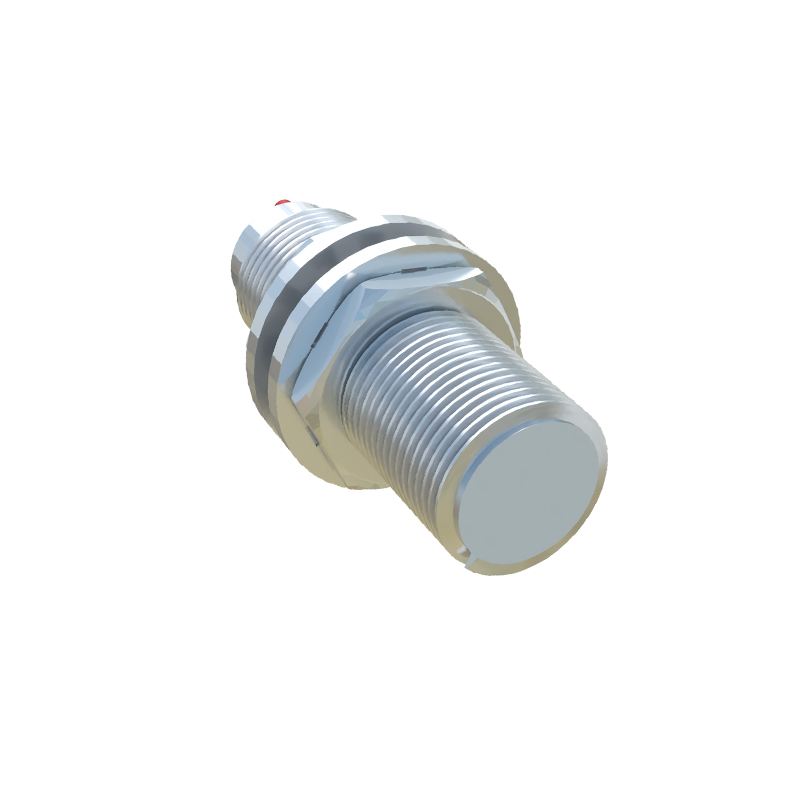
The working principle depends on the sensing technology employed. Inductive proximity sensors are the most common four-wire type for metal detection. They generate an electromagnetic field from a coil in the sensor head. When a metallic target enters this field, it induces eddy currents, causing a change in the oscillation amplitude. This change is detected by the sensor's circuitry, which then triggers the solid-state output switch. Capacitive sensors operate similarly but can detect both metallic and non-metallic materials (plastics, wood, liquids) by sensing changes in capacitance. Ultrasonic sensors use sound waves, measuring the time-of-flight of an echo to determine presence and distance, making them suitable for diverse materials and challenging environments.
Selecting the appropriate four-wire proximity sensor requires careful consideration of several parameters. First, the sensing range, which is the maximum distance at which the sensor can reliably detect a standard target. It is crucial to choose a sensor with a range that accommodates the application's mechanical tolerances. Second, the target material dictates the technology: inductive for metals, capacitive for a broader range. The size and shape of the target also influence detection reliability. Third, the output configuration is vital. The four-wire NO+NC output allows designers to choose the logic that best fits the safety and control sequence. For instance, a safety interlock might require an NC configuration so that a wire break is detected as a fault (de-energized state).
Environmental factors cannot be overlooked. The sensor's housing material (often nickel-plated brass, stainless steel, or PBT plastic) must withstand the operating conditions, including temperature extremes, humidity, washdowns (IP67/IP69K ratings), and exposure to chemicals or oils. Electrical characteristics like supply voltage tolerance, output current capacity, switching frequency (for high-speed applications), and protection against short-circuits and reverse polarity are equally critical for system reliability.
The applications for four-wire proximity sensors are vast and integral to modern manufacturing. In automotive assembly lines, they count parts, verify robot end-effector positions, and confirm door or panel closure. In packaging machinery, they detect the presence of bottles, cans, or boxes on conveyors, triggering fillers, cappers, or labelers. Within material handling, they provide position feedback for actuators, cylinders, and slides. Their NO/NC capability is particularly useful in safety circuits and for creating redundant checking systems, enhancing overall equipment effectiveness (OEE) and preventing jams or misfeeds.
Installation and wiring practices significantly impact performance. Maintaining the proper clearance around the sensor head (as per manufacturer specifications) prevents false triggering from adjacent metal structures (mounting brackets, conveyors). Proper shielding and routing of cables away from high-power lines minimize electromagnetic interference. Regular maintenance, though minimal due to their non-contact nature, involves checking for physical damage, buildup of debris on the sensing face, and verifying electrical connections.
In conclusion, the four-wire proximity switch sensor is a powerhouse of industrial automation. Its dual-output flexibility, combined with robust and reliable non-contact sensing, makes it an indispensable tool for engineers designing efficient, safe, and intelligent control systems. By understanding its technologies and meticulously matching its specifications to the application's demands, professionals can unlock higher levels of precision, productivity, and operational resilience on the factory floor. As Industry 4.0 evolves, these sensors continue to be foundational elements, feeding critical data into PLCs and IoT networks, bridging the physical and digital worlds of manufacturing.