Laser distance sensors, also known as laser rangefinders or LiDAR (Light Detection and Ranging) in specific configurations, have become indispensable tools across numerous industrial sectors. Their ability to provide non-contact, high-precision, and rapid distance measurements has revolutionized processes from quality control to automation. At their core, these devices operate on a few fundamental principles, primarily time-of-flight (ToF) and triangulation.
The most common principle for long-range measurement is the time-of-flight method. The sensor emits a short pulse of laser light towards a target. A photodetector within the sensor then captures the light reflected back. An internal high-speed clock measures the extremely short time interval between the emission and the reception of the pulse. Since the speed of light (c) is a known constant (approximately 3×10^8 m/s), the distance (d) to the target can be calculated using the simple formula: d = (c × t) / 2, where t is the measured time. The division by two accounts for the round-trip journey of the light. ToF sensors are excellent for measuring over longer distances, from several meters to kilometers, and are widely used in surveying, forestry, and autonomous vehicle navigation.
For applications requiring very high accuracy at shorter ranges, often in the sub-millimeter realm, the laser triangulation principle is preferred. Here, the sensor projects a focused laser spot onto the target surface. The reflected light from this spot is not received by a detector directly behind the laser source but by a position-sensitive device (like a CCD or CMOS array) set at a known angle. As the target distance changes, the position of the reflected laser spot on this detector shifts. Using basic trigonometric relationships within this fixed triangle formed by the laser emitter, the detected spot position, and the target point, the sensor's processor calculates the exact distance. This method provides exceptional resolution and is a staple in manufacturing for tasks like thickness gauging, weld seam tracking, and surface profile inspection.
Beyond these, phase-shift measurement is another technique, often a subset of ToF, used for medium-range, high-accuracy applications. The sensor emits amplitude-modulated continuous-wave laser light. The phase difference between the emitted and reflected wave is measured. This phase shift is directly proportional to the distance traveled. This method offers a good balance of range and precision.
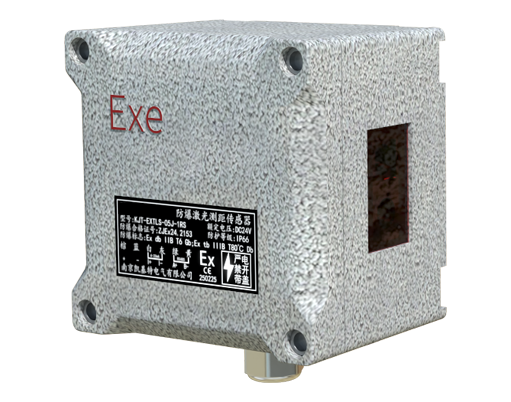
The industrial applications of laser distance sensors are vast and growing. In factory automation, they are crucial for precise positioning of robotic arms, controlling material handling systems, and ensuring accurate fill levels in tanks or silos. On production lines, they perform critical non-contact inspections, measuring the dimensions of components, checking for warpage, or verifying the presence of parts. In the logistics sector, they are integral to automated guided vehicles (AGVs) for navigation and obstacle avoidance, as well as in warehouse management systems for pallet dimensioning and volume scanning. The construction industry relies on them for alignment, leveling, and monitoring structural deformations.

Selecting the right laser sensor requires careful consideration of several key parameters. Measurement range defines the minimum and maximum distances the device can handle. Accuracy and resolution indicate how close the reading is to the true value and the smallest detectable change, respectively. The response time or sampling rate determines how quickly the sensor can take and output measurements, a critical factor in high-speed processes. Environmental conditions are paramount; factors like ambient light, dust, fog, or the target's surface properties (color, reflectivity, texture) can significantly impact performance. Many industrial-grade sensors incorporate features like background suppression, multiple echo processing, and robust housings with high Ingress Protection (IP) ratings to ensure reliable operation in harsh plant environments.
The integration of laser sensors into modern Industrial Internet of Things (IIoT) frameworks is a significant trend. Modern sensors come with various digital interfaces (Ethernet, EtherCAT, PROFINET, IO-Link) allowing for seamless data communication with PLCs and supervisory systems. This enables not just real-time control but also predictive maintenance and advanced data analytics, contributing to smarter, more efficient operations.
In conclusion, laser distance sensors are a cornerstone of modern industrial measurement. By understanding the underlying principles of time-of-flight and triangulation, engineers and technicians can effectively select and deploy these powerful tools. Their role in enhancing precision, efficiency, and automation across diverse fields—from micromanufacturing to large-scale infrastructure—continues to expand, driven by ongoing advancements in laser technology, photonics, and digital connectivity.