In the realm of industrial automation and control systems, proximity sensors are indispensable components for non-contact object detection. Among the various configurations available, the two-wire normally open (NO) proximity sensor stands out for its simplicity, reliability, and cost-effectiveness. This article delves into the operational principles, key advantages, application considerations, and wiring practices of this widely used sensor type.
At its core, a two-wire NO proximity sensor functions as a switch that closes its circuit when a target object enters its sensing range. The "two-wire" designation refers to its basic electrical connection: it requires only a power line and a load line, simplifying installation compared to three-wire or four-wire variants. The "normally open" state indicates that in the absence of a target, the internal switching element (typically a solid-state device) remains in a high-resistance state, effectively keeping the circuit open. When a metallic or other detectable target approaches within the specified sensing distance, the sensor activates, transitioning to a low-resistance state and completing the circuit to allow current flow to the connected load, such as a PLC input, relay, or indicator lamp.
The operational principle is commonly based on electromagnetic induction for inductive sensors (detecting metals) or capacitive coupling for capacitive sensors (detecting various materials including non-metals). An oscillator circuit within the sensor generates a high-frequency electromagnetic field at its active face. The presence of a target object alters this field's characteristics (e.g., causing eddy current losses in metals), which is detected by a threshold circuit. This detection triggers the output switch to change state.
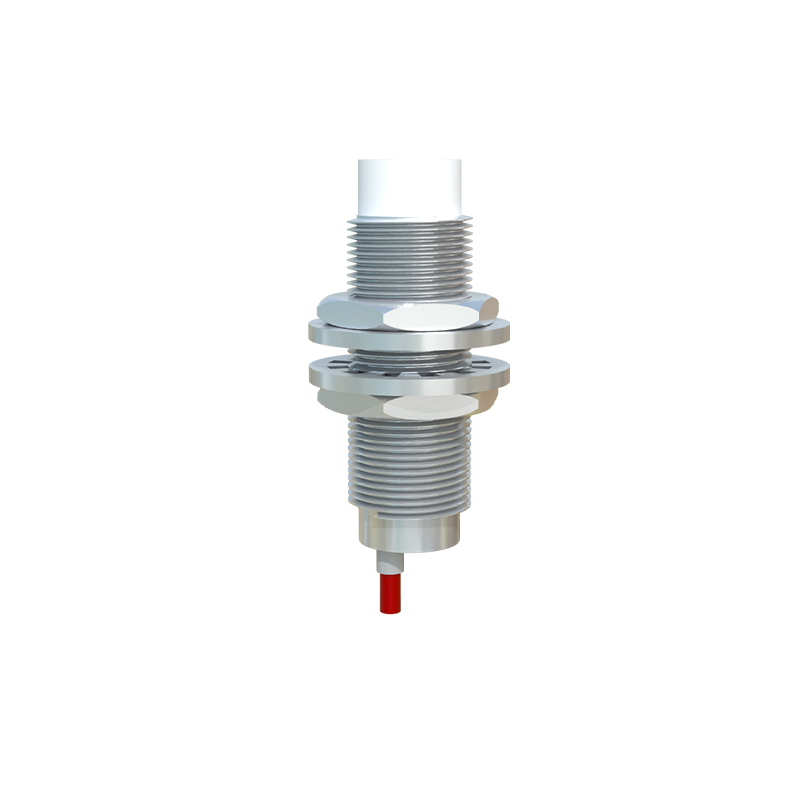
Key advantages of the two-wire NO configuration are numerous. Firstly, installation is straightforward and economical due to reduced wiring requirements and the absence of a separate signal wire. They can be directly connected in series with the load and the power supply, mimicking a traditional mechanical switch. This simplicity translates to lower installation time and material costs. Secondly, their inherent design offers good resistance to electrical noise and short-circuit protection in many models. Furthermore, the two-wire system often features a low leakage current (typically<1.5 mA) when in the "off" state, which is crucial to prevent unintended activation of sensitive PLC inputs. When "on," they exhibit a voltage drop (usually 1.5V to 3V), which must be accounted for in system voltage calculations.
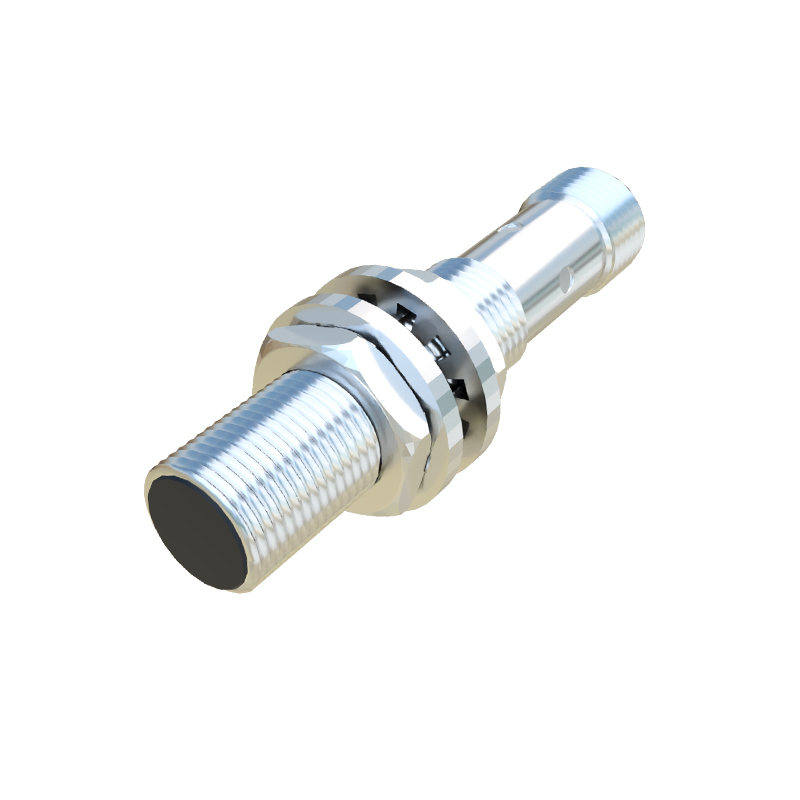
Selecting and applying a two-wire NO proximity sensor requires careful consideration of several parameters. The sensing distance, rated for a standard target, is paramount. Engineers must consider factors like target material, size, and approach direction, as these can affect the effective sensing range. The operating voltage range (commonly 10-30V DC or 20-250V AC) must be compatible with the control system. Current carrying capacity, or the maximum load current the sensor can switch, must not be exceeded. For DC sensors, polarity is critical; they must be connected with correct positive and negative orientation. Additionally, the switching frequency defines how quickly the sensor can respond to targets moving past it.
Wiring practices are fundamental to reliable operation. For a DC two-wire NO sensor, one wire connects to the positive DC supply, and the other wire connects to the load, which then returns to the negative supply. It is essential to include a protective device like a fuse in the circuit. A critical consideration is the leakage current. When the sensor is off, a small current still flows. If this current is sufficient to energize a high-impedance load (like some PLC digital inputs), it may cause a false "on" signal. To mitigate this, a bleeder resistor (or load resistor) is often connected in parallel with the load. This resistor provides a path for the leakage current, ensuring the voltage at the load remains below its turn-on threshold when the sensor is inactive. The resistor value is calculated based on the sensor's leakage current and the load's minimum operating current.
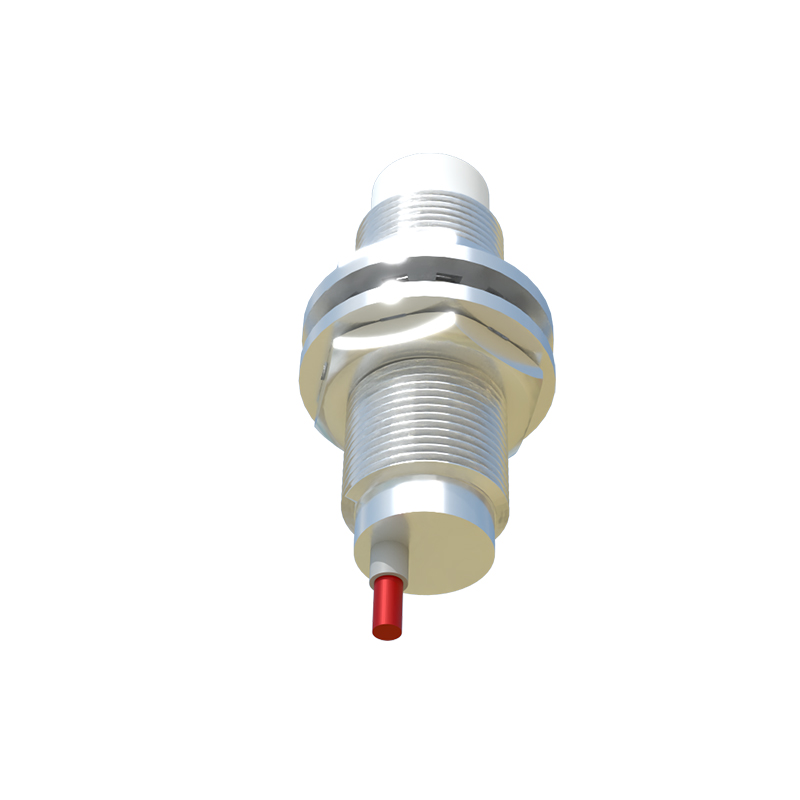
In harsh industrial environments, specifications such as housing material (e.g., nickel-plated brass or stainless steel), IP (Ingress Protection) rating for dust and water resistance, and temperature range are vital for ensuring longevity. Shielding is another consideration; shielded sensors are less susceptible to interference from adjacent metal objects but have a reduced sensing range compared to unshielded types.
In conclusion, the two-wire normally open proximity sensor is a robust and efficient solution for countless detection tasks in machinery, material handling, packaging, and automotive assembly. Its elegance lies in combining detection, switching, and simplified wiring into a single, compact device. By thoroughly understanding its characteristics—particularly the implications of leakage current and voltage drop—engineers can seamlessly integrate these sensors into control systems, ensuring reliable, maintenance-free operation for years. Proper selection based on environmental conditions and electrical requirements is the cornerstone of