In the realm of industrial automation and electrical engineering, proximity switch sensors play a pivotal role in detecting the presence or absence of objects without physical contact. Among the various configurations available, the three-wire proximity switch sensor, particularly from manufacturers like Youjia Processing, stands out for its reliability and ease of integration. This article delves into the fundamentals, working principles, wiring methods, and applications of these sensors, tailored for professionals in the electrical industry.
Proximity sensors are essential components in modern manufacturing and control systems. They are used to monitor positions, count objects, and ensure safety in machinery. The three-wire design is one of the most common types, offering a balance between simplicity and functionality. Unlike two-wire sensors that can be more limited in load capacity, three-wire sensors provide separate paths for power supply and output signals, enhancing performance and reducing interference.
The three-wire proximity switch sensor from Youjia Processing typically consists of three distinct wires: brown (positive), blue (negative), and black (output). The brown wire connects to the positive terminal of the DC power supply, usually ranging from 10 to 30 volts DC, depending on the model. The blue wire is linked to the negative or ground terminal, establishing a complete circuit for power. The black wire serves as the output line, which switches state (open or closed) based on the detection of a target object. This configuration allows for both normally open (NO) and normally closed (NC) operation modes, providing flexibility in control logic.
Working on the principle of electromagnetic induction or capacitive sensing, these sensors detect metallic or non-metallic objects within a specified range. Inductive sensors, common in Youjia Processing's offerings, generate an oscillating electromagnetic field. When a metal object enters this field, it induces eddy currents that dampen the oscillation, triggering the output switch. Capacitive sensors, on the other hand, respond to changes in capacitance caused by any material, making them versatile for diverse applications. The sensing distance, or "range," varies by model but is typically optimized for precision in industrial settings.
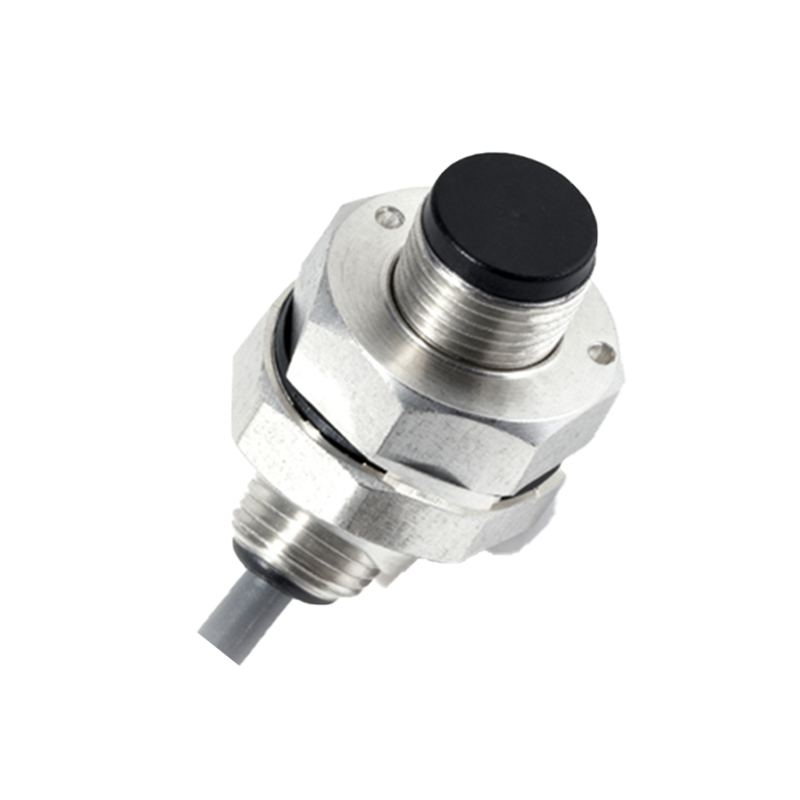
Wiring a three-wire proximity switch sensor is straightforward but requires attention to detail to avoid malfunctions. First, ensure the power supply matches the sensor's specifications—commonly 12-24V DC for industrial use. Connect the brown wire to the positive terminal and the blue wire to the negative terminal. The black output wire should be connected to the load, such as a relay, programmable logic controller (PLC) input, or indicator light. It is crucial to verify the sensor's output type (e.g., NPN or PNP) to match the control system. NPN sensors sink current to ground, while PNP sources current from the positive supply; Youjia Processing provides both options to suit different circuit designs. Additionally, proper shielding and grounding can minimize electrical noise, especially in environments with high-frequency machinery.
Applications of Youjia Processing's three-wire proximity switch sensors are vast across industries. In automotive manufacturing, they monitor assembly lines for part presence or positioning. In packaging, they count products and control conveyor belts. For safety, they can be integrated into machinery guards to halt operations when an object is detected in hazardous zones. Their robust construction, often with IP67 or higher ratings, ensures durability in harsh conditions involving dust, moisture, or temperature extremes. Regular maintenance involves checking for physical damage, cleaning the sensing face, and testing response times to uphold efficiency.
In summary, the three-wire proximity switch sensor from Youjia Processing represents a key tool for electrical engineers seeking reliable non-contact detection. Its design simplifies installation and enhances system stability, making it a preferred choice in automation projects. By understanding its wiring, operation, and applications, professionals can leverage these sensors to optimize industrial processes and improve overall productivity. As technology advances, such components continue to evolve, but the core principles remain integral to effective electrical engineering solutions.