In the rapidly evolving landscape of industrial automation, sensors serve as the critical eyes of manufacturing systems, enabling precision, efficiency, and intelligence. Among the most advanced and widely adopted are vision sensors and laser sensors. Both technologies play pivotal roles in quality control, measurement, guidance, and inspection, yet they operate on fundamentally different principles and are suited to distinct applications. Understanding their capabilities, limitations, and optimal use cases is essential for engineers designing modern automated solutions.
Vision sensors, essentially sophisticated cameras paired with processing software, capture two-dimensional or three-dimensional images of a target. They analyze these images using algorithms to extract information such as presence, orientation, dimensions, and surface defects. A typical vision system includes lighting, a lens, an image sensor (like a CMOS or CCD), and a processor running machine vision software. Their primary strength lies in rich data acquisition; a single snapshot can contain vast amounts of information about an object's appearance. Common applications include optical character recognition (OCR) for reading serial numbers, barcode reading, complex assembly verification, color inspection, and high-speed bottling line monitoring. For instance, a vision system can inspect a pharmaceutical blister pack to verify all pills are present and correctly positioned, something beyond the scope of most point-based sensors. However, vision sensors can be influenced by ambient lighting conditions, require significant processing power for complex analyses, and may struggle with highly reflective or low-contrast surfaces without specialized lighting setups.
Laser sensors, on the other hand, typically operate by emitting a focused beam of light and measuring specific properties of its reflection. The most common types are laser triangulation sensors for displacement and profile measurement, and time-of-flight (ToF) sensors for distance measurement. A triangulation sensor projects a laser spot onto a target; the reflected light hits a position-sensitive detector, and the spot's position shifts proportionally to the target's distance or height. This allows for extremely high-resolution, non-contact measurements of distance, thickness, and vibration. Laser profilometers scan a line across an object to create a precise 2D or 3D height map. Laser sensors excel in applications requiring micron-level accuracy, rapid measurement of precise distances, or profiling of object contours. Examples include measuring the thickness of rolled steel, monitoring the wear of brake discs, guiding robots for precise bin picking, and ensuring the flatness of semiconductor wafers. Their key advantages are high speed, exceptional accuracy, and relative immunity to ambient light. Limitations include a smaller field of view (often measuring a single point or line), potential issues with transparent or absorbent materials, and generally higher cost per sensing point compared to basic vision systems.
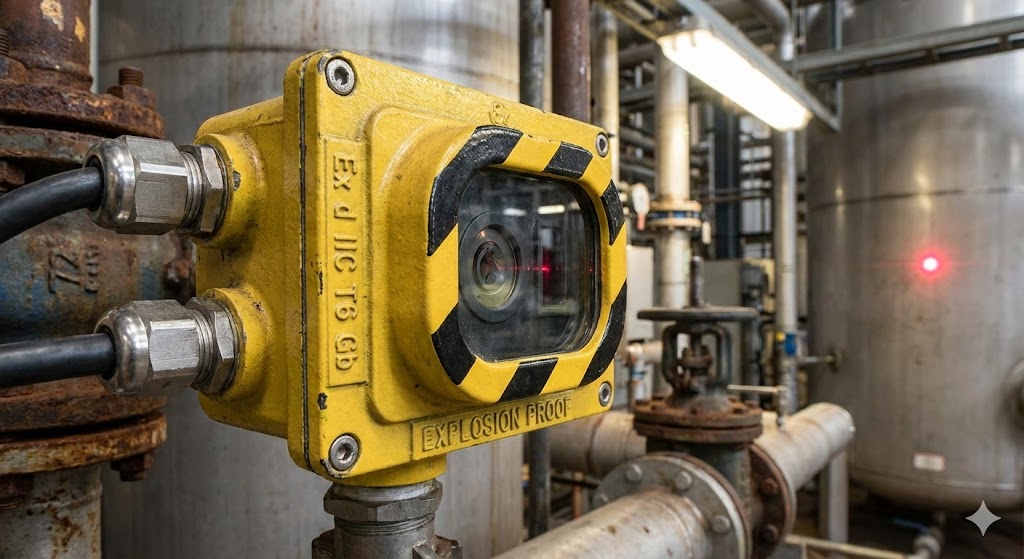
The choice between vision and laser sensors is not a matter of which is superior, but which is more appropriate for the specific task. A decision matrix often considers several factors. For tasks involving complex pattern recognition, color analysis, or large-area inspection where contextual information is key, vision sensors are typically the best choice. If the requirement is for ultra-precise, high-speed measurement of a physical dimension like height, width, or depth at a specific point or along a line, a laser sensor is often unrivaled. In many advanced automation cells, these sensors are not competitors but collaborators. A laser profilometer might first scan a part to ensure its dimensional accuracy, after which a vision system verifies the correct label and surface finish. This sensor fusion approach leverages the strengths of both technologies to achieve comprehensive quality assurance.
Future trends point toward further integration and intelligence. Smart vision sensors with embedded deep learning are becoming more accessible, allowing them to handle highly variable inspections without extensive traditional programming. Laser sensors are becoming faster and more compact, enabling entire surface scans in milliseconds. Furthermore, the integration of both technologies into single, hybrid systems is an emerging frontier, promising to deliver rich visual data with embedded high-precision dimensional metrics in one package.
For the automation engineer, a deep understanding of both vision and laser sensing principles is indispensable. By carefully assessing application requirements for speed, accuracy, data richness, environmental conditions, and cost, one can specify the optimal sensor technology. This ensures robust system performance, maximizes return on investment, and drives the continued advancement of intelligent, data-driven manufacturing.