In the realm of industrial automation and object detection, adjustable capacitive proximity sensors stand as versatile and reliable components. Unlike their inductive counterparts that detect only metals, capacitive sensors can detect a wide range of materials, including liquids, powders, plastics, wood, and glass, by measuring changes in capacitance. This article delves into the operational principles, key features, diverse applications, and critical selection criteria for these adaptable devices.
The fundamental principle of an adjustable capacitive proximity sensor is based on the concept of a capacitor. The sensor's active face, or sensing electrode, forms one plate of a capacitor, with the target object acting as the other plate, and the air gap serving as the dielectric. The sensor's internal oscillator generates an electrostatic field. When a target enters this field, it alters the dielectric constant, leading to a change in the circuit's capacitance. Once this change reaches a preset threshold, the sensor's output state switches, triggering an action in the connected control system, such as a PLC.
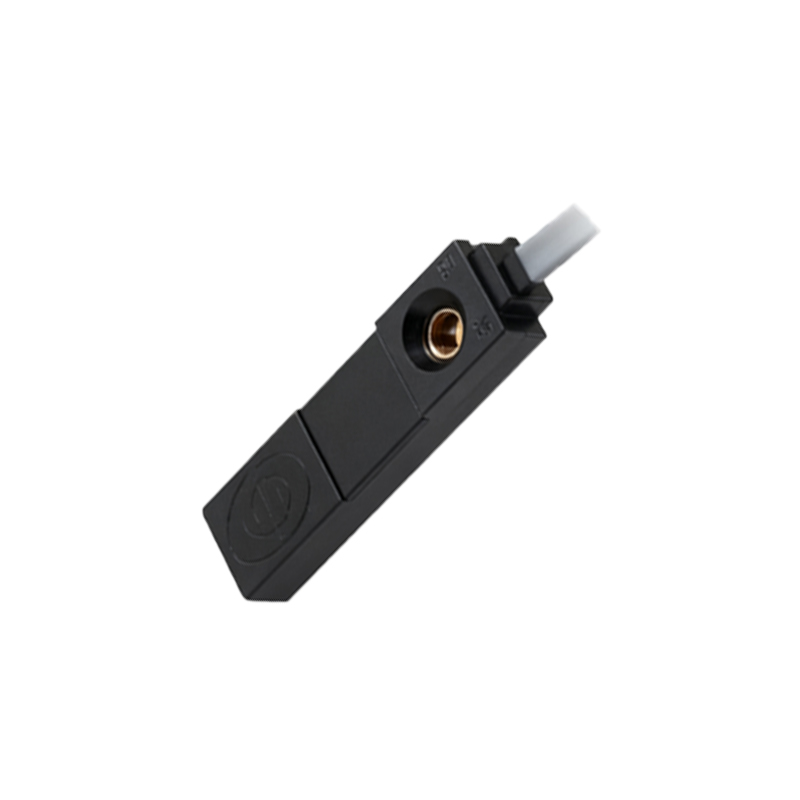
The term "adjustable" is a key differentiator. Most modern capacitive sensors feature a sensitivity adjustment potentiometer or teach-in function. This allows engineers to fine-tune the sensing distance or the sensor's response to different materials and environmental conditions. For instance, sensitivity can be reduced to ignore a container wall and detect the material level inside, or increased to detect low-density materials. This adjustability is crucial for combating false triggers caused by factors like moisture, dust, or material buildup on the sensor face.
Key performance characteristics include the nominal sensing distance (Sn), typically ranging from a few millimeters to about 40mm for standard models. It's vital to note that the effective sensing distance can vary significantly with the target material's dielectric constant. A metal object will be detected at the full nominal distance, while a plastic granule might require a much closer proximity. Repeatability, hysteresis, and response frequency are other critical specs defining precision and speed. Housing materials, such as PBT or stainless steel, are chosen based on the application environment, offering resistance to chemicals, washdowns, or mechanical impact.
The applications for adjustable capacitive proximity sensors are extensive. A primary use is in level detection for bulk solids, granules, and liquids in silos, hoppers, or tanks. They can detect the presence or absence of material without physical contact. In packaging, they verify the presence of liquid in bottles (even through glass or plastic walls) or detect missing caps. In woodworking and plastics processing, they sense non-metallic workpieces on conveyors. They are also employed in moisture detection, assembly verification, and as touch-sensitive switches behind non-conductive panels.
Selecting the right sensor requires careful analysis. First, define the target material and its expected dielectric constant. Determine the required sensing distance, factoring in material properties and any necessary reduction to avoid interference. Consider the operating environment: will the sensor face high humidity, temperature extremes, dust, or cleaning chemicals? This dictates the required ingress protection (IP) rating, such as IP67 or IP69K. The output type (PNP/NPN, NO/NC analog) must be compatible with the control system's input card. Finally, the physical housing shape (barrel, rectangular, ring) must suit the mounting constraints.
Installation and commissioning also demand attention. Ensure the sensor is mounted securely and that flush-mounted types are used in metallic surroundings to prevent shielding effects. Non-flush models offer longer ranges but require a clear non-metallic zone around the sensing face. During setup, use the adjustment mechanism with the actual target material present. Increase sensitivity until reliable detection is achieved, then slightly reduce it to create a safety margin against environmental drift. Regular maintenance involves checking for buildup on the sensing face, which can act as a permanent target, and verifying stability in changing conditions.
In conclusion, adjustable capacitive proximity sensors offer a unique and flexible solution for non-contact detection across a broad spectrum of industries. Their ability to sense non-metallic materials and their tunable sensitivity make them indispensable for complex applications involving level control, material presence verification, and process automation. A thorough understanding of their operating principles, coupled with a methodical approach to selection and setup, ensures optimal performance, reliability, and longevity in demanding industrial environments.