In industrial automation and control systems, proximity sensors are indispensable components for non-contact detection of metallic objects. Among the various types, two-wire AC/DC and three-wire DC sensors are prevalent. A common challenge faced by maintenance engineers and system integrators is the need to adapt or replace a failed two-wire sensor in a system originally designed for, or now requiring, a three-wire interface. This article provides a detailed, practical guide on the principles, methods, and critical considerations for converting a two-wire proximity sensor to function in a three-wire configuration.
Firstly, it is essential to understand the fundamental operational differences. A two-wire sensor is essentially a switch in series with the load. It operates directly on the supply voltage (commonly 120VAC or 24VDC) and has no discrete output wire; the same two wires carry both the power supply and the switching signal. In its "off" state, it exhibits a small leakage current. A three-wire sensor, in contrast, has separate wires for power supply positive (brown), power supply negative/ground (blue), and the output signal (black). The output is typically a transistor (PNP or NPN) that switches the load to either the supply voltage (PNP, sourcing) or ground (NPN, sinking).
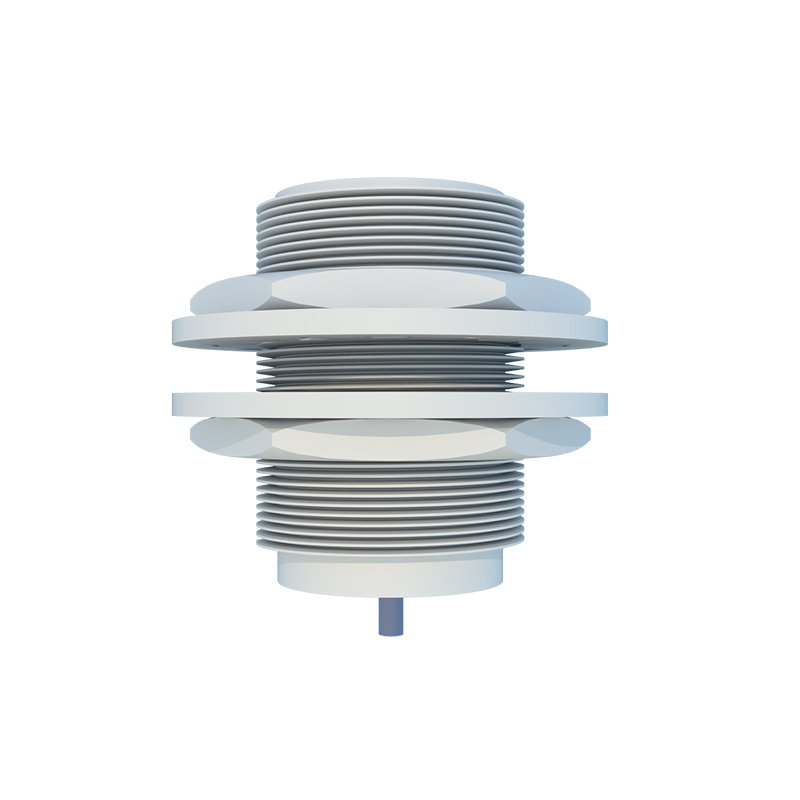
The core objective of a conversion is to make the two-wire sensor's switching action control a separate, isolated output circuit that mimics a three-wire output. This cannot be done by simply rewiring the sensor itself. The conversion requires an external interfacing component: a relay or an electronic interface module.
The most robust and straightforward method is using a control relay. For a DC system, connect the two-wire sensor in series with the coil of a DC relay. The relay coil voltage must match the sensor's supply voltage. The normally open (NO) or normally closed (NC) contacts of this relay are then used as the "output" of the new three-wire system. One side of the contact connects to the positive supply (for a PNP-style output) or negative/ground (for an NPN-style output), and the other side connects to the load (e.g., a PLC input). This method provides complete electrical isolation, handles high inrush currents, and is highly reliable. However, it adds the physical size and mechanical life limitations of the relay.
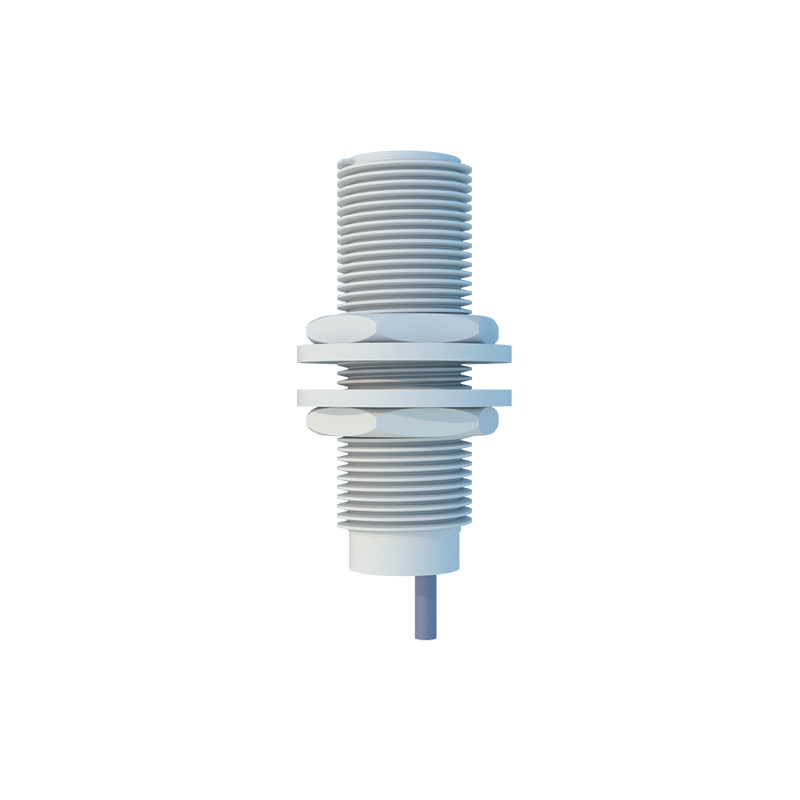
For a more compact and faster solution, specially designed interface modules are available. These solid-state devices are engineered for this exact purpose. They connect to the two-wire sensor on the input side and provide a clean, transistor-compatible output on the other side, effectively creating a PNP or NPN signal. They often include features like reverse polarity protection, short-circuit protection, and status LEDs. When using such a module, carefully follow the manufacturer's wiring diagram, paying close attention to the input polarity (for DC sensors) and the desired output type (sourcing or sinking).
Critical considerations must be addressed to ensure a safe and functional conversion:
1. Leakage Current: Two-wire sensors, especially AC types, have a residual leakage current (typically 1-3 mA) even when "off." This current can be enough to weakly energize a sensitive PLC input or keep a small relay chattering. This is the primary reason a direct connection to a PLC input often fails. Using a relay with a coil current rating higher than the leakage current, or an interface module with a high "off-state" impedance, solves this.
2. Voltage Drop: Two-wire sensors have an inherent voltage drop (1-4V) across them when "on." Ensure the remaining voltage at the load (e.g., relay coil) is sufficient for reliable operation.
3. Load Compatibility: Verify that the new output circuit (relay contact or module output) can handle the current and voltage requirements of the load it is driving.
4. Sensor Type: Confirm if your two-wire sensor is AC or DC. The conversion circuit differs significantly. Never connect an AC sensor to a DC circuit designed for a three-wire DC sensor without proper interfacing.
5. System Safety and Standards: Any modification must comply with local electrical codes and machine safety standards (e.g., IEC 60204-1). Consider the impact on existing safety circuits. Document all changes meticulously on electrical diagrams.
In summary, while a two-wire proximity sensor cannot be internally rewired to become a true three-wire sensor, its functionality can be successfully adapted to a three-wire control system using an external relay or a dedicated interface module. The relay method offers simplicity and isolation, while the electronic module provides speed and compactness. Success hinges on a thorough understanding of leakage current, voltage drop, and