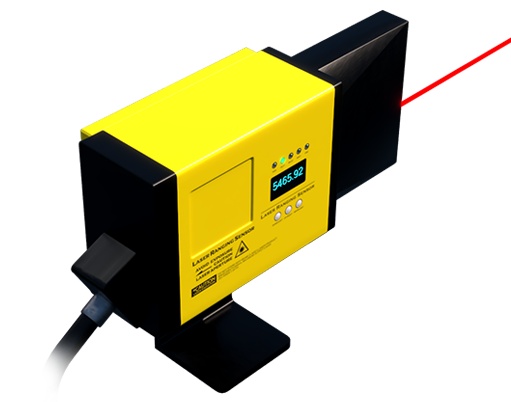
Laser bottle displacement sensors represent a critical advancement in industrial automation, particularly within packaging, beverage, and pharmaceutical lines. These non-contact sensors utilize a focused laser beam to precisely measure the position, fill level, or presence of bottles and containers on high-speed conveyor systems. Unlike traditional mechanical or ultrasonic methods, laser sensors offer unparalleled accuracy, often down to micrometer resolution, and are immune to factors like container color, transparency, or surface texture variations that can plague other sensing technologies. The core principle involves projecting a laser spot onto the target bottle. The reflected light is captured by a receiving element, and sophisticated internal processors calculate the exact distance or displacement based on triangulation or time-of-flight principles. This data is transmitted in real-time to a PLC (Programmable Logic Controller), enabling instantaneous adjustments to robotic arms, filling nozzles, or sorting gates.
The operational benefits are substantial. First, the non-contact nature eliminates wear and tear, ensuring long-term reliability and reducing maintenance costs associated with physical probes. Second, the high-speed response capability allows for inspection and measurement at production rates exceeding thousands of units per minute, a necessity in modern bottling plants. Applications are diverse: ensuring precise fill levels to avoid underfills or costly overfills, verifying cap placement and seal integrity, detecting missing labels, and guiding robots for precise palletizing. A key consideration is the selection of the appropriate sensor model based on the specific bottle material. For clear glass or PET bottles, a sensor with a high-powered, visible red laser might be optimal for consistent reflection. For dark-colored or opaque bottles, a high-performance model with advanced background suppression technology is essential to distinguish the bottle from the conveyor belt reliably.
Installation and integration require careful planning. Engineers must account for environmental factors such as ambient light interference, vibration, and dust. Mounting the sensor at the correct angle and distance, as specified in the datasheet, is crucial for optimal performance. Modern laser displacement sensors often feature intuitive teach-in functions, allowing quick calibration for different bottle types via a push-button or software interface. Connectivity options have evolved from standard analog outputs (4-20mA, 0-10V) to include industrial Ethernet protocols like EtherNet/IP, PROFINET, and IO-Link. This digital integration facilitates not only data transmission but also remote configuration, diagnostics, and predictive maintenance, aligning with Industry 4.0 initiatives.

Despite their robustness, challenges exist. Extremely glossy or reflective bottle surfaces can sometimes cause specular reflection, directing the laser beam away from the receiver. Manufacturers counter this with diffuse reflection models or specialized optical filters. Condensation on cold bottles can also scatter the laser beam, requiring sensors with robust algorithms to maintain accuracy. Cost remains a factor, as laser sensors are typically a higher initial investment than photoelectric or capacitive sensors. However, the total cost of ownership is often lower due to reduced downtime, higher quality control, and minimal product waste. In conclusion, laser bottle displacement sensors are indispensable for achieving the precision, speed, and flexibility demanded by today's automated production lines. Their continued evolution, with trends toward miniaturization, smarter embedded analytics, and enhanced connectivity, will further solidify their role in building more efficient and intelligent manufacturing ecosystems.