In the rapidly evolving landscape of industrial automation and material handling, shuttle cars have become indispensable for efficient warehouse and logistics operations. At the heart of their precision navigation and operational reliability lies a critical component: the laser sensor. These sophisticated devices enable shuttle cars to perform complex tasks with remarkable accuracy, transforming how goods are moved, sorted, and stored in modern facilities.
Laser sensors operate on the principle of emitting laser beams and measuring the time or phase shift of the reflected light to determine distances, positions, and object presence. In shuttle car applications, they are typically deployed for obstacle detection, position control, and alignment. For instance, when a shuttle car navigates narrow aisles in high-density storage systems, laser sensors provide real-time data to prevent collisions with racks, other vehicles, or personnel. This not only enhances safety but also minimizes downtime caused by accidents.
The integration of laser sensors into shuttle cars offers several technical advantages. First, their high resolution and fast response time allow for precise positioning, often within millimeter accuracy. This is crucial for tasks like pallet handling or container stacking, where even minor errors can lead to operational inefficiencies or damage. Second, laser sensors are less susceptible to environmental interference compared to other sensing technologies, such as ultrasonic or infrared sensors. They perform reliably in varying lighting conditions and can detect objects regardless of color or texture, making them ideal for diverse industrial settings.

Modern shuttle car laser sensors often incorporate advanced features like multi-beam scanning and integrated software algorithms. Multi-beam sensors can create detailed 2D or 3D maps of the surroundings, enabling shuttle cars to navigate complex paths autonomously. Coupled with machine learning algorithms, these sensors can adapt to dynamic environments, such as changing warehouse layouts or unexpected obstacles. This adaptability is key to supporting flexible automation systems that require minimal human intervention.
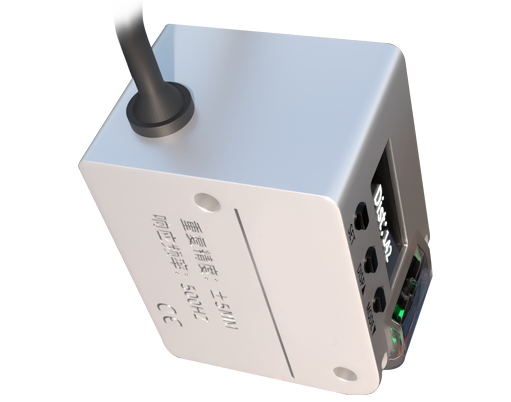
From an engineering perspective, selecting the right laser sensor involves considering factors like range, scanning angle, and communication protocols. For example, long-range sensors (up to several meters) are used for high-speed shuttle operations in large distribution centers, while short-range variants suit compact automated guided vehicles (AGVs) in manufacturing plants. Common protocols like Ethernet/IP or PROFINET ensure seamless integration with broader control systems, facilitating data exchange for centralized monitoring and optimization.
Despite their benefits, challenges exist in deploying laser sensors for shuttle cars. Dust, vibration, and temperature fluctuations in industrial environments can affect sensor performance if not properly addressed. Engineers mitigate these issues through robust housing designs, regular maintenance schedules, and calibration routines. Additionally, cybersecurity measures are increasingly important as sensor data becomes integral to networked automation, requiring encryption and access controls to prevent unauthorized interference.
Looking ahead, trends like Industry 4.0 and the Internet of Things (IoT) are driving further innovation in laser sensor technology. Future shuttle cars may feature sensors with enhanced AI capabilities for predictive maintenance or real-time route optimization. As warehouses strive for greater efficiency and sustainability, laser sensors will continue to play a pivotal role in enabling smarter, safer, and more responsive material handling solutions.
In summary, laser sensors are the unsung heroes behind the precision and reliability of modern shuttle cars. By providing accurate environmental perception and control, they empower automated systems to meet the growing demands of global logistics. For engineers and operators, understanding their functionality and integration is essential for leveraging the full potential of automated material handling.