In the realm of industrial automation and precision measurement, laser displacement sensors have become indispensable tools. Among the prominent technologies, BOE laser displacement sensors stand out for their high accuracy, reliability, and versatility. This article delves into the working principles, key applications, and critical factors for selecting the right BOE sensor for specific tasks.
The fundamental principle behind a BOE laser displacement sensor is based on optical triangulation. The sensor emits a focused laser beam onto the target surface. The reflected light is then captured by a receiving lens at a specific angle and focused onto a position-sensitive detector, such as a CCD or CMOS array. Any change in the distance to the target causes a shift in the position of the light spot on the detector. This displacement is calculated with high precision by the sensor's internal processor, converting it into an accurate distance measurement. This non-contact method ensures no physical wear on the sensor or the target, making it ideal for delicate or moving objects.
BOE sensors are renowned for their exceptional performance characteristics. They typically offer high resolution, often in the micrometer range, and fast response times, enabling real-time monitoring in dynamic processes. Their measurement range varies from a few millimeters to several meters, depending on the model. Furthermore, many BOE sensors incorporate advanced features like background suppression, which minimizes interference from ambient light or highly reflective backgrounds, and multi-echo technology for reliable measurements on transparent or multi-layered surfaces.
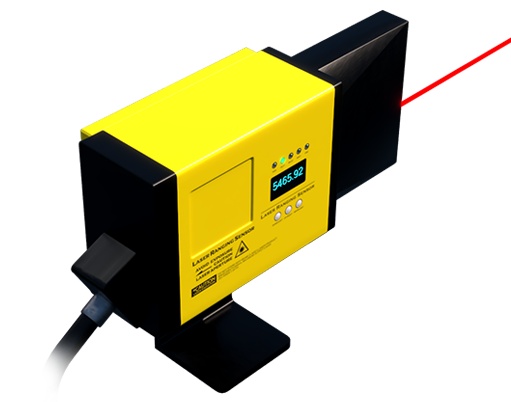
The applications of BOE laser displacement sensors span across numerous industries. In automotive manufacturing, they are used for precise gap and flush measurement between body panels, thickness inspection of brake pads, and vibration analysis. In the electronics sector, these sensors ensure the coplanarity of semiconductor chips, measure solder paste height on PCBs, and inspect component placement. The packaging industry relies on them for fill-level control, bottle height inspection, and cardboard thickness measurement. Additionally, in robotics, they provide crucial feedback for positioning, contour profiling, and object recognition, enhancing the autonomy and precision of robotic arms.
When selecting a BOE laser displacement sensor, several key parameters must be considered to ensure optimal performance. First, define the required measurement range and stand-off distance. The sensor must operate within its specified limits. Second, resolution and linearity are paramount for accuracy; higher resolution is needed for finer measurements. Third, consider the target's properties—its color, material, surface texture (rough, shiny, transparent), and angle—as these affect the laser's reflection. A sensor with adjustable sensitivity or specialized models for challenging surfaces may be necessary. Fourth, the required sampling speed or response frequency must match the process speed to avoid missing data points. Environmental factors such as temperature fluctuations, dust, humidity, and ambient light should also be evaluated; many BOE sensors come with robust housings (IP67 ratings are common) and temperature compensation circuits for harsh conditions. Finally, the output interface (analog voltage/current, digital RS-422, Ethernet/IP, PROFINET) must be compatible with the existing control system for seamless integration.
Installation and calibration are critical for achieving stated accuracy. Ensure the sensor is mounted stably to minimize vibration. The laser beam should be perpendicular to the target surface under normal operating conditions to avoid cosine error. Regular calibration against a known standard is recommended to maintain long-term precision. Proper maintenance, such as keeping the lens clean from dust and oil, is essential for consistent performance.
In conclusion, BOE laser displacement sensors are powerful instruments that drive quality, efficiency, and automation in modern industry. By understanding their operating principles, recognizing their vast application potential, and carefully evaluating selection criteria based on the specific measurement task and environment, engineers and technicians can leverage this technology to solve complex measurement challenges and enhance production processes. As technology advances, we can expect BOE sensors to incorporate even smarter features, such as integrated AI for data analysis and enhanced connectivity for Industry 4.0 ecosystems.