Square standard proximity sensors are integral components in modern industrial automation, offering reliable non-contact detection of metallic objects. These sensors, characterized by their robust square housing, are designed to withstand harsh industrial environments, including exposure to dust, moisture, and mechanical stress. The standard square form factor allows for easy installation and integration into machinery and production lines, providing consistent performance in applications such as position sensing, object counting, and end-of-travel detection.
Operating primarily on inductive principles, these sensors generate an electromagnetic field. When a metallic target enters this field, it causes a change in the oscillator's amplitude, which is then processed by the sensor's circuitry to trigger a solid-state output switch. This technology ensures high switching accuracy and repeatability, critical for precision automation tasks. Key specifications include sensing distance, which typically ranges from a few millimeters to several centimeters, depending on the model and target material. Factors such as the target's size, material (ferrous metals like iron and steel are detected at greater distances than non-ferrous metals like aluminum or copper), and approach direction significantly influence the effective sensing range.
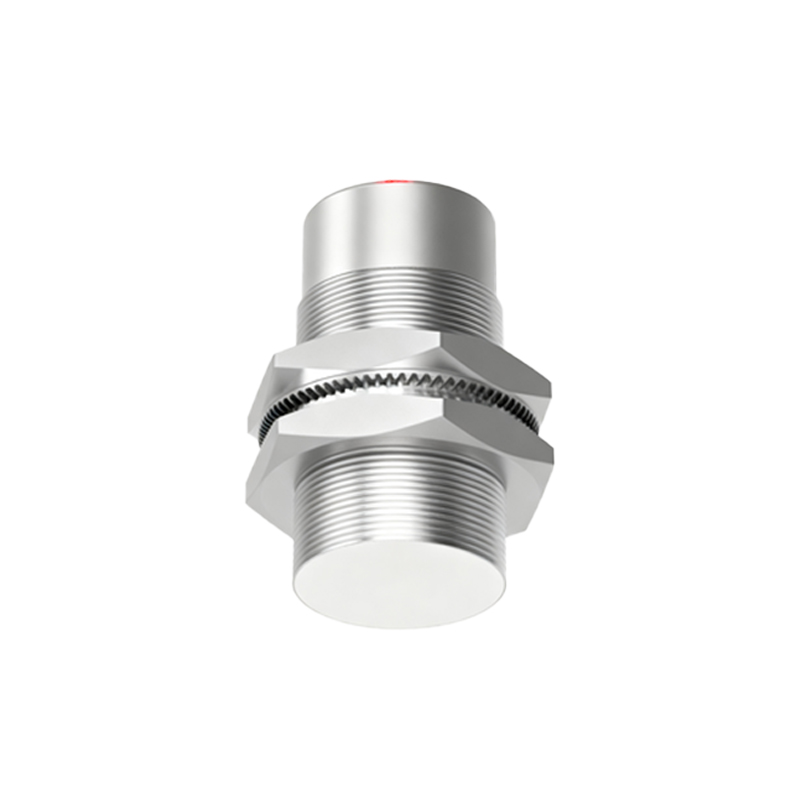
The construction of square proximity sensors emphasizes durability. The housing is commonly made from materials like nickel-plated brass, stainless steel, or high-grade plastics, providing resistance to corrosion and physical impacts. Many models feature LED indicators for operational status, aiding in quick diagnostics and setup. Electrical connections are standardized, often utilizing pre-wired cables or quick-disconnect M8 or M12 connectors, which simplify wiring and maintenance procedures. Output configurations include NPN (sinking) and PNP (sourcing) transistor outputs, as well as normally open (NO) or normally closed (NC) contact logic, allowing compatibility with various programmable logic controllers (PLCs) and control systems.
Application versatility is a hallmark of square standard proximity sensors. In conveyor systems, they detect the presence or absence of products, ensuring smooth material flow and preventing jams. In machine tools, they serve as limit switches to verify the position of moving parts like slides or turrets, enhancing operational safety and precision. Packaging machinery relies on these sensors for accurate bottle cap placement or carton sealing verification. Furthermore, their use in automotive assembly lines for part verification and robotic guidance underscores their critical role in high-speed, high-reliability manufacturing.
When selecting a square proximity sensor, engineers must consider environmental conditions. Temperature ratings, typically from -25°C to 70°C, ensure functionality in varied climates. Ingress Protection (IP) ratings, such as IP67 or IP68, denote resistance to dust and temporary or prolonged immersion in water, making them suitable for washdown areas in food processing or pharmaceutical industries. Additionally, shielding types—shielded (flush-mountable) or unshielded (non-flush-mountable)—affect installation: shielded sensors can be mounted flush with metal surfaces without interference, while unshielded sensors offer longer sensing ranges but require non-metallic surroundings.
Maintenance of these sensors is generally minimal due to their solid-state design, lacking moving parts that wear out. However, regular checks are advised to ensure mounting integrity, cleanliness of the sensing face, and stable electrical connections. Troubleshooting often involves verifying power supply, output load, and target alignment. Advancements in sensor technology continue to enhance features, including improved noise immunity, extended sensing ranges, and the integration of IO-Link communication for digital parameter setting and diagnostic data exchange, paving the way for smarter, more connected industrial ecosystems.
In conclusion, square standard proximity sensors are essential for efficient and safe automation. Their robust design, reliable inductive sensing, and adaptability to diverse applications make them a preferred choice for engineers seeking to optimize production processes. By understanding their operational principles, specifications, and selection criteria, professionals can effectively deploy these sensors to enhance system performance and reliability.