In modern manufacturing, weld seam quality directly impacts structural integrity, safety, and product longevity. Traditional inspection methods, such as visual checks or manual gauging, often fall short in terms of accuracy, speed, and consistency. This is where advanced weld seam laser sensors come into play, offering a transformative solution for industries ranging from automotive and aerospace to shipbuilding and heavy machinery.
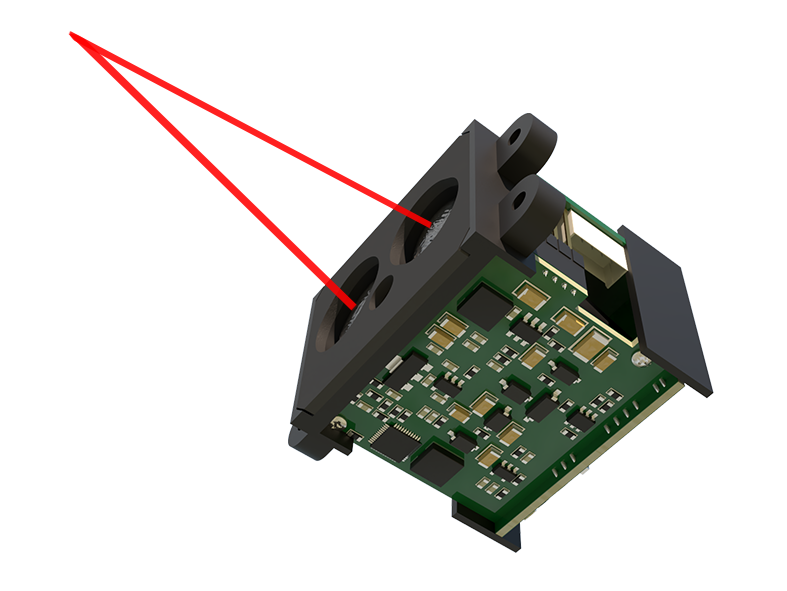
Weld seam laser sensors operate on the principle of laser triangulation. A laser diode projects a precise line or dot onto the weld seam surface. The reflected light is captured by a high-resolution CMOS or CCD camera positioned at a known angle. By analyzing the deformation of the laser line or the displacement of the dot, the sensor calculates key parameters such as seam height, width, undercut, porosity, and surface irregularities with micron-level accuracy. This non-contact measurement ensures no physical interference with the weld, preserving its integrity while enabling real-time data acquisition.
The core advantages of these sensors are multifaceted. First, they deliver exceptional precision, capable of detecting defects as small as 0.01 mm, which is crucial for critical applications like pressure vessels or aerospace components. Second, their high-speed scanning—often exceeding 10,000 profiles per second—allows for inline inspection during the welding process, facilitating immediate corrective actions and reducing scrap rates. Third, their robustness in harsh industrial environments is notable. Many models are equipped with protective housings rated IP67 or higher, resistant to spatter, dust, and extreme temperatures, ensuring reliable operation near welding arcs and in challenging shop-floor conditions.

Integration with automation systems is another key strength. Modern laser sensors feature interfaces such as Ethernet/IP, PROFINET, or EtherCAT, enabling seamless communication with PLCs, robots, and quality control software. This connectivity supports adaptive welding processes, where sensor data dynamically adjusts robot trajectories or welding parameters (e.g., voltage, wire feed speed) to compensate for part misalignment or gap variations. For instance, in automotive assembly lines, robots equipped with laser sensors can precisely track complex 3D seams on car bodies, ensuring consistent weld quality across thousands of units.
Applications are diverse. In pipeline welding, sensors monitor root pass alignment and penetration depth, preventing leaks in oil and gas infrastructure. In electronics, they inspect micro-welds on circuit boards for reliability. Additionally, post-weld analysis software uses sensor data to generate comprehensive reports, including 3D reconstructions of seams, statistical process control charts, and compliance documentation for standards like ISO 5817 or AWS D1.1. This not only enhances traceability but also supports predictive maintenance by identifying trends in weld deviations over time.
Despite their benefits, challenges exist. Highly reflective or dark surfaces can affect laser absorption, though advanced sensors employ adaptive exposure settings and filters to mitigate this. Initial setup and calibration require expertise, but user-friendly software with auto-calibration features is simplifying deployment. Cost remains a consideration, but the return on investment—through reduced rework, lower labor costs, and improved product quality—often justifies the expenditure within months.

Looking ahead, innovations are focusing on AI-driven defect classification, where machine learning algorithms analyze sensor data to automatically categorize flaws (e.g., cracks vs. porosity) with minimal human intervention. Miniaturization is also progressing, enabling sensors to fit into compact robotic end-effectors for intricate tasks. As Industry 4.0 advances, the fusion of laser sensors with digital twins and IoT platforms will further optimize welding cells, making manufacturing smarter and more efficient.
In summary, weld seam laser sensors represent a cornerstone of precision manufacturing. By providing accurate, real-time insights into weld quality, they empower industries to achieve higher standards, reduce waste, and enhance operational agility. As technology evolves, their role in ensuring durable, safe, and high-performance welded structures will only grow more pivotal.