In the realm of industrial automation, robotics, and smart systems, infrared (IR) proximity sensors are indispensable components. Their ability to detect the presence, absence, or distance of an object without physical contact makes them vital for countless applications. As a seasoned electrical engineer, I often field questions about the different types available. This article delves into the ten primary categories of infrared proximity sensors, explaining their operating principles, key characteristics, and typical use cases. Understanding these distinctions is crucial for selecting the optimal sensor for your specific design challenge.
1. Diffuse Reflective Sensors
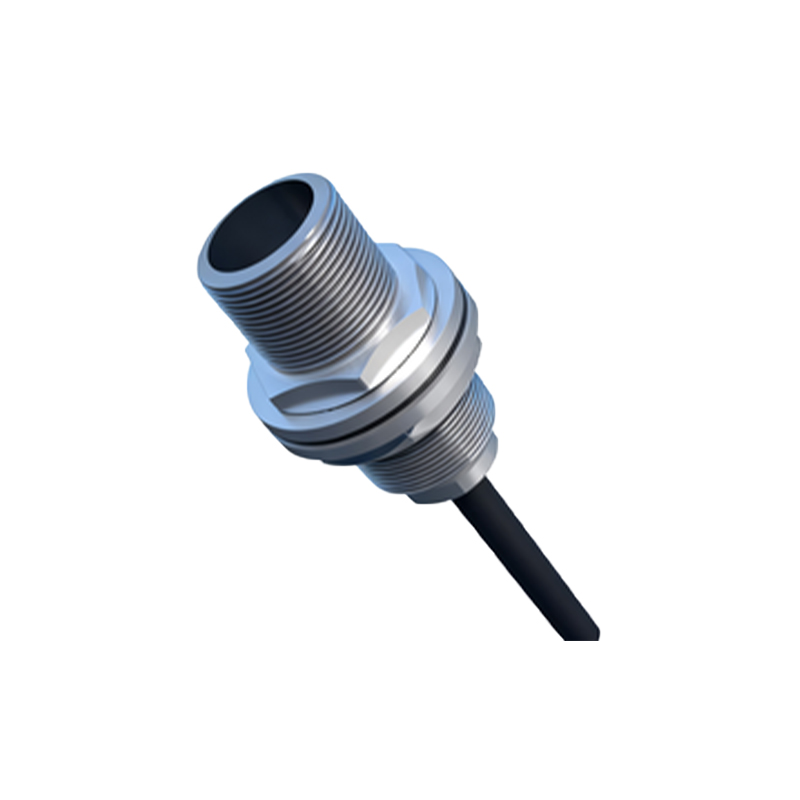
These are the most common type. The emitter and receiver are housed in the same unit. The sensor detects an object when the emitted IR light is reflected back to the receiver. Performance is highly dependent on the object's color, texture, and reflectivity. They are cost-effective and used for short-range detection in applications like conveyor belt counting or paper detection in printers.
2. Retro-Reflective Sensors
Here, the emitter and receiver are also in one housing, but they rely on a reflector (like a tape or prism) placed opposite the sensor. The sensor detects an object when it interrupts the beam between the sensor and the reflector. This offers a longer sensing range than diffuse types and is less affected by the object's color. Common in automated doors and packaging machinery.
3. Through-Beam Sensors
This type features separate units for the emitter and receiver, positioned opposite each other. An object is detected when it breaks the IR beam. This configuration provides the longest sensing range and highest reliability, as it is virtually unaffected by the object's surface properties. Ideal for precise detection in high-speed assembly lines or security systems.
4. Fixed-Focus Infrared Sensors
These sensors use lenses to focus the IR beam at a specific distance. They are designed to detect objects only within this precise focal point, ignoring objects closer or farther away. This is perfect for applications requiring exact positioning, such as in robotic pick-and-place operations or level detection in containers.
5. Adjustable-Focus / Background Suppression Sensors
A sophisticated evolution of diffuse sensors, they utilize triangulation principles. By using a position-sensitive detector (PSD) or a CMOS array, they can precisely measure the angle of the reflected light, allowing them to ignore background objects beyond a set distance. Essential for detecting objects on a conveyor belt while ignoring the belt itself or the machine bed.
6. IR Distance Measuring Sensors
These sensors actively measure distance, not just presence. They typically use time-of-flight (ToF) or phase-shift measurement principles for the emitted IR signal. They output an analog signal (e.g., 0-10V) or digital data proportional to the distance. Widely used in robotics for obstacle avoidance, material handling, and drone altitude control.
7. IR Analog Output Sensors
Similar to distance sensors but often simpler, these provide a continuous analog voltage or current output that changes with the intensity of the reflected IR light, which correlates to distance or reflectivity. Used for tasks like edge guiding in web processing or monitoring thread thickness in textiles.
8. Digital Output IR Sensors
The most straightforward type, they provide a simple ON/OFF (high/low) signal when an object is within a preset sensing range. The threshold is usually adjustable via a potentiometer. These are the workhorses for basic object detection, limit switching, and part counting in countless machines.
9. IR Sensor Arrays
These consist of multiple IR emitter-receiver pairs arranged in a linear or grid pattern. They can detect the shape, size, or orientation of an object. Advanced versions are used in line-following robots, gesture recognition interfaces, and simple imaging applications for sorting.
10. Modulated IR Sensors
To combat ambient light interference (from sunlight or artificial lights), these sensors modulate the emitted IR light at a specific high frequency (e.g., 30-40 kHz). The receiver is tuned to only respond to light modulated at that same frequency. This dramatically improves stability and reliability in challenging lighting environments, making them suitable for outdoor applications or brightly lit factories.
Each type offers a unique balance of range, precision, environmental immunity, and cost. The choice hinges on factors like required sensing distance, object properties, environmental conditions (light, dust), required output signal, and budget. For instance, a through-beam sensor is unbeatable for long-range, reliable breaking detection, while a background suppression sensor solves the tricky problem of detecting a dark object on a dark background. As IR technology continues to advance, integrating with digital buses like IO-Link for parameterization and diagnostics, their role in enabling smarter, more adaptive automation will only grow more profound.