In industrial environments where flammable gases, vapors, mists, or combustible dusts are present, the selection of sensing technology is not merely a matter of functionality but of paramount safety. Among the array of solutions available, explosion-proof ultrasonic proximity sensors have emerged as a robust and versatile choice for non-contact detection and measurement in these classified hazardous areas. Unlike inductive or capacitive sensors, ultrasonic sensors operate on the principle of sound wave reflection, making them effective on a wide variety of materials regardless of color, transparency, or surface texture. Their ability to function reliably in environments with airborne particulates, steam, or varying light conditions further solidifies their position in challenging industrial settings.
The core distinction of an explosion-proof ultrasonic sensor lies in its housing and design certification. These devices are engineered to contain any ignition event—such as a spark or excessive heat generated within the sensor's circuitry—preventing it from propagating into the surrounding hazardous atmosphere. This is achieved through robust, flame-path enclosures typically constructed from durable materials like stainless steel or brass, with tightly toleranced threaded joints. These joints are designed to cool any escaping gases below the ignition temperature of the external atmosphere. Common certifications for such equipment include ATEX (Europe), IECEx (International), and NEC/CEC classifications (North America) for specific zones and divisions, such as Zone 1/21 or Division 1. It is critical that the sensor's certification matches the specific gas group (e.g., IIC for hydrogen) and temperature class (T6 being the most stringent) of the installation area.
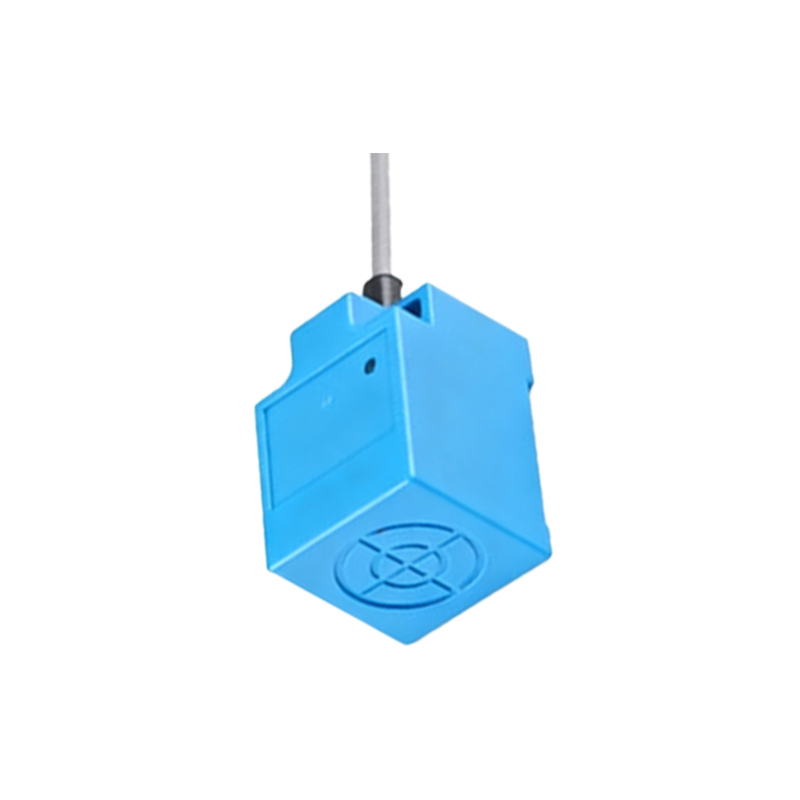
The operational principle is elegantly straightforward. The sensor's transducer emits high-frequency ultrasonic pulses (typically between 200 kHz and 400 kHz, inaudible to humans). These pulses travel through the air, strike a target object, and are reflected back to the sensor. An internal microcontroller calculates the time-of-flight (ToF)—the interval between pulse emission and echo reception. Since the speed of sound in air is a known variable (though affected by temperature and pressure, which advanced models compensate for), this time measurement is directly converted into a precise distance reading. This allows the sensor to perform not just simple presence/absence detection, but also continuous level monitoring of liquids or bulk solids, precise positioning, and loop control.
Key advantages of deploying explosion-proof ultrasonic sensors are numerous. Their non-contact nature eliminates mechanical wear and prevents product contamination, which is crucial in food, pharmaceutical, or chemical processing. They are largely immune to the material properties that confound other sensors, reliably detecting clear glass bottles, dark rubber sheets, or liquid surfaces with equal efficacy. Modern units offer sophisticated features like adjustable sensing windows (teach-in), analog outputs (4-20 mA, 0-10 V), programmable switching outputs (PNP/NPN), and IO-Link communication for Industry 4.0 integration. This enables remote configuration, diagnostics, and parameterization, reducing the need for physical entry into the hazardous zone for maintenance adjustments.
However, practical application requires careful consideration of several factors. The sensing range is finite, and very soft or sound-absorbent materials (like cotton or foam) may yield weak echoes. Extreme temperature gradients or strong air turbulence in the sensing path can distort the sound wave, potentially causing measurement inaccuracies. Proper mounting is essential; the sensor must be positioned to avoid "false echoes" from nearby machinery, walls, or structural beams. Regular maintenance, such as keeping the transducer face clean from heavy dust or ice buildup, is necessary for optimal performance. For level measurement in tanks, the sensor's beam angle and the tank's internal obstructions must be evaluated.
Typical applications span a broad spectrum of high-risk industries. In oil & gas refineries and offshore platforms, they monitor tank levels of volatile chemicals and crude oil. In grain silos and flour mills (combustible dust atmospheres), they prevent overfilling and manage inventory. In pharmaceutical manufacturing with solvent-based processes, they ensure precise filling operations. They are also indispensable in paint spray booths, wastewater treatment plants with methane presence, and mining operations for conveyor belt control and collision avoidance on vehicles.
In conclusion, the explosion-proof ultrasonic proximity sensor represents a critical fusion of advanced sensing technology and intrinsic safety engineering. By providing reliable, maintenance-light, and versatile detection capabilities, it addresses the dual imperative of operational efficiency and personnel/plant safety in hazardous locations. When selected and installed with due regard for its specifications, environmental conditions, and the relevant safety certifications, it becomes an indispensable component in the automation and safeguarding of modern industrial processes where explosive risks are a constant concern.