In the realm of industrial automation and electronic control systems, proximity sensors are indispensable components widely used for object detection, positioning, and counting without physical contact. A common misconception persists that proximity sensors can only detect metallic objects. This article delves into the working principles of various proximity sensors, clarifies their material detection capabilities, and explains why this belief is not entirely accurate.
Proximity sensors operate based on different physical principles, primarily including inductive, capacitive, ultrasonic, and photoelectric types. Each type interacts with materials in distinct ways, determining what they can detect.
Inductive proximity sensors are the most frequently associated with metal detection. They generate an electromagnetic field using a coil and oscillator. When a metallic object enters this field, eddy currents are induced in the metal, causing a change in the sensor's oscillation amplitude or frequency. This change is detected by the sensor's circuitry, triggering an output signal. Ferrous metals (like iron and steel) and non-ferrous metals (such as aluminum, copper, or brass) affect the electromagnetic field differently, but all are detectable. However, non-metallic materials like plastic, wood, ceramic, or glass do not conduct electricity significantly and thus do not generate eddy currents. Consequently, standard inductive sensors indeed do not detect non-metals, which likely fuels the common belief.
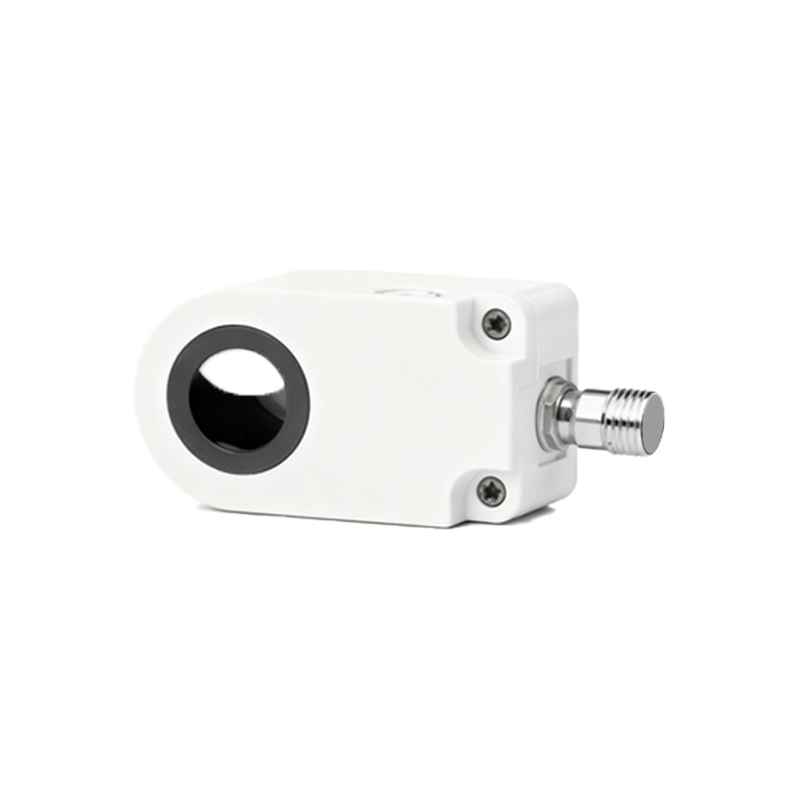
In contrast, capacitive proximity sensors function by detecting changes in capacitance. They generate an electrostatic field between the sensor's active surface and the ground. Any object that enters this field alters the dielectric constant and thus the capacitance, regardless of its material composition. This means capacitive sensors can detect both metallic and non-metallic materials, including liquids, powders, plastics, wood, and glass. The key factor is the object's dielectric constant relative to air. For instance, water has a high dielectric constant, making it easily detectable. Therefore, capacitive sensors break the "metal-only" limitation and are versatile in applications involving diverse materials.
Ultrasonic proximity sensors use sound waves beyond human hearing. They emit ultrasonic pulses and measure the time taken for the echo to return after hitting an object. The detection relies on the reflection of sound waves, which depends on the object's density and acoustic impedance rather than its electrical properties. Thus, ultrasonic sensors can detect almost any solid or liquid material, be it metal, plastic, fabric, or even transparent objects, as long as they reflect sufficient sound waves. They are particularly useful in challenging environments with dust, smoke, or varying colors.
Photoelectric sensors, another major category, employ light beams (usually infrared, visible, or laser) to detect objects. They work by either through-beam (transmitter and receiver separate), retro-reflective, or diffuse reflection modes. The detection depends on the interruption or reflection of light, making them sensitive to materials that affect light transmission or reflection. While metals are easily detectable due to their opacity or reflectivity, photoelectric sensors can also detect non-metals like plastics, paper, and liquids, unless the material is completely transparent to the specific wavelength used.
So, why does the myth that proximity sensors only detect metals persist? The historical and industrial context provides an answer. Inductive sensors were among the earliest and most widely adopted types in manufacturing, especially in metalworking, machining, and automotive industries. Their robustness, reliability, and immunity to non-metallic environmental interference made them a staple. As a result, many engineers and technicians became familiar primarily with inductive sensors, leading to a generalized assumption about all proximity sensors. Moreover, in applications where only metal detection is needed, inductive sensors are often preferred for their precision and cost-effectiveness, reinforcing the association.
Understanding the correct sensor for an application is crucial. For metal detection in harsh environments with oil, dirt, or vibration, inductive sensors are ideal. For detecting non-metals, capacitive or ultrasonic sensors are better choices. In packaging, food processing, or material handling where diverse materials are present, capacitive and photoelectric sensors excel. Ultrasonic sensors are preferred for distance measurement or detecting transparent objects.
In summary, proximity sensors are not limited to metal detection. While inductive sensors specialize in metals, other types like capacitive, ultrasonic, and photoelectric sensors can detect a wide range of materials. The choice depends on the specific application requirements, including the target material, environmental conditions, sensing distance, and cost. Dispelling this myth allows for more innovative and efficient use of sensor technology across industries, from manufacturing and robotics to consumer electronics and safety systems. Always refer to sensor datasheets and consult with experts to select the appropriate type for your needs.