In industrial automation and control systems, proximity sensors are indispensable components for detecting the presence or absence of objects without physical contact. Among the various configurations available, the 3-wire normally closed (NC) proximity sensor stands out for its reliability and specific operational characteristics. This article delves into the working principles, wiring configurations, advantages, and typical applications of 3-wire NC proximity sensors, providing essential insights for engineers and technicians in the electrical and automation fields.
A 3-wire normally closed proximity sensor typically consists of three distinct wires: a brown wire for the positive supply voltage (often +24V DC), a blue wire for the common ground or negative connection, and a black wire as the signal output line. In a normally closed configuration, the output circuit is initially closed when the sensor is in its idle state (no target detected). This means that electrical current can flow through the output circuit under normal conditions. When a target object enters the sensor's detection range, the internal switching mechanism opens the circuit, interrupting the current flow. This change in state is then interpreted by the connected control system, such as a programmable logic controller (PLC), as a detection event.
The wiring of a 3-wire NC sensor is straightforward but requires careful attention to polarity and load connections. The brown wire must be connected to the positive terminal of the DC power supply, while the blue wire is linked to the negative terminal. The black output wire is connected to the input channel of the controller or the load device. It is crucial to note that the load (e.g., a PLC input, relay, or indicator lamp) is typically placed between the black wire and the positive supply or between the black wire and ground, depending on whether the sensor is sourcing or sinking current. Always refer to the manufacturer's datasheet for specific wiring diagrams, as conventions can vary between PNP (sourcing) and NPN (sinking) output types. For a normally closed sensor, the output provides a continuous signal until the target is detected, which is the opposite behavior of a normally open (NO) sensor.
One of the primary advantages of using a 3-wire normally closed proximity sensor is enhanced safety in certain applications. In fail-safe critical systems, a normally closed configuration can be preferable because a wire break or power loss will cause the output circuit to open, simulating a detection event and triggering a safe shutdown or alarm. This inherent fail-safe characteristic makes NC sensors suitable for applications where safety is paramount, such as in machine guarding, emergency stop circuits, or monitoring protective door positions. Additionally, 3-wire sensors offer improved signal stability and noise immunity compared to 2-wire versions, as the separate supply and output wires reduce the risk of voltage drops affecting the signal integrity.
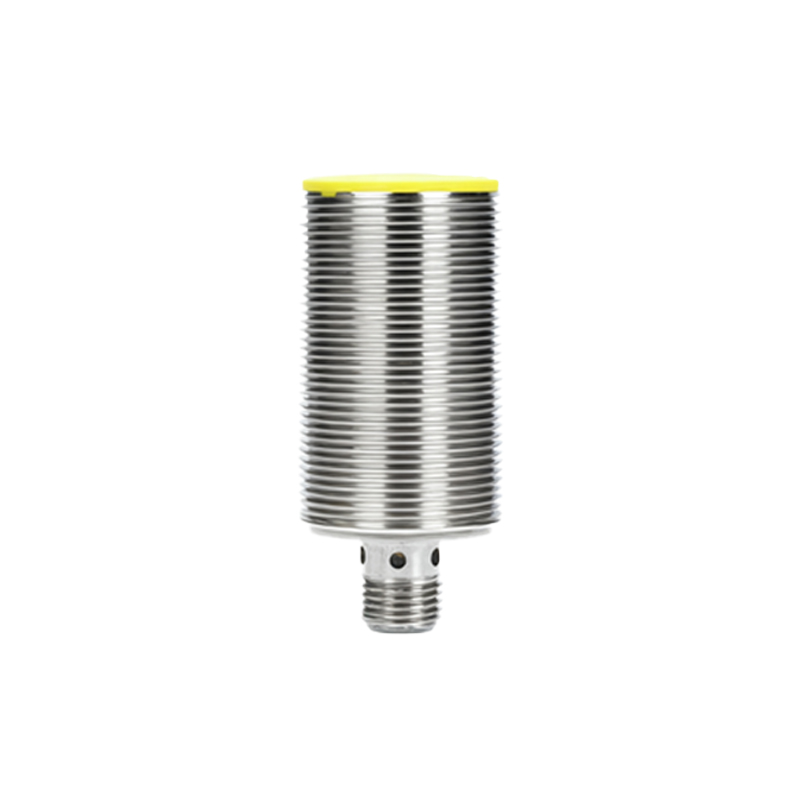
These sensors are commonly employed across various industries. In material handling, they are used to detect the presence of packages on conveyor belts, ensuring proper spacing and preventing jams. In automotive assembly lines, NC sensors monitor the position of robotic arms or verify that components are correctly installed. They are also integral to packaging machinery, where they count products or confirm that lids are properly sealed. The robust construction of industrial proximity sensors, often featuring metal housings and high ingress protection (IP) ratings, allows them to perform reliably in harsh environments with exposure to dust, moisture, and mechanical vibrations.
When selecting a 3-wire NC proximity sensor, engineers must consider several key parameters. The sensing range, which varies from a few millimeters to several tens of millimeters, must be appropriate for the application. The type of target material (ferrous metals, non-ferrous metals, or all metals) influences the choice of inductive sensors, while capacitive sensors can detect non-metallic materials. Response time, switching frequency, and output current capacity are also critical factors. Furthermore, environmental conditions like temperature extremes, chemical exposure, and potential electrical interference must be accounted for to ensure long-term reliability.
In conclusion, the 3-wire normally closed proximity sensor is a versatile and reliable component in modern industrial control systems. Its design offers a clear operational logic, where the output signal is present until a target is detected, making it ideal for fail-safe applications. Proper understanding of its wiring, advantages, and selection criteria enables engineers to design safer, more efficient, and more robust automation solutions. As technology advances, these sensors continue to evolve with features like IO-Link communication for diagnostics and parameterization, further solidifying their role in the interconnected landscape of Industry 4.0.